10 Luxury Gift Box Design Ideas for Premium Brands
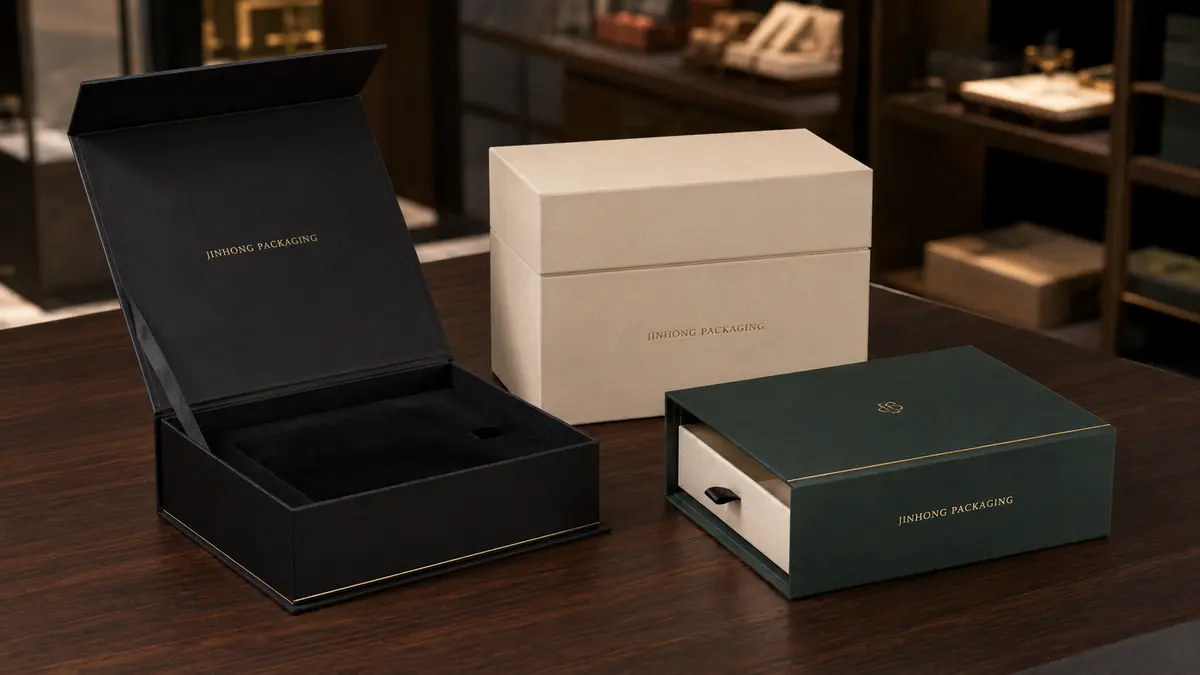
Luxury gift box design combines visual appeal, product protection, and a carefully planned opening experience. For cosmetics, jewelry, candles, confectionery, coffee, fashion accessories, and corporate gifts, the box often forms a customer’s first physical impression of the product.
A premium appearance does not come from adding as many decorative elements as possible. It usually results from a suitable box structure, balanced proportions, coordinated materials, precise printing, and details that support the brand’s identity.
The most effective design also considers practical requirements. Product weight, dimensions, fragility, shipping method, order quantity, assembly, storage, and budget can all influence the final packaging specification.
This guide explores ten luxury gift box design ideas and explains how to turn them into packaging that looks refined, protects the product, and remains practical for production and delivery.
What Makes a Gift Box Look Luxurious?
Luxury packaging is not defined by one material or finish. It is created through the way several design elements work together.
Important elements include:
• A box structure that suits the product
• Accurate sizing and balanced proportions
• Consistent brand colors and typography
• Appropriate paper and wrapping materials
• Controlled use of foil, embossing, or specialty finishes
• A well-fitted insert that presents the product clearly
• A smooth and intentional opening experience
• Reliable protection during storage and transportation
A simple rigid box with precise proportions and clean printing can look more premium than an elaborate box with too many colors, finishes, and accessories. The design should support the product rather than compete with it.
Before selecting decorative details, brands should define the product dimensions, presentation goals, sales channel, expected order quantity, and target packaging budget.
1. Select a Box Structure That Supports the Brand Experience
The structure determines how the box opens, how the product is presented, and how the packaging will be assembled and transported.
Magnetic Closure Boxes
Magnetic closure boxes provide a controlled opening motion and a strong presentation surface. They are frequently selected for cosmetics, skincare sets, jewelry, premium food gifts, and corporate gift collections.
The closure strength, lid alignment, hinge construction, and magnet position should be tested during sampling. Magnets may also affect recyclability, so brands with specific sustainability requirements should discuss alternative closure methods.
Explore our magnetic gift boxes for more information about structures, materials, and customization options.
Lift-Off Lid Boxes
Lift-off lid boxes, also known as two-piece rigid boxes, use a separate lid and base. Their clean structure works well for candles, confectionery, apparel accessories, perfume, and presentation sets.
The depth of the lid and the fit between the two parts influence the opening experience. A very tight fit may make the box difficult to open, while a loose fit can reduce the sense of precision.
Drawer Boxes
Drawer boxes reveal the product gradually as the inner tray slides out of the sleeve. A ribbon pull, paper tab, or thumb notch can be added to improve usability.
This structure is suitable for jewelry, cosmetics, small electronics, stationery, and curated gift sets. Designers should allow enough clearance for smooth movement after the paper wrapping and printed sleeve are applied.
Book-Style Boxes
Book-style boxes open from one side and offer a large interior surface for brand messages, instructions, or storytelling. They are often used for sample collections, promotional kits, beauty products, and limited-edition gifts.
Collapsible Rigid Boxes
Collapsible rigid boxes can reduce storage and freight volume compared with fully assembled rigid boxes. They are useful when the finished box is large or when shipping efficiency is an important project requirement.
However, the fold lines, adhesive areas, magnetic closure, and final assembled appearance need careful testing. A collapsible structure should not be selected only for freight savings if it makes assembly difficult or weakens the presentation.
2. Choose Materials Based on Appearance and Performance
Material selection affects rigidity, surface texture, print results, box weight, and cost.
Luxury rigid boxes are commonly made from paperboard or chipboard wrapped with with printed, colored, or textured paper. Board thickness should be selected according to the box size, product weight, structure, and expected level of protection.
Common material options include:
• Coated paper for smooth printing and consistent colors
• Uncoated paper for a softer, more natural appearance
• Textured specialty paper for tactile differentiation
• Dyed-through paper that reduces visible white edges
• Kraft paper for a more natural or understated presentation
• Printed paper laminated over rigid board for detailed graphics
A thicker board does not automatically produce a better box. If the structure, lid fit, wrapping, and insert are poorly planned, increasing board thickness may add cost without improving the customer experience.
Brands interested in responsibly sourced paper can ask about FSC-certified options. Availability depends on the selected material, specification, production partner, and certification requirements. More information about certified forest-based materials is available from the Forest Stewardship Council.
3. Use Color with Restraint and Consistency
Color is one of the strongest signals of brand identity. Luxury packaging often uses a controlled palette rather than many competing shades.
Black, white, navy, burgundy, dark green, cream, and warm neutral tones are common, but luxury gift box design does not have to rely on dark colors. Bright colors can also feel premium when they are used consistently and supported by suitable typography, materials, and finishes.
Consider the following when developing the color palette:
• How the packaging relates to the product and brand identity
• Whether the same color must be repeated across different materials
• How coated and uncoated papers change color appearance
• Whether metallic foil or ink will complement the base color
• How the packaging will appear under retail and photographic lighting
Exact color matching across paper, ribbon, molded inserts, printed cards, and flexible packaging may be difficult because each material reflects and absorbs color differently. Physical samples or material swatches are therefore more reliable than evaluating colors only on a computer screen.
For projects with strict brand-color requirements, specify the intended color reference and confirm the acceptable tolerance before production.
4. Create a Clear Visual Hierarchy
Luxury packaging usually feels organized and intentional. Customers should be able to identify the brand, product, and important information without searching through a crowded design.
A clear visual hierarchy may include:
• The brand name or logo as the primary element
• The product name as the secondary element
• A short product description or collection name
• Required product, safety, or regulatory information
• Supporting details placed on the base, sleeve, or insert card
Large logos do not automatically create stronger branding. More empty space around a carefully positioned logo can increase visual impact and make the packaging feel more refined.
Typography should also be practical. Very thin lettering, small reversed text, and fine foil-stamped details may lose clarity during production. The artwork should be reviewed according to the selected printing process rather than judged only from the digital design.
5. Add Foil Stamping as a Controlled Accent
Foil stamping can create a reflective or pigmented detail that contrasts with the surrounding paper. Gold and silver are traditional choices, but copper, rose gold, colored, matte, and holographic foils are also available.
Common applications include:
• Logos and brand names
• Borders and fine decorative lines
• Product names
• Limited-edition details
• Interior messages
Foil is usually most effective when used selectively. Covering too much of the surface can increase cost, complicate production, and reduce the visual contrast that makes the finish distinctive.
The result depends on the foil type, paper texture, design detail, stamping pressure, and coverage area. Highly textured paper may not produce the same sharp result as smooth coated paper. Fine lines and small lettering should therefore be tested before final production.
6. Use Embossing and Debossing to Add Tactile Detail
Embossing raises part of the paper surface, while debossing presses the design below the surrounding surface. Both techniques add texture that customers can see and feel.
They are often applied to:
• Logos
• Monograms
• Product names
• Patterns
• Borders
• Small decorative elements
Embossing can be combined with foil stamping to create a raised metallic effect. Debossing can produce an understated result on uncoated or textured paper without adding another color.
The depth and clarity of the impression depend on the paper, board construction, artwork, die, pressure, and size of the design. Extremely fine details may not reproduce cleanly, especially on strongly textured materials.
When embossing or debossing is placed close to an edge, fold, magnet, or internal component, the structural limitations should be reviewed before the artwork is finalized. Sampling helps confirm whether the finish looks balanced and whether it affects the shape of the box.
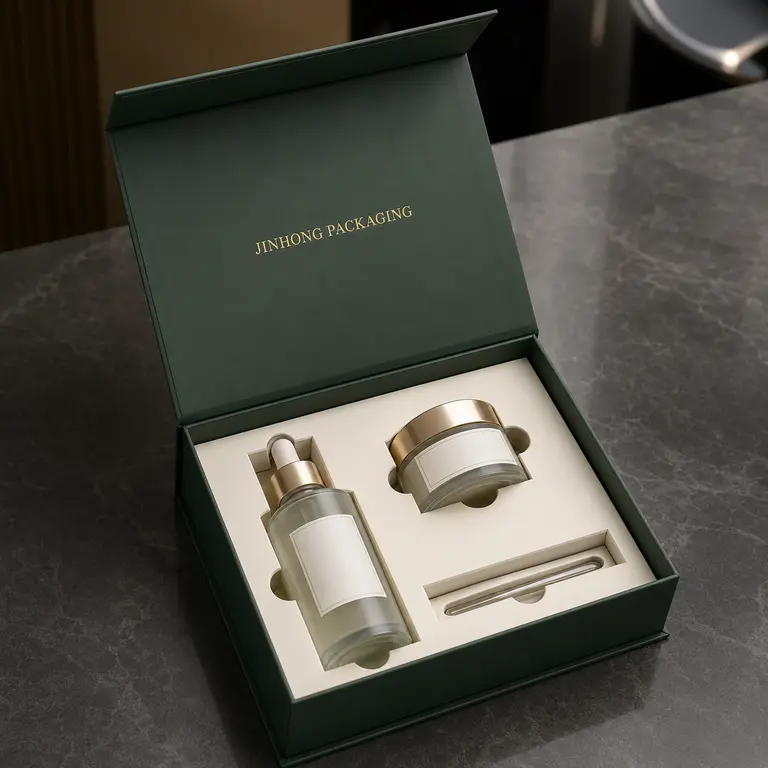
7. Design an Insert Around the Actual Product
The insert is one of the most important functional elements in a luxury gift box. It holds the product in position, improves presentation, and helps reduce movement during handling and transportation.
Common insert options include:
Paperboard Inserts
Folded paperboard inserts are suitable for many cosmetics, candles, small accessories, and gift sets. They can be printed to coordinate with the outer box and are often easier to flatten for shipping than thicker foam inserts.
The locking tabs, support points, and openings need to match the actual product dimensions. Bottles or jars with rounded shoulders may require additional support around the base or neck.
Molded Pulp Inserts
Molded pulp can provide a structured fit and a natural paper-based appearance. It may suit brands seeking to reduce plastic components, although surface texture, tooling requirements, color consistency, and minimum quantities should be reviewed.
EVA and Foam Inserts
EVA and other foam materials provide cushioning and can be cut to hold products securely. They are commonly used for jewelry, glass bottles, electronics, tools, and fragile gift items.
Foam density, thickness, color, surface treatment, and odor should be considered. If recyclability is a priority, brands should evaluate whether a mixed-material insert is consistent with their packaging goals.
Fabric-Covered Inserts
Foam or board inserts can be wrapped with velvet, satin, or other fabrics to create a softer presentation. This approach is often used for jewelry, commemorative products, and premium accessories.
Fabric-covered inserts may require more assembly and can complicate material separation after use, so appearance, budget, and environmental objectives should be balanced.
Product-Specific Compartments
Multi-product gift sets need enough space between items to prevent contact and preserve visual order. Finger notches, ribbon lifts, removable trays, and accessory compartments can make products easier to remove.
Insert development should begin with accurate product samples or confirmed technical dimensions. Designing from approximate measurements can lead to loose fittings, difficult removal, or pressure on fragile components.
For additional options such as ribbons, cards, labels, and tissue paper, see our packaging accessories guide.
8. Plan the Unboxing Sequence
Unboxing is not simply the moment when the lid opens. It is the sequence through which the customer discovers the brand and product.
A carefully planned sequence might include:
• An exterior box with restrained branding
• A smooth magnetic, drawer, or lift-off opening
• An interior message printed under the lid
• Tissue paper or a protective wrap
• A product arranged securely in a fitted insert
• A thank-you card, care guide, or product information card
• Accessories placed in a separate compartment
Each element should have a clear function. Adding tissue, ribbon, stickers, cards, and sleeves without a plan may increase assembly time and material use while making the package feel cluttered.
The opening process should also be intuitive. Customers should not need excessive force, sharp tools, or complicated instructions to reach the product.
For e-commerce projects, the presentation box may still require a separate shipping carton and protective material. A decorative gift box should not automatically be treated as a shipping box unless it has been designed and tested for that purpose.
9. Balance Decorative Details with Production Practicality
Luxury gift box design must be practical enough to produce consistently. Every added feature can affect tooling, setup, assembly, lead time, cost, and minimum order requirements.
Before approving a design, review:
• The number of box components
• Manual assembly requirements
• Printing and finishing setup
• Insert tooling
• Magnet, ribbon, or handle placement
• Paper and accessory availability
• Flat-packed or assembled shipping volume
• Packing method and outer-carton protection
• Expected order quantity
• Replacement or repeat-order requirements
A complex prototype may look impressive but become inefficient when produced at scale. For example, multiple ribbons, layered inserts, hand-applied labels, and separate printed sleeves can increase labor and create more points where appearance may vary.
A more restrained design often provides better consistency. One well-executed foil detail, a fitted paper insert, and an accurately wrapped rigid box may create a stronger result than several finishes competing for attention.
For a broader comparison of common decorative processes, read our guide to custom packaging printing methods.
10. Design for Protection, Storage, and Delivery
A luxury gift box must reach the customer in good condition. Surface scuffs, crushed corners, loose products, and damaged closures can weaken the presentation even when the original design is attractive.
Confirm the Correct Box Size
Oversized boxes use more material, require larger inserts, and increase shipping volume. Boxes that are too small can place pressure on the product or leave insufficient room for cushioning.
Measure the product at its widest, longest, and highest points, including caps, pumps, closures, and protruding components. For multi-product sets, confirm the intended arrangement before calculating the internal dimensions.
Our packaging box size guide explains the main measurements and allowances to consider.
Protect Exterior Surfaces
Matte laminations, dark papers, and specialty finishes can show fingerprints, scratches, glue marks, or rubbing more easily than expected. Protective tissue, sleeves, bags, dividers, or individual wrapping may be required during packing and transportation.
The protection method should be considered during quotation because it affects material use and packing labor.
Review Shipping Conditions
A rigid gift box may need to travel through several stages before reaching the customer:
• Production and assembly
• Product filling or kitting
• Warehouse storage
• Domestic or international freight
• Fulfilment
• Parcel delivery
The outer shipping carton, carton strength, internal arrangement, and moisture protection should reflect this journey. Large empty spaces inside master cartons can allow movement, while excessive stacking weight may damage box corners or lids.
Where necessary, packaging tests should be selected according to the product, distribution method, and risk level. Testing requirements should be agreed upon before mass production rather than assumed after the final design is approved.
How to Develop a Luxury Gift Box Design
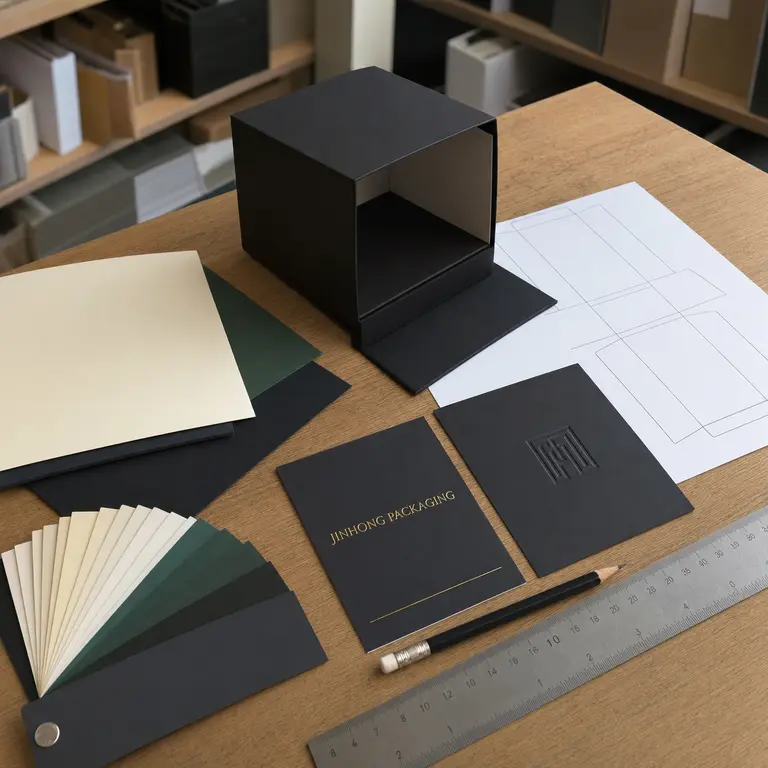
A structured development process helps reduce avoidable changes and allows the box structure, artwork, materials, and product fit to be reviewed separately.
Step 1: Define the Product Requirements
Provide accurate information about:
• Product dimensions and weight
• Number of items per box
• Product fragility
• Preferred product arrangement
• Sales and distribution channels
• Target order quantity
• Desired delivery schedule
• Packaging budget range
• Required printing and finishes
• Sustainability or certification preferences
Step 2: Select the Structure and Materials
Compare suitable box styles according to presentation, protection, assembly, freight volume, and cost. Confirm the proposed board, wrapping paper, insert material, and accessories.
If you are comparing different paperboard box styles, see our guide to rigid boxes vs. folding cartons.
Step 3: Prepare the Dieline and Artwork
Artwork should be created on the confirmed dieline. Important elements need to remain within safe areas, while folds, cut lines, glue areas, and finishing positions should be clearly marked.
Files should normally include:
• Vector logos and graphics
• Outlined or supplied fonts
• Linked high-resolution images
• Defined colors
• Separate layers for cutting, foil, embossing, spot UV, or white ink
• Clear instructions for interior and exterior printing
Step 4: Review a Physical Sample
A physical sample can reveal issues that are difficult to judge on screen, including:
• Box proportions
• Lid and base fit
• Magnetic closure strength
• Drawer movement
• Product fit
• Insert removal
• Paper texture
• Color appearance
• Foil coverage
• Logo position
• Opening experience
When final production materials or finishes are not used in an initial structural sample, the differences should be clearly identified.
Step 5: Approve the Final Specification
Before production, confirm the approved dimensions, structure, materials, printing, finishes, insert, accessories, packing method, quantity, and acceptance standards.
Changes made after material preparation or production begins can affect cost and timing. Keeping a written specification also makes repeat orders easier to coordinate.
Jinhong Packaging supports packaging sourcing, material and structure comparison, sample coordination, production follow-up, and shipment preparation through selected manufacturing partners. The final solution is developed according to the requirements of each project.
Common Luxury Gift Box Design Mistakes
Even attractive designs can cause problems when practical details are overlooked.
Using Too Many Finishes
Foil, embossing, spot UV, texture, ribbon, and metallic paper do not all need to appear on the same box. Choose the details that best support the brand and remove those that do not add a clear benefit.
Designing Before Confirming Product Dimensions
If the product dimensions change after the box and insert are designed, the structure may need to be revised. Final product samples or confirmed technical drawings should be available as early as possible.
Ignoring Assembly Time
Complex folding, ribbon tying, protective wrapping, and multi-layer inserts can increase packing time. Brands should confirm who will assemble and fill the boxes and what process is practical at the packing location.
Treating the Gift Box as a Shipping Carton
Most premium presentation boxes still require protective transit packaging. Parcel labels, tape, rain, abrasion, and impact can damage decorative surfaces.
Choosing Materials Only from Digital Images
Screen colors and online photographs cannot fully show texture, thickness, sheen, or tactile quality. Material samples and physical prototypes provide more reliable information.
Making Unsupported Environmental Claims
Terms such as “eco-friendly,” “green,” and “sustainable” are broad and can be misleading without clear evidence. Claims should describe the specific material, recycled content, certification, or disposal pathway and account for the complete packaging configuration.
Businesses selling into the United States can consult the Federal Trade Commission’s Green Guides when reviewing environmental marketing claims.
Frequently Asked Questions About Luxury Gift Box Design
What is a luxury gift box?
A luxury gift box is presentation packaging designed to create a refined brand and product experience. It commonly combines a rigid or carefully engineered structure with coordinated paper, printing, finishes, inserts, and accessories. The design should also protect the product and remain practical for packing and delivery.
Which box structure is best for luxury packaging?
There is no single best structure. Magnetic closure boxes provide a distinctive opening experience, lift-off lid boxes offer a classic presentation, drawer boxes create a gradual reveal, and collapsible rigid boxes may reduce storage and freight volume. The right choice depends on the product, presentation goal, quantity, budget, and distribution method.
What materials are used for luxury gift boxes?
Common materials include rigid paperboard wrapped with coated, uncoated, kraft, printed, or textured paper. Inserts may be made from folded paperboard, molded pulp, EVA, foam, fabric-covered board, or other product-specific materials.
Can luxury gift boxes use FSC-certified paper?
FSC-certified paper options may be available, depending on the material, production partner, order specification, and certification requirements. Brands should confirm the exact certified material and documentation needed before production.
What information is needed to request a quotation?
Useful information includes the box dimensions, product dimensions and weight, structure, quantity, material preferences, printing colors, finishes, insert requirements, accessories, destination, and desired schedule. Reference images can help explain the intended style, but the final specification should be based on measurable requirements.
Should I order a sample before production?
Yes. A physical sample helps evaluate structure, size, product fit, opening experience, materials, color, printing, and finishes. The type of sample required depends on whether the project needs only structural confirmation or a closer representation of the final production result.
How can I reduce the cost of a luxury gift box?
Cost can often be managed by simplifying the structure, reducing the number of finishing processes, using a paperboard insert instead of a more complex material, standardizing components, and selecting dimensions that reduce material waste and shipping volume. Cost decisions should not compromise essential product protection.
Are luxury gift boxes suitable for e-commerce?
Yes, but the presentation box usually needs additional transit protection. A suitable shipping carton, cushioning, surface protection, and packing arrangement can help prevent scuffs, crushed corners, and product movement during parcel delivery.
Final Thoughts
Successful luxury gift box design balances appearance, structure, product protection, and production practicality. The most effective packaging is not necessarily the most complicated. It uses carefully selected materials, controlled decorative details, accurate sizing, and a well-fitted insert to create a consistent brand experience.
Before starting production, confirm the product dimensions, distribution conditions, design priorities, quantity, budget, and expected opening sequence. A clear specification and physical sampling process can reduce revisions and help the final packaging perform as intended.
Planning a premium gift box for cosmetics, jewelry, candles, food, coffee, accessories, or a corporate collection? Jinhong Packaging can assist with packaging sourcing, structural and material comparison, sampling coordination, production follow-up, and delivery preparation through selected manufacturing partners.