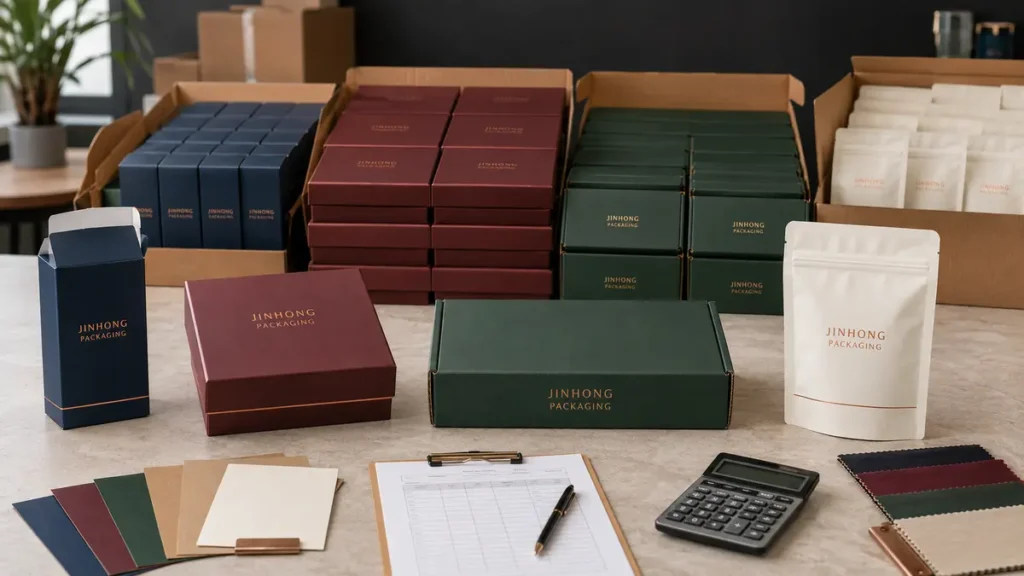
Custom packaging MOQ can affect unit price, inventory planning, artwork decisions and the range of packaging options available to a brand.
MOQ means minimum order quantity—the lowest production quantity available for a particular packaging specification. However, it is not one universal number. The applicable MOQ can change according to box style, material, dimensions, printing method, finish, number of designs and production process.
Understanding how MOQ is calculated helps brands compare quotations more accurately and avoid ordering more packaging than they can reasonably use.
1. What Does Custom Packaging MOQ Mean?
Custom packaging MOQ is the minimum quantity available for one defined packaging specification.
A specification may include:
• Box or pouch structure
• Dimensions
• Material
• Board or film thickness
• Printing method
• Artwork
• Surface finishing
• Insert design
• Packing requirements
MOQ may apply separately to each size, design or SKU.
For example, ordering 1,000 boxes divided across four different sizes does not always meet an MOQ of 1,000 units if each size requires separate tooling, setup or material preparation. The supplier may treat them as four individual production specifications.
Always ask whether the stated MOQ applies:
• Per order
• Per size
• Per design
• Per color
• Per SKU
• Per material structure
This distinction is important when comparing packaging quotations.
2. Why Does Custom Packaging Have an MOQ?
Custom packaging production includes fixed preparation costs that exist before the first usable unit is completed.
Depending on the packaging type, these costs may include:
• Structural development
• Dieline preparation
• Cutting dies
• Printing plates or cylinders
• Machine setup
• Color calibration
• Material preparation
• Foil or embossing dies
• Insert tooling
• Production waste
• Packing setup
When a production run is very small, these costs are divided across fewer units, which increases the unit price.
MOQ also helps align the order with available sheet sizes, roll widths, machine speeds, material purchasing requirements and production efficiency.
The main reason for an MOQ is therefore not simply supplier preference. It is often connected to how the selected packaging must be produced.
3. How Packaging Type Affects MOQ
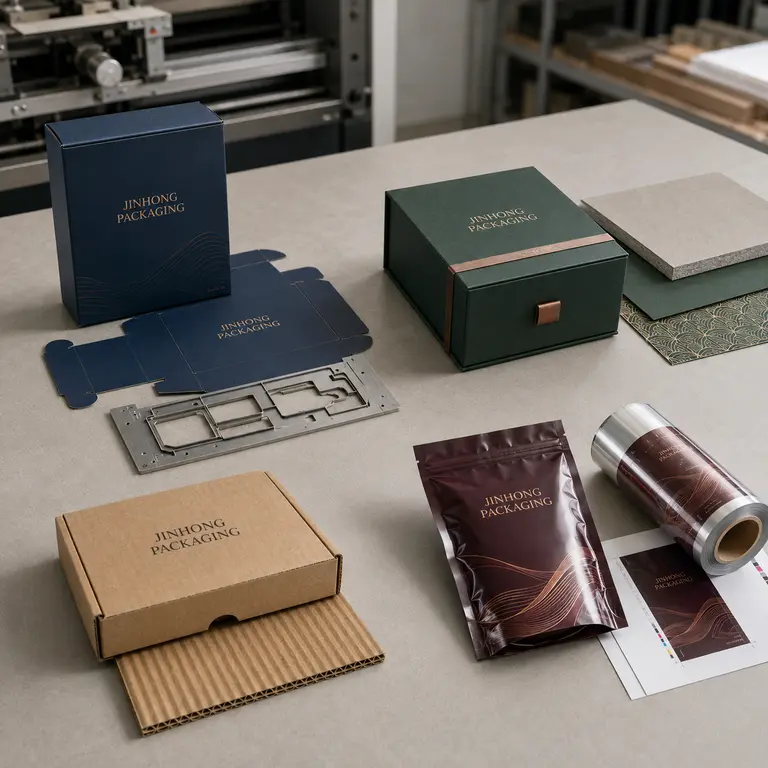
Different packaging structures use different materials and production processes, so they do not share one standard MOQ.
Folding Cartons
Folding cartons are printed, die-cut, creased and glued from paperboard.
MOQ may depend on sheet utilization, printing method, cutting die, box size and artwork. Digital printing can sometimes support smaller quantities, while offset printing may become more economical as volume increases.
Explore related structures through our Folding Carton Boxes page.
Rigid Boxes
Rigid boxes use thick greyboard wrapped with printed or specialty paper. Many styles require more wrapping, assembly and finishing steps than folding cartons.
MOQ can be affected by box structure, wrapping paper, insert design, magnetic components and manual assembly requirements.
Review available options through our Custom Rigid Boxes page.
Corrugated Mailer Boxes
Corrugated mailer box MOQ depends on board grade, flute type, printing method, dimensions and die-cutting requirements.
Simple one-color structures may have different quantity requirements from litho-laminated or highly finished e-commerce packaging.
Explore branded structures through our Custom Mailer Boxes page.
Flexible Packaging
Coffee bags, food pouches and printed rollstock may require printing plates or cylinders, laminated film structures and minimum material runs.
Digital printing may support shorter runs for selected projects, while flexographic or gravure printing is generally associated with larger production quantities.
Coffee brands can review different formats through our Coffee Packaging page.
4. How Printing and Finishing Affect MOQ
Printing method is one of the most important factors influencing custom packaging MOQ.
Digital Printing
Digital printing does not require conventional printing plates. It may be suitable for samples, short runs, seasonal packaging and projects with several artwork versions.
Availability still depends on material, box size, converting requirements and local equipment.
Offset Printing
Offset printing requires plates and machine setup. It is widely used for detailed paperboard packaging and can become more cost-effective at medium or higher quantities.
Flexographic and Gravure Printing
Flexographic and gravure processes are commonly used for labels, films and flexible packaging.
They require plates or engraved cylinders and are generally more practical for repeat or higher-volume production.
Decorative Finishes
Foil stamping, embossing, debossing, spot UV and specialty coatings may require additional dies, screens or setup.
These finishes do not automatically create the same MOQ for every project, but they can increase setup cost and affect the most economical production quantity.
When requesting a quotation, identify which finishes are essential and which are optional.
5. Samples Are Different From Production MOQ
A packaging sample does not normally represent a small production order.
Samples are created to evaluate specific aspects of the project, such as:
• Dimensions
• Box structure
• Material
• Product fit
• Insert design
• Printing
• Color
• Surface finishing
Common sample types include:
Digital Mockup
A digital rendering shows the intended appearance but cannot confirm material, strength or physical product fit.
Unprinted Structural Sample
A structural sample helps confirm dimensions, folding, assembly and product fit. It may use the proposed material or a similar sample material.
Digitally Printed Sample
A digitally printed sample can show artwork position and approximate color, but it may not exactly reproduce the final production printing process or finish.
Production-Process Sample
A sample made using production methods can provide a closer representation of the final packaging but may require tooling, plates, dies or higher setup cost.
Sample quantity and production MOQ should therefore be discussed separately.
Approving one sample does not mean that the same process can economically produce a very small commercial order.
6. How MOQ Affects Price and Inventory Risk
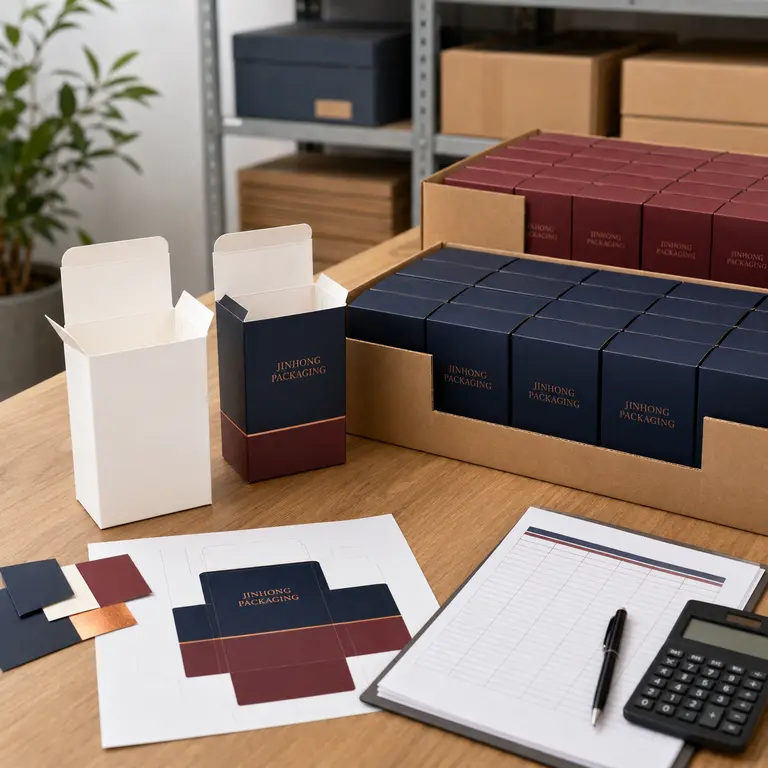
A higher order quantity often reduces the unit price because setup costs are distributed across more units.
However, the lowest unit price does not always create the best overall business decision.
Brands should consider:
• Total order value
• Storage space
• Number of SKUs
• Product sales rate
• Artwork change risk
• Regulatory updates
• Seasonal demand
• Packaging damage during storage
• Cash tied up in inventory
• Future rebranding plans
For example, ordering twice as many boxes may reduce the unit price but increase the total cash commitment and leave the brand with unused packaging if the product design changes.
A useful quotation comparison should include:
• MOQ
• Unit price at several quantities
• Tooling and setup charges
• Sample cost
• Packing method
• Master carton information
• Estimated storage volume
• Shipping cost
• Repeat-order requirements
The best quantity balances unit cost with realistic inventory use.
7. How to Manage MOQ for a Smaller Project
A lower-volume brand may not be able to remove every production minimum, but several decisions can make the project easier to manage.
Reduce the Number of Initial SKUs
Launching fewer sizes or designs can help each specification reach a workable production quantity.
Instead of dividing one order across many low-volume SKUs, prioritize the products most likely to sell.
Use One Box Size for Several Products
Products with similar dimensions may be able to share one outer box when inserts, sleeves or labels are adjusted.
This approach must be tested carefully so that each product remains secure and the final presentation still looks intentional.
Simplify the Structure
A standard folding carton or mailer structure may require less development than a highly complex custom construction.
Simplification can reduce tooling and assembly requirements, although it does not guarantee a specific MOQ.
Limit Optional Finishes
Using fewer foil colors, embossing areas or specialty components can reduce setup complexity.
Keep the finishes that matter most to the brand rather than applying every available decoration.
Consider Digital Printing
Digital printing may be suitable for selected short-run cartons, labels and flexible packaging projects.
Material compatibility, size limits, color requirements and finishing options should be confirmed before choosing this route.
Use Custom Labels or Sleeves
For some early-stage projects, a standard unprinted container combined with a custom label, sleeve or printed card may be more practical than fully customized packaging.
This is not suitable for every product, but it can reduce the number of fully printed components required at launch.
Plan Repeat Orders
If a design will be reordered regularly, discuss repeat production, material availability and tooling storage from the beginning.
A stable repeat program may offer more practical options than treating every order as a new one-time project.
Typical MOQ: Why There Is No Universal Number
There is no single typical MOQ that applies to all custom packaging.
Two boxes that look similar may have different MOQ requirements because they use different:
• Dimensions
• Materials
• Printing methods
• Finishes
• Inserts
• Assembly processes
• Production equipment
• Artwork quantities
MOQ can also change as raw material availability and production conditions change.
For this reason, a reliable answer requires a complete packaging specification rather than only a product category.
Avoid comparing MOQ figures unless the quotations cover the same size, material, structure, printing, finish and delivery terms.
Information Needed for an MOQ Quotation
To receive a more accurate custom packaging MOQ and quotation, provide:
• Packaging type
• Internal or external dimensions
• Product dimensions and weight
• Order quantity
• Number of sizes
• Number of artwork designs
• Material preference
• Printing colors
• Finishing requirements
• Insert requirements
• Sample requirements
• Packing method
• Shipping destination
• Target budget
If you are uncertain about the material or structure, explain the product, sales channel and target presentation instead of guessing technical specifications.
A packaging supplier can then compare suitable options with selected production partners.
Questions to Ask Before Accepting an MOQ
Before confirming an order, ask:
• Does the MOQ apply per size or per design?
• Are multiple artworks allowed within one production run?
• Are tooling and setup costs included?
• What type of sample is included?
• Will the sample use the final production process?
• How are finished units packed?
• How many units fit in each master carton?
• Can tooling be reused for repeat orders?
• Could material or color vary between production batches?
• What happens if the finished quantity varies slightly from the order quantity?
Clear answers make it easier to compare quotations and plan inventory.
Working With a Packaging Supplier
Jinhong Packaging supports brands with packaging sourcing, structural recommendations, material comparison, sampling and production coordination.
We work with selected manufacturing partners to evaluate available quantities according to the packaging structure, dimensions, artwork, materials and finishing requirements.
MOQ should be confirmed for each project rather than presented as one fixed number for every packaging category.
Conclusion
Custom packaging MOQ is influenced by much more than the number of boxes or bags a brand wants to purchase.
The most important points are:
• MOQ may apply separately to each size, design or SKU
• Different packaging types have different production requirements
• Printing and finishing affect setup cost
• Samples are different from commercial production runs
• A lower unit price may create higher inventory risk
• Simpler structures and fewer SKUs may help smaller projects
• Accurate specifications are required before MOQ can be confirmed
The right order quantity should balance production efficiency, unit cost, inventory use, storage and future sales plans.
Need Help Evaluating Packaging MOQ?
Share your packaging type, dimensions, quantity, artwork count, material preferences and shipping destination with Jinhong Packaging. We can help compare suitable structures, sampling options and available production quantities for your project.
DISCUSS YOUR PACKAGING PROJECT
Frequently Asked Questions
What does custom packaging MOQ mean?
Custom packaging MOQ is the minimum production quantity available for one defined packaging specification. It may apply separately to each size, design, material or SKU.
Why does custom packaging have an MOQ?
Custom packaging requires setup, tooling, material preparation and production processes. MOQ helps distribute these fixed requirements across a workable number of units.
Is there one standard MOQ for all packaging?
No. MOQ varies according to packaging type, dimensions, material, printing method, finishing, number of designs and production equipment.
Can several designs share one MOQ?
Sometimes, but not always. Multiple designs may require separate printing setup or material preparation. Confirm whether the MOQ applies per order, per size or per artwork.
Does digital printing have a lower MOQ?
Digital printing may support shorter runs because it does not use conventional printing plates. However, the actual minimum still depends on the material, dimensions and converting process.
Is a sample order the same as a small production order?
No. Samples are usually made to test structure, fit, artwork or finish. Their method and unit cost differ from commercial production.
Does a higher quantity always offer better value?
A higher quantity may reduce unit cost, but it also increases total spending, storage and obsolete-inventory risk. The best value depends on how quickly the packaging will be used.
What information is required to confirm MOQ?
Provide the packaging type, dimensions, quantity, number of designs, material, printing, finishing, inserts, sample requirements and shipping destination.