
Coffee Pouch Sample Review
This Coffee Pouch Sample Review examines how pouch dimensions, closure features, valve placement and composite material construction can support roasted coffee packaging.
The blank silver sample was supplied by one of our selected manufacturing partners for packaging evaluation. Jinhong Packaging reviewed the visible structure and functional details to identify the information that a coffee roaster or brand should confirm before requesting a quotation, approving a sample or proceeding with production.
This page presents a representative packaging sample rather than a completed client project. Final materials, barrier performance, dimensions, printing, valve specifications and food-contact documentation must be confirmed separately for each application and destination market.
This Coffee Pouch Sample Review examines how pouch dimensions, closure features, valve placement and composite material construction can support roasted coffee packaging.
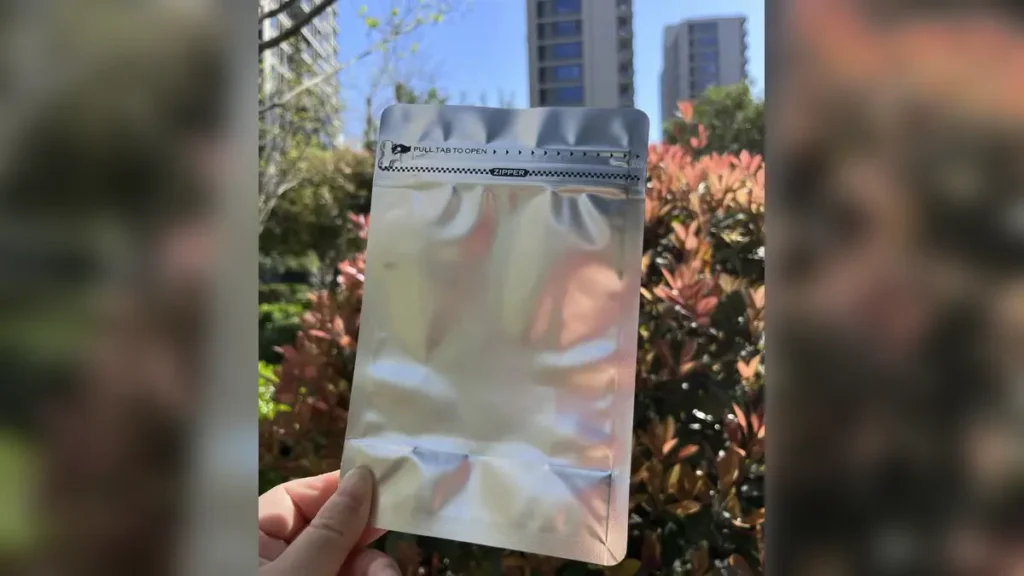
Sample Overview
The sample is a silver stand-up coffee pouch with a bottom gusset, resealable zipper, pull-tab opening and one-way degassing valve.
The confirmed sample information includes:
- Pouch dimensions: 13 × 20 + 7 cm
- Format: stand-up pouch with bottom gusset
- Construction: composite flexible packaging material
- Thickness: approximately 130 μm for each pouch wall, according to information supplied by the manufacturing partner
- Closure: resealable zipper
- Opening feature: pull-tab opening
- Coffee feature: one-way degassing valve
- Appearance: unprinted silver surface
- Intended application: professional roasted coffee packaging
The stated thickness applies to each individual pouch wall. The exact layer composition, measurement method and tolerance should still be included in the final specification confirmation.
Why This Pouch Format Is Used for Coffee
Roasted coffee requires packaging that can help manage exposure to oxygen, moisture, external odors and light. The appropriate level of protection depends on the coffee format, roast profile, expected shelf life, distribution environment and storage conditions.
A stand-up pouch offers several practical advantages:
- The bottom gusset allows the filled pouch to stand for shelf display.
- The resealable zipper supports repeated opening and closing after the package has been opened.
- The one-way valve provides a controlled route for gases released by freshly roasted coffee.
- The composite material structure can be specified according to the required barrier and sealing performance.
- The blank silver surface can be replaced with custom printing or other finishes after artwork and production specifications are confirmed.
No single pouch structure is suitable for every coffee product. Whole beans, ground coffee, retail shelf life and shipping conditions should all be reviewed before confirming the final material.
One-Way Degassing Valve
The visible valve is positioned on the front panel of the pouch. One-way degassing valves are commonly considered for freshly roasted coffee because coffee can continue releasing carbon dioxide after roasting.
The valve is intended to allow internal gas to escape while limiting the reverse entry of outside air. However, the presence of a valve alone does not establish its performance.
Before production, the following points should be confirmed:
- Valve type and supplier
- Valve position
- Installation method
- Opening pressure specification
- Compatibility with the pouch material
- Seal integrity around the valve
- Suitability for the intended coffee and filling process
Valve performance should be reviewed together with the material structure, sealing parameters and expected distribution conditions.
Resealable Zipper and Pull-Tab Opening
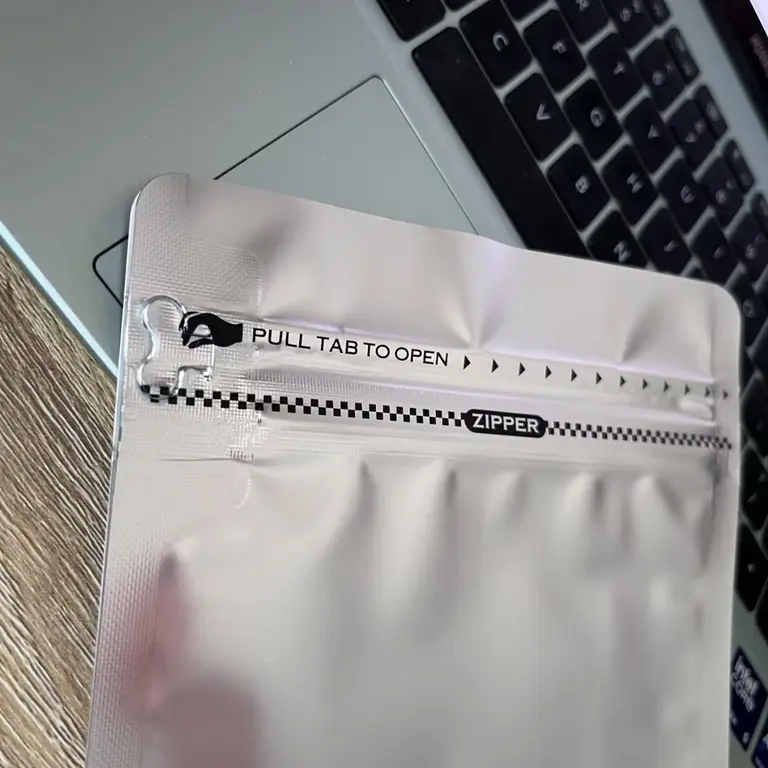
This sample combines a resealable zipper with a pull-tab opening feature.
The zipper allows the consumer to close the pouch again after opening. Its position should leave sufficient space above the zipper for the initial seal while maintaining practical access to the product.
The printed “PULL TAB TO OPEN” strip provides a clear opening direction. During sampling, the opening force, tear path and zipper alignment should be checked to confirm that the package opens as intended without damaging the functional seal area.
Important review points include:
- Zipper alignment across the pouch
- Distance between the top seal and zipper
- Pull-tab starting position
- Tear consistency
- Ease of opening
- Reclosure performance
- Seal continuity at both sides of the zipper
These features should be tested using the final pouch dimensions and intended filling volume rather than assessed only from an empty sample.
Composite Material and Thickness
The manufacturing partner described this sample as a composite material coffee pouch with an approximate thickness of 130 μm for each pouch wall.
The silver appearance does not, by itself, confirm whether the barrier layer is aluminum foil, metallized film or another structure. These materials should not be treated as interchangeable.
Before quotation or production, the exact material specification should identify:
- Individual material layers
- Thickness of each layer
- Total nominal thickness
- Sealing layer
- Barrier layer
- Printing layer
- Adhesive or lamination system, where relevant
- Applicable tolerance
- Required food-contact documentation
Barrier requirements should be matched to the coffee format, target shelf life and destination market. Claims such as recyclable, compostable or eco-friendly should only be used when they are supported by the final structure and appropriate evidence.
For a broader comparison of paper, films, foil and composite structures, see our packaging materials for food and coffee guide.
Size and Filling Confirmation
The sample dimensions are 13 × 20 + 7 cm. The “+7 cm” refers to the gusset measurement used for the pouch structure.
Dimensions alone should not be used to promise a fixed coffee capacity. Actual filling capacity can vary according to:
- Whole beans or ground coffee
- Bean density and roast profile
- Required headspace
- Filling method
- Valve and zipper position
- Desired final appearance
- Sealing allowance
A physical filling test is recommended before the final size is approved. Customers should provide the intended coffee weight and, where possible, a representative product sample for capacity evaluation.
Visible Sample Review Points
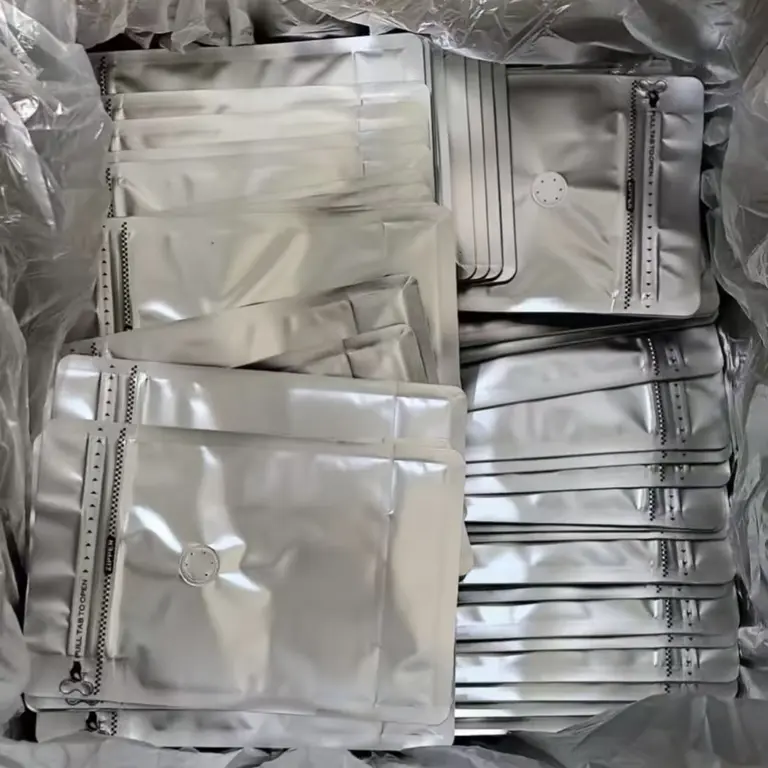
The supplied photographs allow several visible features to be reviewed:
Pouch Shape and Gusset
The pouch has a rectangular front panel and a folded bottom gusset. The gusset should open evenly during filling and support a stable standing shape after the pouch is filled.
Valve Position
The valve is positioned below the zipper area. Its final position should be coordinated with the artwork, fill level and sealing requirements.
Top Opening Area
The pull-tab feature and zipper are visibly aligned across the upper portion of the pouch. The available top-seal area should be confirmed against the intended filling and sealing equipment.
Edge Seals
The side and bottom seal areas should be checked for consistent width, appearance and continuity. Final inspection criteria should be agreed before production.
Surface Condition
Because this is an unprinted silver sample, it is suitable for initial structural and functional review. Printing appearance, color, registration and finishing must be evaluated separately on an artwork proof or printed sample.
Information to Confirm Before Quotation
To prepare an accurate coffee pouch quotation, the following information should be provided:
- Coffee format: whole beans or ground coffee
- Intended fill weight
- Required pouch dimensions
- Preferred pouch format
- Material or barrier requirements
- Target shelf life
- Valve requirement
- Zipper and opening features
- Printing artwork and number of colors
- Surface finish
- Order quantity
- Destination country
- Required food-contact or material documentation
- Preferred delivery schedule
If the final material structure has not yet been selected, the product, shelf-life and distribution requirements should be reviewed before a recommendation is requested.
How Jinhong Packaging Supports the Project
Jinhong Packaging works with selected manufacturing partners to support packaging sourcing and project coordination.
Depending on the project, our support may include:
- Requirement collection
- Pouch format and size confirmation
- Material specification coordination
- Sample coordination
- Valve and zipper requirement confirmation
- Artwork and printing information follow-up
- Production schedule follow-up
- Inspection requirement coordination
- Documentation coordination
- Delivery preparation
Final production specifications should be confirmed in writing before an order proceeds. Samples should be evaluated against the intended product and filling conditions whenever practical.
Representative Sample Notice
This coffee pouch sample is presented to illustrate packaging structure, functional features and specification-confirmation considerations. It is not presented as a confidential client order or as evidence of in-house manufacturing by Jinhong Packaging.
Exact materials, performance, compliance, printing, MOQ, lead time and commercial terms depend on the confirmed project specification and selected manufacturing partner.
Discuss Your Coffee Packaging Project
Selecting a coffee pouch involves more than choosing a size and appearance. Product format, barrier requirements, valve performance, filling conditions, printing and destination-market requirements should be reviewed together.