Las tendencias en envases de cosméticos están cada vez más determinadas por preocupaciones prácticas: uso de materiales, compatibilidad de productos, rendimiento de recarga, espacio de etiquetado, distribución de comercio electrónico y opciones de fin de vida útil. El diseño visual sigue siendo importante, pero un envase atractivo también debe proteger la fórmula, dispensarla correctamente y satisfacer las necesidades del mercado de destino.
No todas las tendencias son apropiadas para todos los productos de belleza. Una botella liviana puede reducir el uso de material pero brindar menos protección. Un sistema de recarga puede parecer eficiente en cuanto a recursos, pero solo ofrece beneficios cuando los clientes realmente reutilizan el contenedor principal. Una caja decorativa multimaterial puede crear una apariencia premium y al mismo tiempo dificultar la separación de materiales.
Esta guía explora las tendencias en envases de cosméticos que las marcas de belleza y cuidado personal deberían evaluar antes de desarrollar su próxima gama de envases.
¿Qué está impulsando las tendencias en envases cosméticos?
Las decisiones sobre envases de belleza están influenciadas por varios factores:
. Demanda de un uso de materiales reducido y mejor documentado
. Crecimiento del comercio electrónico y la distribución directa al consumidor
. Interés por los sistemas recargables y reutilizables
. Necesidad de información clara sobre productos e ingredientes.
. Mayor atención a la accesibilidad y la facilidad de uso.
. Diferenciación de marca en mercados minoristas abarrotados
. Embalaje y normativa medioambiental.
. Costo, cantidad mínima de pedido y eficiencia de producción.
La tendencia más útil no es necesariamente la más distintiva visualmente. Es la dirección que se adapta a la fórmula, al cliente, al canal de ventas y al sistema completo de envasado.
Diez tendencias en envases cosméticos para evaluar
1. Embalaje ligero y del tamaño adecuado
El aligeramiento tiene como objetivo reducir el material de embalaje innecesario y al mismo tiempo mantener la protección del producto y el rendimiento de dosificación.
Esto puede implicar:
. Reducir el espesor de la pared de la botella o frasco cuando sea técnicamente adecuado
. Seleccionar un cuadro exterior más pequeño
. Eliminar capas innecesarias
. Reducir tapas o bases sobredimensionadas
. Optimización de encartes y cajas de envío
. Utilizar un formato de producto concentrado
El material reductor no debe comprometer la integridad del sello, el rendimiento de la barrera o la resistencia a los daños durante el transporte. Los componentes livianos requieren pruebas con la fórmula y el proceso de llenado reales.
El tamaño adecuado también es importante en el comercio electrónico. Un artículo cosmético pequeño empaquetado dentro de una caja de presentación de gran tamaño puede requerir más relleno protector y una caja de envío más grande, lo que reduce el beneficio de un paquete primario liviano.
2. Sistemas recargables y reutilizables
Los envases recargables siguen siendo una dirección importante para las marcas de cuidado de la piel, fragancias, maquillaje y cuidado personal.
Los sistemas comunes incluyen:
. Tarros de crema recargables
. Cartuchos de lápiz labial reemplazables
. Botellas de recarga de fragancias
. Bolsas utilizadas para rellenar dispensadores rígidos.
. Recargas de productos concentrados
. Contenedores de presentación reutilizables
Un concepto de recarga debe evaluarse como un sistema completo. Considerar:
. ¿Cuántas veces se espera reutilizar el contenedor principal?
. Material utilizado en la recarga.
. Riesgos de higiene y contaminación del producto.
. Facilidad de limpieza, cuando sea necesario
. Fugas durante el almacenamiento y envío
. Si los componentes de repuesto son fáciles de obtener
. Instrucciones claras para los clientes.
Un paquete recargable no produce automáticamente un menor impacto ambiental. Su rendimiento depende de la elección de materiales, el comportamiento del cliente, el transporte y el número de ciclos de reutilización reales.
3. Componentes monomateriales y fácilmente separables
Las marcas examinan cada vez más si los componentes del embalaje pueden utilizar un material principal o separarse más fácilmente después de su uso.
Los ejemplos pueden incluir:
. Frascos y tapones de familias de polímeros compatibles.
. Bombas o cierres extraíbles.
. Cajas de papel sin ventanas de plástico.
. Insertos que se pueden separar de la caja exterior.
. Etiquetas y adhesivos seleccionados para el flujo de reciclaje previsto
Los envases de cosméticos suelen ser difíciles de simplificar porque las bombas, espejos, aplicadores, imanes y acabados decorativos pueden combinar varios materiales.
El diseño monomaterial no debe tratarse como una solución universal. Aún se deben considerar la compatibilidad del producto, los requisitos de barrera y la infraestructura de reciclaje local.
4. Contenido reciclado y abastecimiento de material documentado
El contenido reciclado posconsumo, comúnmente llamado PCR, se utiliza en determinadas aplicaciones de embalaje de plástico, vidrio, aluminio y papel.
Antes de seleccionar contenido reciclado, las marcas deben discutir:
. Porcentaje disponible
. Variación de color y apariencia.
. Requisitos de olor y limpieza.
. Rendimiento mecánico
. Compatibilidad de fórmulas
. Consistencia del suministro
. Documentación
. Requisitos del mercado de destino
El contenido reciclado puede cambiar el color o la consistencia de la superficie de un componente. Esto no es necesariamente un defecto, pero debe evaluarse durante el muestreo.
Para las cajas de papel, el abastecimiento verificado de fibra también puede ser relevante. La certificación FSC se refiere al abastecimiento de materiales forestales y a la cadena de custodia; No significa automáticamente que el paquete completo sea reciclable o que tenga un impacto menor en cada aplicación.
5. Diseño minimalista con mayor reconocimiento de marca
El minimalismo sigue siendo visible en los envases de belleza, pero no tiene por qué significar cajas beige lisas y tipografía negra idéntica.
Un enfoque más útil combina una jerarquía de información clara con elementos de marca reconocibles:
. Un sistema de color controlado
. Tipografía distintiva
. Colocación consistente del logotipo
. Contraste adecuado
. Borrar jerarquía de nombres de productos
. Acabado limitado pero intencionado.
. Espacio para información requerida
El embalaje mínimo debería ser fácil de identificar en un estante o en la imagen de un producto en línea.
Las marcas también deben evitar reducir el tamaño del texto simplemente para preservar un diseño ordenado. La información obligatoria debe permanecer legible.
6. Los acabados táctiles se utilizan de forma más selectiva
El estampado de láminas, el estampado en relieve, el grabado en relieve, los papeles texturizados, los rayos UV puntuales y los recubrimientos especiales pueden proporcionar una sensación de primera calidad. La dirección actual suele ser hacia un uso selectivo en lugar de aplicar varios acabados a cada superficie.
Un solo detalle de lámina bien colocado o un logotipo en relieve puede crear más impacto que combinar múltiples procesos decorativos.
Para un ejemplo práctico, vea nuestro físico. muestra de caja de regalo cosmética revisión que cubre los detalles de la lámina reflectante, la estructura de la caja de presentación y las aberturas de insertos personalizados.
Las decisiones finales afectan:
. Costo unitario
. Costos de instalación
. Cantidad mínima de pedido
. Consistencia del color
. Resistencia al desgaste
. Separación de materiales
. plazo de entrega
. Reclamaciones de reciclabilidad
nuestra guía para Métodos de impresión de envases personalizados explica en qué se diferencian los procesos comunes de impresión y acabado.
7. Embalaje accesible y fácil de usar
La accesibilidad se está convirtiendo en una parte cada vez más importante del diseño de envases. Un paquete debe considerarse desde la perspectiva de clientes con fuerza de agarre limitada, visión reducida o dificultad para leer textos pequeños.
Las consideraciones prácticas incluyen:
. Gorras más fáciles de agarrar
. Instrucciones de apertura claras
. Fuerte contraste entre texto y fondo.
. Tamaños de letra legibles
. Indicadores táctiles
. Dispensación controlada
. Embalaje que no requiere fuerza excesiva
. Códigos QR que complementan, en lugar de reemplazar, información esencial
La accesibilidad debe equilibrarse con la seguridad del producto, la evidencia de manipulación y los requisitos de seguridad para niños, cuando corresponda.
Las pruebas deben involucrar a usuarios reales siempre que sea posible en lugar de depender únicamente de una maqueta visual.
8. Información digital y embalaje conectado
Los códigos QR y otras funciones digitales pueden conectar un paquete físico a:
. Información de ingredientes
. Instrucciones de uso
. Sistemas de verificación de autenticidad
. Tutoriales
. Información específica del lote
. Atención al cliente
. Guía de reciclaje
. Contenido multilingüe
Un código QR estándar por sí solo no prueba la autenticidad. Los sistemas de autenticación genuinos requieren datos controlados, identificadores únicos y una infraestructura de verificación adecuada.
La información digital no debe sustituir la información contenida en el envase exigida legalmente a menos que el mercado de destino lo permita específicamente. El código debe permanecer escaneable después de la impresión, el acabado y la manipulación normal.
9. Envases cosméticos listos para el comercio electrónico
Los productos de belleza que se venden en línea enfrentan riesgos diferentes a los de los productos que se exhiben únicamente en tiendas minoristas.
Es posible que los envases de comercio electrónico deban resistir:
. clasificación de paquetes
. Vibración
. Gotas e impacto
. Cambios de temperatura
. Fuga
. Movimiento de producto
. Rayado de superficie
Una caja plegable de primera calidad puede verse excelente en la tienda, pero aun así requiere un sobre protector, un encarte o una caja de envío para la distribución en el comercio electrónico.
Las marcas deberían probar el sistema completo:
. Contenedor primario
. Cierre
. Caja del producto
. Inserto estructural
. Material protector
. Caja de envío
Explora nuestro Insertos de embalaje para opciones de presentación y posicionamiento de productos.
10. Embalaje modular en todas las gamas de productos
Las marcas de belleza suelen gestionar varios productos, tonos, tamaños y colecciones de temporada. El embalaje modular puede ayudar a crear coherencia y al mismo tiempo reducir el número de estructuras completamente diferentes.
Un sistema modular puede utilizar:
. Una estructura de caja en varios tamaños.
. Dimensiones de inserción compartidas
. Botellas estándar con diferente decoración.
. Etiquetas o fundas codificadas por colores
. Componentes intercambiables del set de regalo
. Cuadrículas de ilustraciones consistentes
Este enfoque puede simplificar el abastecimiento y la gestión del material gráfico, pero no debería obligar a los productos a empaquetarse en paquetes inadecuados. Cada fórmula y componente aún requiere una revisión de compatibilidad y rendimiento.
La compatibilidad del embalaje es más importante que la apariencia

Las formulaciones cosméticas pueden interactuar con los materiales de embalaje. Los aceites, el alcohol, las fragancias, los principios activos y los cambios de temperatura pueden afectar:
. Componentes de plástico
. Recubrimientos
. Etiquetas y adhesivos
. Bombas y juntas
. Impresión
. Integridad del sello
. Color u olor del producto.
Las pruebas de compatibilidad deben utilizar la fórmula real y el paquete previsto. No se debe aprobar una botella, frasco o bolsa visualmente adecuada basándose únicamente en una muestra vacía.
Los requisitos de prueba dependen del producto y del mercado, pero pueden incluir:
. Compatibilidad de fórmulas
. Fuga
. Rendimiento de la bomba o pulverización
. Integridad del sello
. Prueba de caída
. Exposición a la temperatura
. Adhesión de etiquetas
. Simulación de tránsito
Las cajas exteriores y los accesorios también deben ajustarse al contenedor primario lleno y no sólo a las dimensiones nominales del proveedor.
Materiales de embalaje de cosméticos y compensaciones
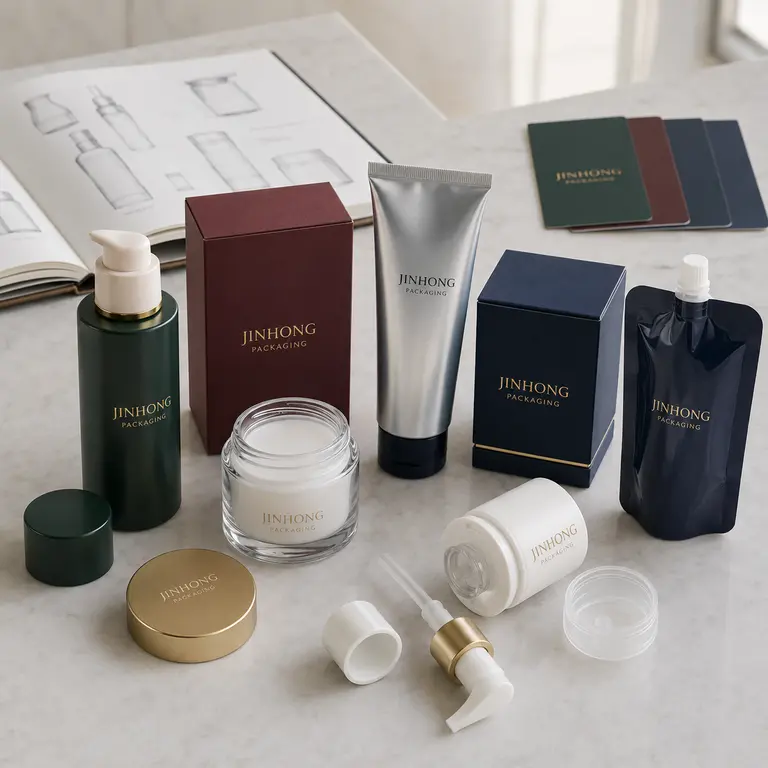
Vidrio
El vidrio puede proporcionar peso, claridad y una sensación de primera calidad. Sin embargo, es más pesado que muchos formatos de plástico y requiere protección contra roturas durante la distribución.
Plástico
El plástico ofrece una amplia gama de formas, cierres y opciones de dispensación. El tipo de resina, el contenido reciclado, la decoración y la compatibilidad de los componentes afectan el rendimiento y las opciones de fin de vida útil.
Aluminio
El aluminio puede crear una apariencia premium y puede respaldar ciertos objetivos de reciclaje. Aún es necesario revisar los revestimientos, las bombas, los cierres de materiales mixtos y la compatibilidad del producto.
Cartón y cartón rígido
Las cajas de papel proporcionan superficies imprimibles, protección y presentación. Los revestimientos, laminaciones, láminas, ventanas, imanes e inserciones estructurales pueden influir en la separación y el reciclaje de materiales.
Para estructuras de caja comunes, explore nuestra Cajas de cosméticos personalizadas.
Bolsas flexibles
Las bolsas pueden reducir el peso del embalaje y admitir aplicaciones de recarga. La estructura del material debe seleccionarse para los requisitos de fórmula, barrera, sellado y dispensación. Muchas estructuras multicapa son difíciles de reciclar mediante sistemas convencionales.
Ningún material es siempre el más sostenible o adecuado. Se debe evaluar el paquete completo y su uso previsto.
Consideraciones regulatorias y de etiquetado
Los envases de cosméticos deben proporcionar suficiente espacio utilizable para la información requerida del producto. Los requisitos varían según el mercado de destino y la categoría de producto.
Para los cosméticos vendidos en los Estados Unidos, la FDA proporciona una resumen de los requisitos de etiquetado de cosméticos. La información requerida puede incluir la identidad del producto, la cantidad neta, declaraciones de ingredientes, información comercial y advertencias aplicables.
No se debe asumir que los códigos QR y las inserciones removibles reemplazan el etiquetado requerido.
Para los productos comercializados en el mercado de la Unión Europea, los requisitos de embalaje también están cambiando. El Reglamento de la UE sobre envases y residuos de envases entró en vigor en febrero de 2025 y se aplica en general a partir del 12 de agosto de 2026. Las empresas deben revisar la información actual de la Comisión Europea sobre reglas de residuos de envases y obtener asesoramiento sobre cumplimiento específico del mercado cuando sea necesario.
Jinhong Packaging puede apoyar la evaluación de materiales y estructuras, el abastecimiento, la coordinación de muestras y el seguimiento de la producción. Las decisiones regulatorias finales y las declaraciones sobre el producto siguen siendo responsabilidad de la marca o del operador responsable en el mercado.
Las afirmaciones ambientales requieren evidencia
Términos como “ecológico”, “verde”, “reciclable”, “biodegradable” y “compostable” no deben usarse como descripciones generales sin información de respaldo.
Antes de realizar un reclamo, confirme:
. Composición completa del material
. Porcentaje de contenido reciclado
. Alcance de la certificación
. Disponibilidad de recogida local
. Si los componentes deben separarse
. Pruebas o documentación
. Orientación sobre el mercado de destino
. Si el reclamo se aplica al paquete completo o a una parte
Los envases con apariencia de papel aún pueden contener películas de plástico, láminas, revestimientos, imanes o adhesivos.
Para Estados Unidos, el Guías ecológicas de la FTC Ofrecer orientación destinada a ayudar a los especialistas en marketing a evitar afirmaciones medioambientales engañosas.
Cómo elegir qué tendencias se adaptan a su marca
No intentes aplicar todas las tendencias en un solo paquete. Comience con el producto y los requisitos comerciales.
Preparar:
. Tipo de producto y fórmula.
. Llenar volumen
. Dimensiones del contenedor
. Método de cierre o dispensación.
. Mercado objetivo
. Espacio de etiquetado requerido
. Canal minorista o de comercio electrónico
. Cantidad de pedido esperada
. Materiales preferidos
. Decoración y acabados
. Objetivos de sostenibilidad
. Presupuesto y calendario de lanzamiento
Luego separe los requisitos en tres grupos:
Básico
Estos incluyen compatibilidad, protección del producto, dispensación, información requerida y desempeño de distribución.
Privilegiado
Estos pueden incluir colores, acabados, opciones de recarga o preferencias de materiales específicos.
Opcional
Estos incluyen elementos decorativos que pueden eliminarse si generan costos, plazos de entrega o complejidad de materiales excesivos.
Este proceso ayuda a evitar que la apariencia tenga prioridad sobre el rendimiento del producto.
Cómo Jinhong Packaging apoya los proyectos de envasado de cosméticos
Jinhong Packaging es un proveedor de embalaje y socio para la coordinación de proyectos. Trabajamos con socios de fabricación seleccionados para respaldar:
. Abastecimiento de envases
. Coordinación de caja, botella, tarro y accesorios.
. Discusiones sobre materiales y estructuras.
. Coordinación de muestras
. Seguimiento del material gráfico y del archivo de producción.
. Coordinación del avance de la producción.
. Consolidación de embalajes cuando sea adecuado
. Soporte de envío mundial
Las especificaciones, las cantidades mínimas y los plazos de entrega dependen del producto seleccionado y del proceso de fabricación.
Explora nuestro Soluciones de embalaje cosmético para obtener una descripción general del proceso del proyecto.
Conclusión
Las tendencias de envasado de cosméticos más útiles se centran en mejores decisiones sobre materiales, rendimiento de recarga, diseño accesible, protección del comercio electrónico, información clara y compatibilidad con la fórmula.
La identidad visual sigue siendo importante, pero un envase cosmético exitoso también debe funcionar durante el llenado, el almacenamiento, el transporte y el uso por parte del cliente.
Las marcas deben evaluar cada tendencia frente a los requisitos del producto, las regulaciones del mercado, el costo total y la evidencia disponible antes de aprobar una especificación de empaque.
Para analizar las estructuras de embalaje, los materiales, la impresión y el muestreo de sus productos de belleza, Solicite un presupuesto de embalaje cosmético personalizado..
Preguntas frecuentes sobre las tendencias en envases cosméticos
¿Cuáles son las principales tendencias en packaging cosmético?
Las direcciones actuales incluyen envases livianos, sistemas de recarga, estructuras de materiales más simples, contenido reciclado documentado, diseño accesible, protección del comercio electrónico, información digital y acabados premium selectivos.
¿Los envases de cosmética recargables son siempre más sostenibles?
No. Su rendimiento depende de los materiales utilizados, el diseño de recarga, el transporte y cuántas veces los clientes realmente reutilizan el contenedor principal.
¿Qué material es mejor para los envases de cosméticos?
No existe un único mejor material. La elección correcta depende de la compatibilidad de la fórmula, la dosificación, la protección, la decoración, los requisitos del mercado y las opciones de final de vida.
¿Puede un código QR reemplazar la información de las etiquetas de los cosméticos?
No automáticamente. La información requerida debe permanecer en el paquete o en la etiqueta que lo acompaña, cuando corresponda. Los requisitos dependen del mercado de destino.
¿Deberían someterse a pruebas de compatibilidad los envases de cosméticos?
Sí. La fórmula real debe probarse con el recipiente, cierre, bomba, etiqueta y otros componentes relevantes previstos antes de la aprobación de la producción.
¿Cómo puede una marca de belleza reducir los envases innecesarios?
Comience por dimensionar correctamente el paquete, eliminando componentes sin una función clara, simplificando las combinaciones de materiales y probando si las estructuras más ligeras aún brindan una protección adecuada.