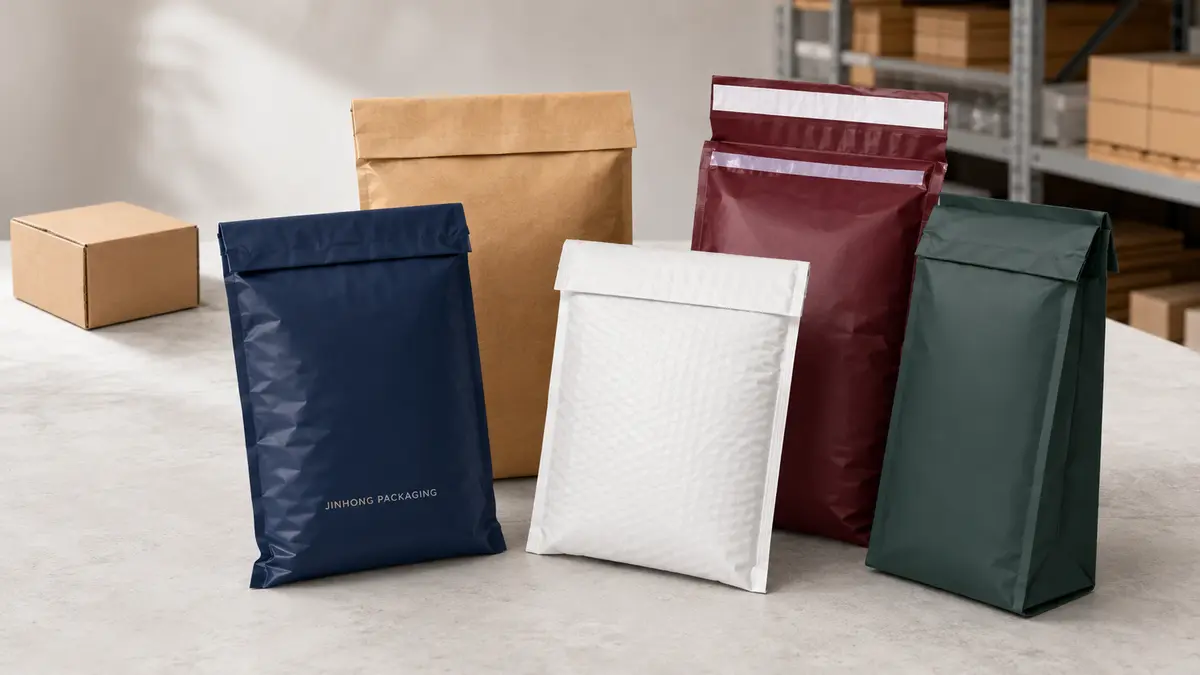
Las bolsas de envío personalizadas son paquetes de envío flexibles que se utilizan para ropa, textiles, accesorios y otros productos que no requieren la resistencia a la compresión de una caja de cartón corrugado. Pueden reducir el peso del embalaje, utilizar menos espacio de almacenamiento y proporcionar una superficie imprimible para la marca del comercio electrónico.
Sin embargo, las bolsas de envío no son adecuadas para todos los envíos. Proporcionan una amortiguación limitada y poca resistencia al aplastamiento. Las esquinas afiladas, los recipientes de vidrio, los líquidos y los productos frágiles pueden requerir una caja de envío, un inserto protector o un embalaje exterior adicional.
Esta guía explica los beneficios prácticos, las opciones de materiales y las limitaciones de las bolsas de envío personalizadas, junto con la información que las empresas deben preparar antes de solicitar muestras o cotizaciones.
¿Qué son las bolsas de envío personalizadas?
Las bolsas de envío personalizadas son sobres flexibles diseñados para la entrega de paquetes. Generalmente incluyen una tira adhesiva sensible a la presión y también pueden incluir una tira de desgarro, una tira de retorno, un refuerzo lateral o un acolchado interno.
Los tipos comunes incluyen:
- Sobres de polietileno
- bolsas de envío coextruidas
- Sobres de papel
- Sobres de papel acolchados
- Sobres publicitarios de burbujas
- Sobres retornables con doble sello
- bolsas de envío con fuelle
- Bolsas de seguridad o con evidencia de manipulación
Las bolsas de envío se diferencian de las bolsas flexibles para venta minorista. Una bolsa de venta minorista está diseñada para contener y presentar el producto, mientras que una bolsa de envío sirve como paquete de envío exterior.
8 beneficios prácticos de las bolsas de envío personalizadas
1. Menor peso del embalaje
Un sobre flexible generalmente pesa menos que una caja de cartón corrugado de tamaño comparable. Esto puede reducir el peso del envío empaquetado para productos adecuados.
La diferencia real del costo de envío depende de:
- Precios del operador
- Reglas de peso dimensional
- Dimensiones del envío
- Peso del producto
- Destino
- Tarifas de manipulación adicionales
- Si se requiere protección secundaria
Una bolsa de envío ligera no garantiza un costo de flete más bajo en todas las situaciones. Las empresas deben comparar las dimensiones completas del paquete y las reglas del transportista.
2. Almacenamiento eficiente
Las bolsas de envío sin llenar generalmente se almacenan planas y requieren menos espacio de almacén que las cajas ensambladas o empaquetadas en plano.
Esto puede ayudar a las empresas de comercio electrónico a:
- Almacene más unidades de embalaje en un área pequeña
- Reabastezca las estaciones de embalaje más fácilmente
- Reducir el manejo interno
- Simplifique el cumplimiento de volúmenes bajos
- Mantenga varios tamaños disponibles
Las condiciones de almacenamiento siguen siendo importantes. Las tiras adhesivas, las superficies del papel y la impresión pueden verse afectadas por el calor excesivo, la humedad, el polvo o los períodos de almacenamiento prolongados.
3. Embalaje más rápido para productos adecuados
Las bolsas de envío pueden ser más rápidas de empaquetar porque no requieren ensamblaje de caja ni cinta de embalaje en muchas aplicaciones.
Un proceso típico implica:
- Colocar el producto en el interior.
- Quitar el revestimiento protector
- Plegar y presionar la solapa adhesiva
- Aplicar la etiqueta de envío
La velocidad de embalaje depende del tamaño de la bolsa, el diseño de la solapa, la forma del producto y si se agrega papel de seda, tarjetas o protección interna.
Un sobre retornable con una segunda tira adhesiva también puede facilitar las devoluciones de los clientes.
4. Marca personalizada
La superficie exterior puede mostrar:
- Logotipos
- Colores de la marca
- Patrones
- Información de manipulación
- códigos QR
- Instrucciones de devolución
- Información de redes sociales
La impresión no debe interferir con la etiqueta de envío, el código de barras o el escaneo del transportista.
El diseño también debe tener en cuenta los pliegues, las costuras, los refuerzos y la solapa adhesiva. El texto importante debe permanecer alejado de los bordes del sello y las áreas de alto desgaste.
Nuestra guía sobre Métodos de impresión de embalajes personalizados explica los principales procesos de impresión utilizados en los proyectos de embalaje.
5. Alguna resistencia a la humedad y al polvo
Las bolsas de envío de plástico pueden proporcionar una resistencia útil a la humedad ligera, la suciedad y el polvo durante el manejo normal.
No deberían describirse automáticamente como impermeables. El rendimiento puede verse afectado por:
- Cierre de solapa
- Sellos laterales e inferiores
- Pequeños pinchazos
- desgarros
- Exposición prolongada
- Aberturas alrededor del producto
- Daños durante la clasificación
Los sobres de papel generalmente requieren diferentes consideraciones de humedad. Los recubrimientos pueden mejorar la resistencia, pero pueden afectar la separación o el reciclaje de materiales.
6. Dimensionamiento flexible
Las bolsas de envío personalizadas se pueden producir en diferentes anchos, largos, tamaños de solapa y profundidades de fuelle.
El tamaño correcto ayuda a:
- Reducir el material suelto
- Limitar el movimiento
- Mejorar la posición del sello
- Mantenga las etiquetas de envío planas
- Reducir los enganchones durante el manejo
- Evite el volumen dimensional innecesario
Una bolsa demasiado pequeña puede ejercer presión sobre las costuras o la solapa. Una bolsa demasiado grande puede doblarse, engancharse en el equipo o requerir cinta adicional.
7. Opciones para envío de devolución
Las bolsas de envío con doble sello incluyen dos tiras adhesivas:
- La primera tira cierra el envío original.
- La segunda tira permite al cliente volver a sellar la bolsa para una devolución.
Se puede colocar una tira rasgable entre ellos para una apertura controlada.
El embalaje retornable es útil sólo cuando la estructura permanece intacta después de la primera entrega. Se deben probar el espesor del material, la posición de la tira de corte y las instrucciones de apertura.
8. Compatibilidad con accesorios de embalaje
Las bolsas de envío se pueden combinar con:
- papel de seda
- Pegatinas
- tarjetas de agradecimiento
- Tarjetas de instrucciones
- Bolsas de ropa
- Pequeñas envolturas protectoras
- Documentos de devolución
Los accesorios deben tener un propósito claro. Demasiados componentes decorativos pueden ralentizar el embalaje y aumentar el uso de material.
Explore nuestros Accesorios de embalaje para etiquetas, tarjetas, papel tisú y otros componentes de soporte.
Materiales comunes para bolsas de envío personalizadas
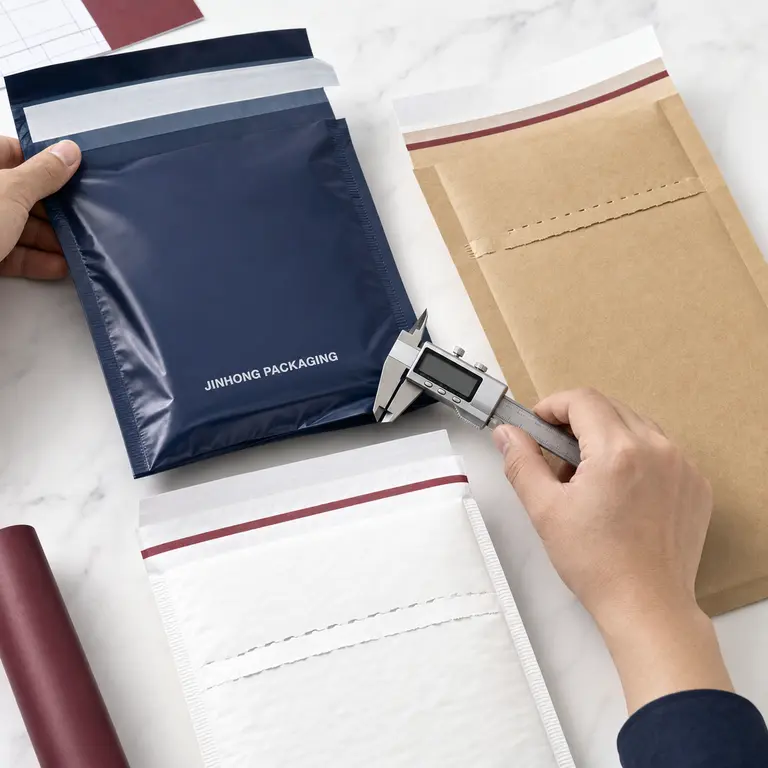
Bolsas de envío de polietileno
PE se usa ampliamente para bolsas de envío ligeras de comercio electrónico. Dependiendo de la estructura, puede proporcionar flexibilidad, resistencia al desgarro y resistencia a la humedad.
Las construcciones comunes incluyen:
- PE de una sola capa
- PE coextruido
- PE con contenido reciclado
- Capas exteriores opacas e interiores oscuras.
- Estructuras monomaterial de PE
Las afirmaciones sobre la composición del material, el contenido reciclado y la reciclabilidad deben estar respaldadas por la documentación adecuada.
bolsas de envío coextruidas
La coextrusión combina múltiples capas de polímero durante la producción de películas. Las capas pueden proporcionar diferentes colores, opacidad, sellabilidad o resistencia.
Una bolsa de envío común puede tener:
- Una capa exterior imprimible
- Una capa interna opaca u oscura.
- Una estructura termosellable
- Una solapa adhesiva sensible a la presión
No todas las estructuras coextruidas son aceptadas por todos los sistemas de reciclaje, incluso si la familia principal de polímeros es la misma.
Sobres en papel
Los sobres de papel ofrecen una apariencia diferente y pueden proporcionar rigidez para productos livianos.
Podrán utilizar:
- papel kraft
- Papel blanco
- papel reforzado
- Refuerzos
- Tiras de papel
- Cierres adhesivos
Los sobres de papel no son adecuados para todas las condiciones climáticas o formas de productos. Los revestimientos, refuerzos, adhesivos y películas internas pueden afectar la repulpabilidad y el reciclaje.
Sobres De Papel Acolchados
Los sobres de papel acolchados pueden utilizar papel gofrado, múltiples capas de papel o acolchado de fibra. Proporcionan más protección de la superficie que un sobre de papel sin acolchado.
Aún ofrecen menos protección contra aplastamientos que una caja de cartón corrugado y deben probarse con el producto real.
Sobres Burbuja
Los sobres de burbujas combinan una capa exterior de papel o plástico con un acolchado interno de burbujas.
Pueden proteger artículos pequeños de impactos leves y abrasión, pero la estructura de materiales mixtos puede ser difícil de separar o reciclar.
Sobres compostables
Los sobres compostables requieren información sobre el material y la certificación relevante para el mercado de destino.
Las empresas deben confirmar:
- Condiciones de compostaje industrial o doméstico.
- Alcance de la certificación
- Vida de almacenamiento
- Sensibilidad al calor y la humedad.
- Rendimiento del sello
- Sistemas de recolección locales
- Instrucciones de eliminación
“Compostable” no debe utilizarse como sinónimo general de reciclable, biodegradable o inofensivo para el medio ambiente.
Productos adecuados para bolsas de envío
Las bolsas de envío se consideran comúnmente para:
- Ropa
- Textiles suaves
- Accesorios de tela
- Artículos de moda no frágiles
- juguetes blandos
- ropa de cama
- Productos flexibles preenvasados
- Materiales impresos con soporte adecuado.
- Productos de suscripción no frágiles
El producto debe poder tolerar:
- Presión ejercida por otros paquetes
- Gotas
- Doblar
- Contacto superficial
- Clasificación automatizada
- Cambios de temperatura y humedad.
Los productos blandos preenvasados suelen ser candidatos más fuertes que los artículos sueltos, afilados o frágiles.
Productos que pueden necesitar una caja de envío
Una caja de cartón corrugado u otro paquete protector puede ser más adecuado para:
- Botellas o frascos de vidrio
- Envases cosméticos rígidos
- Electrónica frágil
- Productos con esquinas afiladas
- Productos coleccionables
- Líquidos con riesgo de fuga
- Juegos de regalo premium
- Productos que se pueden triturar.
- Artículos pesados
- Productos que requieren inserciones estructurales.
A veces se puede utilizar un sobre de plástico alrededor de la caja de un producto para proteger contra la intemperie o la privacidad, pero no debe reemplazar la protección estructural o la amortiguación requerida.
Para conocer estructuras de mayor protección, consulte nuestras cajas de envío personalizadas.
bolsas de envío personalizadas versus cajas de envío
| Factores | Bolsas De Envío | Cajas de Envío |
|---|---|---|
| Estructura | Flexibles | Cartón ondulado rígido o semirrígido |
| Peso | Generalmente inferior | Generalmente mayor |
| Almacenamiento | Almacenado plano en espacios pequeños | Requiere más espacio de almacenamiento |
| Protección contra aplastamiento | Limitado | Mejor |
| Resistencia a la humedad | Depende del material y las juntas | Generalmente necesita revestimiento o una capa exterior |
| Impresión | Impresión en película o papel flexible | Impresión directa o liner impreso |
| Velocidad de embalaje | A menudo más rápido | Requiere plegado y cierre |
| Más adecuado para | Productos blandos y resistentes | Productos frágiles, rígidos o centrados en la presentación |
La elección final debe basarse en el riesgo del producto y las pruebas de distribución, no solo en el precio unitario.
Selección de Tamaño, Grosor y Cierre
Tamaño de la bolsa
Mida el producto envasado en lugar de solo el producto vacío.
Incluye:
- Ancho del producto
- Longitud del producto
- Grosor del producto
- Prendas dobladas o envoltorios internos
- Documentos o tarjetas
- Holgura necesaria
- Posición de la aleta y del sello
El producto debe entrar en la bolsa sin estirar las costuras laterales.
Espesor de la película
El espesor requerido depende de:
- Peso del producto
- Bordes afilados
- Condiciones de distribución
- Dimensiones de la bolsa
- Formulación de película
- Contenido reciclado
- Requisitos de perforación y desgarro
El espesor por sí solo no determina el rendimiento. Dos películas del mismo espesor pueden tener diferente resistencia debido a la mezcla de resina, la orientación y la calidad de fabricación.
Cierre Adhesivo
El adhesivo debe permanecer seguro durante el almacenamiento y la entrega.
Considere:
- Limpieza de superficies
- Presión de aplicación
- Temperatura
- Humedad
- Duración del almacenamiento
- Tamaño de la solapa
- Eliminación del revestimiento protector
- Requisitos de la tira de retorno
Tira rasgable
Una tira rasgable puede crear una experiencia de apertura más controlada. Debe colocarse de manera que al abrir la bolsa no se dañe el adhesivo de devolución ni el producto.
Opciones de impresión
Las bolsas de envío personalizadas pueden utilizar:
- Impresión flexográfica
- impresión en huecograbado
- Impresión digital
- Conversión de películas preimpresas
El método adecuado depende de:
- Cantidad de pedido
- Número de colores
- Cobertura del diseño gráfico
- Consistencia del color
- plazo de entrega
- tipo de material
- Requisitos para repetir pedidos
La impresión digital puede admitir tiradas más pequeñas o diseños múltiples, mientras que la impresión flexográfica o de huecograbado puede ser más adecuada para cantidades mayores. La disponibilidad varía según el material y el socio de fabricación.
Prueba de bolsas de envío personalizadas
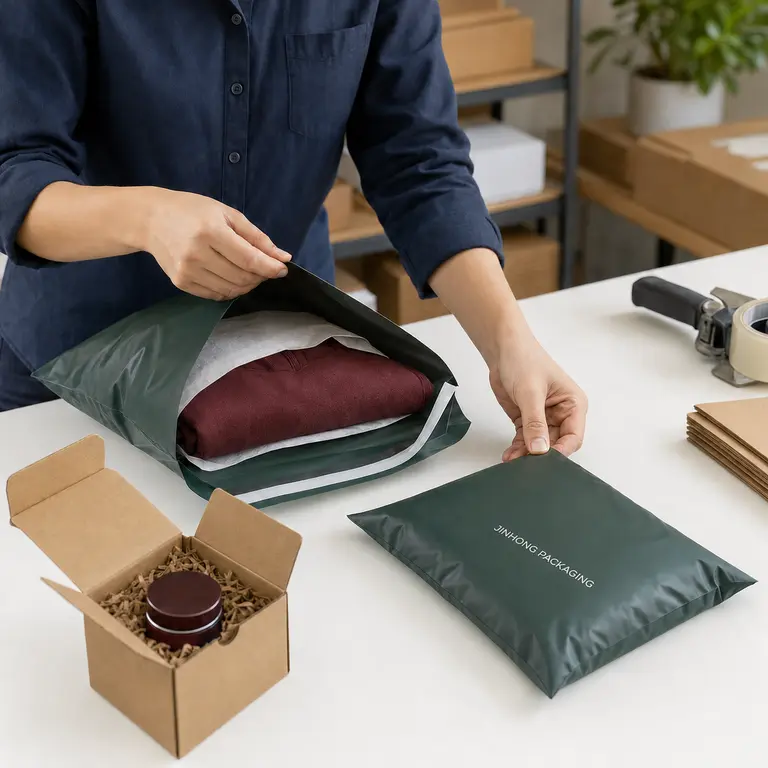
Las muestras deben probarse con el producto real.
Las comprobaciones útiles incluyen:
- Ajuste del producto
- Fuerza de la costura
- Adhesión de solapas
- Resistencia a la punción
- Resistencia al desgarro
- Opacidad
- Resistencia de la impresión al rayado
- Escaneo de códigos de barras
- Exposición a la humedad
- Rendimiento ante caídas y manipulación
- Función de tira de retorno
Las pruebas deben simular el proceso de cumplimiento completo, incluido el embalaje, el etiquetado, el manejo del transportista y la apertura del cliente.
Los requisitos del transportista también pueden afectar si una bolsa flexible se acepta como paquete estándar o si recibe un manejo adicional.
Reclamaciones Ambientales
El desempeño ambiental no se puede determinar a partir de una característica como la apariencia del papel, el contenido reciclado o el peso reducido.
Antes de realizar reclamos, verificar:
- Composición completa del material
- Porcentaje de contenido reciclado
- Certificación
- Acceso local al reciclaje o al compostaje.
- Tintas, adhesivos y etiquetas.
- Si los componentes necesitan separación
- Orientación sobre el mercado de destino
- Si la declaración se aplica a toda la bolsa de envío
En Estados Unidos, las Guías Verdes de la FTC proporcionan orientación destinada a ayudar a los especialistas en marketing a evitar afirmaciones medioambientales engañosas.
Reducir el tamaño innecesario y seleccionar una estructura que evite daños al producto puede ser más significativo que agregar un lenguaje amplio "ecológico".
Información necesaria para una cotización de bolsa de envío personalizada
Preparar:
- tipo de producto
- Dimensiones empaquetadas
- Peso del producto
- Ancho y largo requeridos de la bolsa
- Requisitos de refuerzo
- Material preferido
- Grosor de la película o papel
- Requisitos de la tira adhesiva
- Tira de desgarro o tira de retorno
- Colores de impresión y cobertura.
- Cantidad de pedido estimada
- Mercado de destino
- Archivos del diseño gráfico
- Proceso de embalaje y envío
Si el material o el tamaño son inciertos, proporcione las dimensiones del producto y describa el proceso de cumplimiento antes de finalizar la especificación.
Cómo Jinhong Packaging apoya los proyectos de bolsas de envío
Jinhong Packaging es un proveedor de envases y socio de coordinación de proyectos. Trabajamos con socios de fabricación seleccionados para respaldar:
- Discusiones sobre materiales y estructuras.
- Coordinación del tamaño de la bolsa de envío
- Selección del método de impresión
- Coordinación de muestras
- Seguimiento de los archivos gráficos y de producción.
- Seguimiento de la producción.
- Abastecimiento de accesorios de embalaje
- Coordinación de envíos internacionales
Las cantidades mínimas, las opciones de impresión y los plazos de entrega dependen del material seleccionado, las dimensiones y el proceso de producción.
Explore nuestros Soluciones de embalaje para comercio electrónico para obtener una descripción general más amplia de las opciones de embalaje de envío.
Conclusión
Las bolsas de envío personalizadas pueden proporcionar un menor peso de embalaje, un almacenamiento eficiente, un embalaje más rápido y una superficie de envío de marca para productos de comercio electrónico blandos y resistentes.
Proporcionan protección limitada contra aplastamientos e impactos y no deben describirse automáticamente como impermeables o adecuados para productos frágiles. El material, tamaño, espesor, sellos e impresión deben seleccionarse de acuerdo con el producto real y el proceso de distribución.
Cuando un producto necesita una protección más fuerte, una caja de cartón corrugado puede ser la opción más confiable.
Para analizar materiales, dimensiones, impresiones y muestras para sus envíos de comercio electrónico, solicite una cotización de bolsa de envío personalizada.
Preguntas frecuentes sobre bolsas de envío personalizadas
¿Qué productos son adecuados para bolsas de envío personalizadas?
Se utilizan comúnmente para prendas de vestir, textiles y otros productos blandos y resistentes que no requieren una fuerte protección contra aplastamientos.
¿Las bolsas de envío personalizadas son resistentes al agua?
No deberían describirse automáticamente como impermeables. Los sobres de plástico pueden proporcionar resistencia a la humedad, pero las costuras, los cierres, las perforaciones y la exposición prolongada afectan el rendimiento.
¿Son mejores las bolsas de envío que las cajas?
Ninguno de los dos es universalmente mejor. Las bolsas de envío son adecuadas para productos livianos y no frágiles, mientras que las cajas brindan una mejor protección contra aplastamientos e impactos.
¿Las bolsas de envío personalizadas pueden incluir una tira de devolución?
Sí. Algunas estructuras incluyen una segunda tira adhesiva y una tira rasgable para las devoluciones de los clientes. La función completa debe probarse antes de la producción.
¿Las bolsas de envío pueden ser reciclables?
Algunas estructuras pueden ser reciclables cuando existen sistemas de recolección adecuados. Se debe considerar la composición del material, las etiquetas, los adhesivos y la infraestructura local.
¿Qué afecta el MOQ de las bolsas de envío personalizadas?
La cantidad mínima de pedido depende del material, el tamaño, el grosor, el método de impresión, la cobertura del diseño gráfico y el proceso de fabricación.
Obtenga más información sobre las cantidades de los pedidos en nuestro MOQ de embalaje personalizado.