Los envases flexibles se utilizan en los mercados de alimentos, café, cuidado de mascotas, cuidado personal, productos nutricionales y para el hogar. Su popularidad proviene de algo más que la apariencia: un empaque flexible bien diseñado puede reducir el peso del material, proteger el producto, simplificar el almacenamiento y brindar características convenientes para los consumidores.
Sin embargo, no todas las estructuras de película, estilos de bolsa o cierres funcionan para todos los productos. Antes de seleccionar un material, se deben considerar los requisitos de barrera, las condiciones de llenado, los riesgos de distribución, los requisitos reglamentarios y las opciones de fin de vida útil.
Esta guía explica los principales beneficios del embalaje flexible, los formatos comunes, las limitaciones importantes y los factores prácticos que las empresas deben evaluar antes de iniciar un proyecto de embalaje.
¿Qué son los envases flexibles?
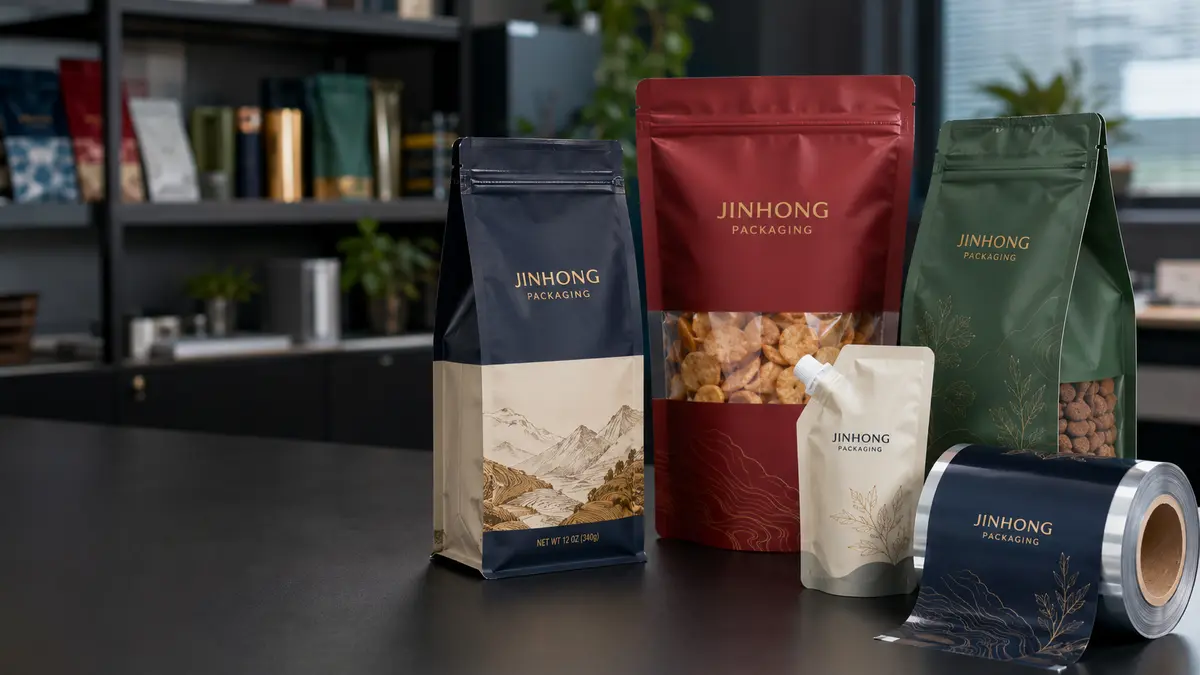
Los envases flexibles se refieren a envases fabricados con materiales que pueden doblarse o cambiar de forma cuando se llenan o se manipulan. Los ejemplos comunes incluyen bolsas verticales, bolsas de fondo plano, bolsas con fuelle lateral, bolsas con sello de tres lados, bolsitas y películas en rollo.
Un paquete flexible puede utilizar un solo material o varias capas combinadas para proporcionar propiedades específicas. Dependiendo del producto, estas capas pueden soportar:
. Protección contra la humedad
. Protección de oxígeno
. Protección de la luz
. Retención de aroma
. Resistencia a la punción
. Sellado térmico
. Rendimiento de impresión
La estructura correcta depende de qué se envasa, cómo se llena, cuánto tiempo debe permanecer estable y dónde se venderá.
Diez ventajas de los envases flexibles para las empresas
1. Menor peso del envase
Las bolsas flexibles generalmente utilizan menos material en peso que los contenedores rígidos que cumplen una función similar. Un peso de embalaje más bajo puede reducir el peso total de los envíos terminados y hacer que las cajas sean más fáciles de manipular.
Los ahorros reales dependen de la estructura de la bolsa, el peso del producto, el embalaje secundario y el método de transporte. Las empresas deberían comparar sistemas empaquetados completos en lugar de evaluar únicamente el paquete vacío.
2. Almacenamiento y transporte eficientes
Las bolsas y el material en rollo sin llenar suelen ocupar menos espacio en el almacén que los contenedores rígidos preformados. Es posible que quepan más unidades de embalaje en cada caja o palé de envío, lo que ayuda a simplificar el almacenamiento y el transporte de entrada.
Esta ventaja puede ser especialmente valiosa para las empresas que compran embalajes a nivel internacional o tienen una capacidad de almacén limitada.
3. Protección de barrera específica del producto
Uno de los beneficios más importantes del embalaje flexible es la capacidad de seleccionar una estructura de material según la sensibilidad del producto.
Por ejemplo:
. El café tostado puede requerir protección contra el oxígeno y la humedad.
. Los snacks secos pueden necesitar resistencia a la humedad e integridad del sello.
. La comida para mascotas puede requerir resistencia a la grasa y a las perforaciones.
. Los polvos pueden necesitar un sellado de partículas finas
. Los productos sensibles a la luz pueden requerir una barrera opaca o metalizada.
Una estructura de alta barrera no es automáticamente la mejor opción para cada aplicación. Las capas innecesarias pueden aumentar el costo y dificultar el reciclaje. Las especificaciones de la barrera deben basarse en el producto real y la vida útil esperada.
4. Múltiples formatos de embalaje
Los envases flexibles se pueden convertir en muchos formatos para diferentes productos, procesos de llenado y entornos minoristas.
Las opciones comunes incluyen:
. Bolsas de pie
. Bolsas de fondo plano
. Bolsas con fuelle lateral
. Bolsas con cierre de tres lados
. Bolsas con cierre cuádruple
. Bolsitas y paquetes de muestra
. Bolsas con pico
. Rollstock para líneas de embalaje automatizadas
Las marcas deben seleccionar el formato según el peso del relleno, la presentación en el estante, el método de sellado, los cierres requeridos y el equipo de embalaje disponible.
Para ver ejemplos de estructuras utilizadas para granos tostados y café molido, explore nuestra Bolsas de café opciones.
5. Funciones convenientes para el consumidor
Los paquetes flexibles pueden incluir componentes funcionales que faciliten la apertura, el almacenamiento y la dispensación del producto.
Las opciones pueden incluir:
. Cremalleras resellables
. Muescas de lágrima
. Válvulas desgasificadoras unidireccionales
. Agujeros para colgar
. Asas de transporte
. Caños y tapas
. Puntuación láser
. Ventanas transparentes
Cada característica afecta el costo, la compatibilidad del material y los requisitos de producción. Por ejemplo, una cremallera puede mejorar la comodidad de los productos que se consumen en varias ocasiones, mientras que una válvula unidireccional cumple una función de frescura específica en los envases de café.
6. Amplia superficie para impresión y marca
El embalaje flexible ofrece una gran superficie imprimible para gráficos de marca, información de producto, instrucciones de preparación, códigos QR y texto reglamentario.
La impresión por huecograbado, flexografía y digital puede admitir diferentes volúmenes de pedidos y requisitos de diseño. El mejor método depende de la cantidad, la complejidad del arte, la consistencia del color, el tiempo de entrega y el presupuesto.
nuestra guía para Métodos de impresión de envases personalizados explica en qué se diferencian las principales opciones de impresión.
7. Tamaños personalizados para diferentes productos
El ancho, la altura, la profundidad del refuerzo y el área de sellado de la bolsa se pueden ajustar para adaptarse a diferentes pesos de relleno y formas de productos. El tamaño personalizado puede reducir el espacio vacío innecesario y mejorar la presentación en los estantes.
La selección del tamaño debe representar más que el volumen del producto. También debe considerar:
. Densidad del producto
. Requisitos de espacio de cabeza
. Tolerancia de llenado
. Posición de cremallera y sello
. Expansión de refuerzo
. Orientación de la pantalla
. Dimensiones del cartón secundario
Probar muestras llenas es más confiable que seleccionar el tamaño de la bolsa únicamente a partir de un dibujo plano.
8. Compatibilidad con diferentes canales de venta
Los envases flexibles pueden respaldar los estantes de las tiendas minoristas, los envíos de comercio electrónico, los productos de suscripción, las muestras y las aplicaciones de servicios de alimentos.
Una bolsa de venta minorista puede priorizar la estabilidad en el estante y el impacto visual, mientras que un paquete de comercio electrónico puede necesitar una mayor resistencia a las perforaciones y una protección secundaria adecuada. Los sobres pequeños pueden facilitar el muestreo, mientras que las bolsas resellables más grandes pueden ser adecuadas para productos de uso repetido.
Por lo tanto, el paquete debe evaluarse como parte del sistema de distribución completo y no como un componente aislado.
9. Potencial de ahorro de material y costes
Los envases flexibles pueden proporcionar un equilibrio práctico entre protección, presentación y uso del material. En aplicaciones adecuadas, puede reducir el peso del embalaje, los requisitos de almacenamiento y el volumen de transporte.
Sin embargo, el precio unitario más bajo no siempre produce el costo total más bajo. Las empresas también deberían considerar:
. Costos de configuración de impresión
. Cantidades mínimas de pedido
. Eficiencia de llenado
. Pérdida de producto causada por falla del sello
. Requisitos de embalaje secundario
. Transporte y almacenamiento
. Declaraciones de reciclabilidad y requisitos de etiquetado
Una estructura ligeramente más cara puede ofrecer un mejor valor general si reduce los daños o mejora la eficiencia del embalaje.
10. Opciones para diseños más eficientes en el uso de recursos
Algunos proyectos pueden avanzar hacia estructuras más delgadas, formatos monomateriales o peso de embalaje reducido. Estos cambios pueden mejorar la eficiencia de los materiales, pero las afirmaciones medioambientales deben hacerse con cuidado.
No todos los envases flexibles son reciclables. Los laminados multimaterial pueden resultar difíciles de procesar porque sus capas no se separan fácilmente. Incluso una bolsa monomaterial técnicamente reciclable puede no ser aceptada por todos los sistemas de recogida locales.
Por este motivo, las empresas deben confirmar:
. La composición de la estructura completa.
. Si las barreras, tintas, adhesivos y cierres afectan la reciclabilidad
. Infraestructura de recogida y reciclaje disponible en el mercado de ventas.
. Requisitos locales de etiquetado y declaración ambiental
. Si el uso reducido de material afecta la protección o la vida útil
"Reciclable", "compostable" y "biodegradable" no son términos intercambiables y no deben usarse sin especificaciones de respaldo.
Materiales habituales para envases flexibles
La selección del material comienza con el producto y su desempeño requerido.
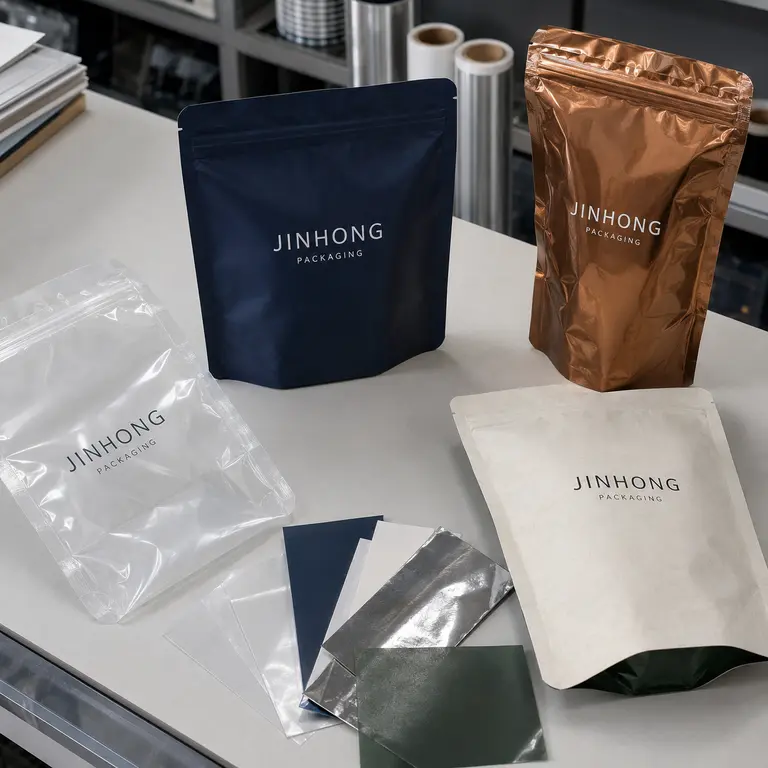
Polietileno
El polietileno se utiliza comúnmente para capas selladoras y estructuras de envases flexibles. Ciertos diseños monomateriales basados en PE pueden respaldar los objetivos de reciclaje cuando existan sistemas de recolección adecuados.
polipropileno
El polipropileno puede proporcionar claridad, rigidez, resistencia a la humedad y resistencia al calor. Se utiliza en películas y en algunos desarrollos de bolsas monomateriales.
Película de PET
La película PET proporciona resistencia, estabilidad dimensional y una superficie de impresión adecuada. A menudo se combina con otras capas, aunque las combinaciones de varias capas pueden complicar el reciclaje.
Película metalizada y papel de aluminio.
Las películas y láminas metalizadas pueden proporcionar una protección mejorada contra la luz, el oxígeno y la humedad. Generalmente se consideran para productos con requisitos de barrera exigentes, pero pueden limitar las opciones de transparencia y reciclaje.
Estructuras basadas en papel
El papel puede proporcionar una apariencia superficial natural y respaldar ciertos objetivos de marca. Sin embargo, es posible que el papel por sí solo no proporcione la capacidad de sellado, la resistencia a la grasa o el rendimiento de barrera necesarios para muchos productos.
Un paquete con apariencia de papel aún puede contener películas, revestimientos o láminas de plástico. Por lo tanto, sus características ambientales deben evaluarse desde la estructura completa y no desde su apariencia externa.
Aplicaciones de embalaje flexible
Los envases flexibles se utilizan en varias de las principales categorías de productos de Jinhong Packaging.
Café y Alimentos Secos
Las bolsas de café, las bolsas de refrigerios, los envases de alimentos secos y las bolsas de productos en polvo pueden requerir protección contra la humedad, el oxígeno o el aroma. Las cremalleras y las muescas pueden mejorar la comodidad, mientras que las aplicaciones de café también pueden utilizar válvulas unidireccionales.
Vea nuestro Bolsas de envasado de alimentos personalizadas y Envasado de bocadillos para opciones de formato comunes.
Alimentos y golosinas para mascotas
Los productos para mascotas pueden requerir resistencia a la grasa, sellos fuertes y estructuras resistentes a perforaciones. Las bolsas de gran formato también necesitan una resistencia adecuada para su transporte y manipulación.
Productos de cuidado personal y del hogar
Se pueden utilizar bolsas de recambio, bolsitas y formatos con pico para líquidos, polvos y productos de cuidado personal adecuados. Es posible que se requieran pruebas de migración y compatibilidad del producto antes de confirmar el material.
Muestras y porciones de un solo uso
Los sobres pequeños pueden admitir muestras de productos, tamaños de viaje y porciones medidas. El llenado preciso, la integridad del sello y las instrucciones claras son especialmente importantes cuando el paquete tiene un espacio imprimible limitado.
Limitaciones importantes del embalaje flexible
El embalaje flexible ofrece muchas ventajas, pero no es la mejor opción para todos los productos.
Las posibles limitaciones incluyen:
. Menor rigidez que botellas, tarros o cajas.
. Riesgo de pinchazo por productos punzantes o irregulares.
. Reciclabilidad limitada para algunas estructuras multicapa.
. Necesidad de equipos de sellado y llenado compatibles
. Posibles costos de instalación más altos para ciertos métodos de impresión
. Menos protección física durante la entrega de paquetes sin embalaje secundario
. Requisitos de prueba de materiales para líquidos, aceites o productos químicamente activos
Es posible que aún se necesiten cajas exteriores de primera calidad cuando la presentación, la resistencia al apilamiento o la protección del envío sean importantes. Las empresas pueden combinar bolsas con adecuadas Cajas de embalaje y Accesorios de embalaje para crear un sistema de embalaje más completo.
Contacto con alimentos y consideraciones regulatorias
Los materiales de envasado de alimentos deben ser adecuados para el producto previsto y las condiciones de uso. Los requisitos pueden diferir según el mercado de destino, tipo de alimento, temperatura, tiempo de contacto y proceso de llenado.
Para los productos vendidos en los Estados Unidos, las empresas pueden revisar la información de la FDA sobre Envases y Sustancias en Contacto con Alimentos.
Los compradores de embalajes deben analizar los documentos aplicables y los requisitos de prueba antes de confirmar los materiales. Declaraciones como “calidad alimentaria” deben estar respaldadas por información relevante sobre la estructura real del material y el uso previsto.
Cómo seleccionar una solución de embalaje flexible
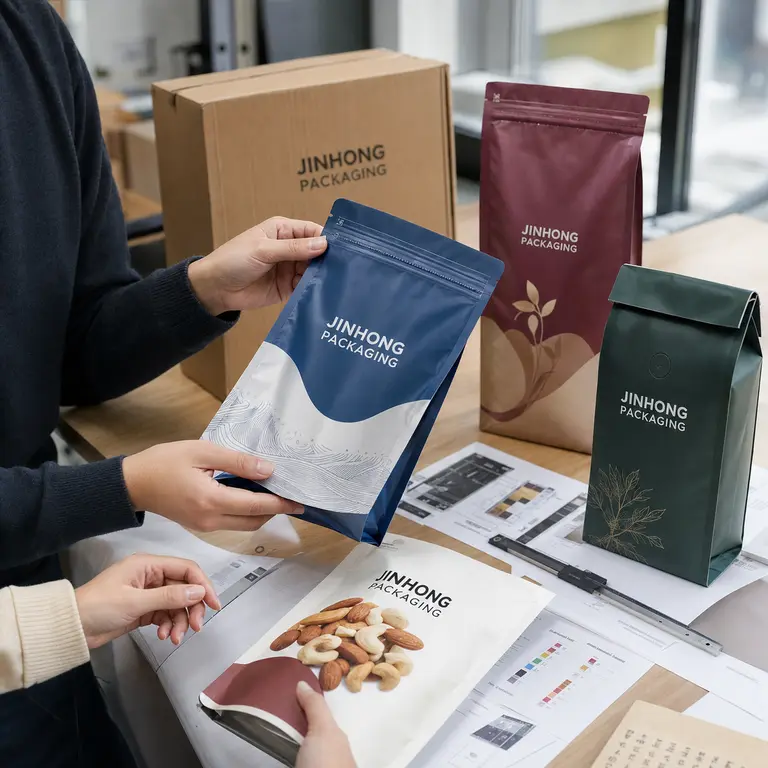
Antes de solicitar una cotización, prepare la siguiente información:
. Tipo de producto e ingredientes.
. Llenar peso o volumen
. Estilo de bolsa deseado
. Dimensiones aproximadas
. Rendimiento de barrera requerido
. Método de llenado y sellado.
. Condiciones de almacenamiento
. Vida útil esperada
. Cremallera, válvula, pico o ventana requerida
. Mercado de ventas y requisitos regulatorios.
. Expectativas de arte e impresión.
. Cantidad de pedido estimada
Las muestras deben evaluarse con el producto real siempre que sea posible. Para aplicaciones de mayor riesgo, también pueden ser necesarias pruebas de compatibilidad, migración, sellado y distribución.
Jinhong Packaging respalda el abastecimiento de envases, las discusiones sobre materiales y formatos, la coordinación de muestreos y el seguimiento de la producción a través de socios de fabricación seleccionados. Las especificaciones finales se confirman según el proyecto individual en lugar de utilizar una estructura estándar para cada producto.
Conclusión
Los beneficios más valiosos de los envases flexibles incluyen menor peso, almacenamiento eficiente, rendimiento de barrera personalizable, múltiples formatos y características convenientes para el consumidor. Estas ventajas hacen que las bolsas y películas sean adecuadas para muchas aplicaciones de café, alimentos, cuidado de mascotas, cuidado personal y venta minorista.
La solución correcta aún depende del producto, el proceso de llenado, el entorno de distribución y el mercado de destino. Las empresas deben comparar el desempeño de las barreras, el costo total, la idoneidad regulatoria y las opciones de final de vida antes de aprobar una estructura.
Para analizar materiales, formatos de bolsas, impresión y muestreo de su producto, solicitar una cotización de embalaje personalizado.
Preguntas frecuentes sobre los beneficios del embalaje flexible
¿Cuál es la principal ventaja del embalaje flexible?
Su principal ventaja es la capacidad de combinar un embalaje de bajo peso con protección, impresión y funciones prácticas específicas del producto. El beneficio real depende de seleccionar la estructura correcta para el producto.
¿Qué productos son aptos para envases flexibles?
Las aplicaciones comunes incluyen café, refrigerios, alimentos secos, polvos, alimentos para mascotas, golosinas para mascotas, repuestos para el cuidado personal, productos para el hogar y muestras. La compatibilidad del producto debe confirmarse antes de la producción.
¿Pueden los envases flexibles prolongar la vida útil del producto?
Una estructura de barrera adecuada puede ayudar a proteger los productos de factores como la humedad, el oxígeno, la luz o la pérdida de aroma. La vida útil depende del producto completo y del sistema de envasado y debe validarse en lugar de asumirse.
¿Todos los envases flexibles son reciclables?
No. Algunas estructuras monomateriales pueden ser reciclables cuando existen sistemas de recolección adecuados, mientras que muchos laminados multicapa son difíciles de reciclar. Las reclamaciones deben reflejar la estructura completa y el mercado de destino.
¿Qué información se necesita para una cotización de embalaje flexible?
Proporcione el tipo de producto, el peso del relleno, las dimensiones, el estilo de la bolsa, las características requeridas, las necesidades de barrera, los requisitos de impresión, el mercado de destino y la cantidad estimada del pedido.
¿Debo solicitar muestras antes de realizar un pedido?
Sí. Las muestras ayudan a evaluar las dimensiones, el ajuste del producto, la apariencia y la funcionalidad básica. Se recomienda realizar pruebas con el producto real antes de confirmar una especificación de producción.