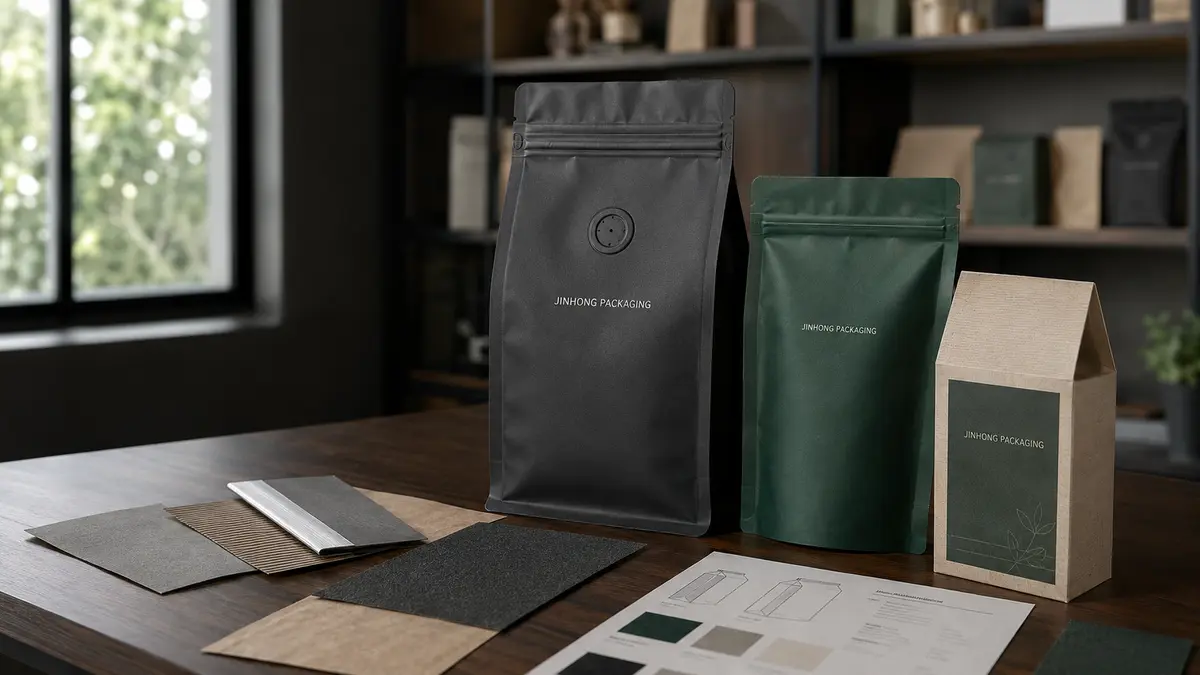
Coffee and tea may appear to have similar packaging requirements. Both are dry products, both are sensitive to storage conditions, and both are commonly sold in flexible pouches, tins, cartons, or gift packaging.
However, coffee packaging and tea packaging are not interchangeable. Freshly roasted coffee releases carbon dioxide after roasting and usually requires stronger control of oxygen and aroma loss. Tea does not normally require a degassing valve, but it can be highly sensitive to moisture, external odors, light, and physical damage to delicate leaves.
The right packaging structure depends on the exact product, processing method, filling schedule, target shelf life, distribution environment, and consumer use. Understanding coffee packaging vs tea packaging helps brands avoid unnecessary features while providing the protection each product actually requires.
Coffee and Tea Deteriorate Differently
Coffee and tea are both sensitive to their surroundings, but the mechanisms that affect their quality are different.
Roasted coffee contains volatile aroma compounds and oils that can be affected by oxygen, moisture, heat, and light. After roasting, coffee also releases carbon dioxide. The rate of degassing varies according to roast level, bean structure, grinding, roast date, and storage conditions.
Ground coffee generally changes faster than whole-bean coffee because grinding greatly increases the surface area exposed to the package atmosphere.
Tea does not release gas in the same way as freshly roasted coffee. Its main packaging concerns commonly include:
• Moisture absorption
• Exposure to oxygen
• Loss of delicate aroma
• Transfer of external odors
• Light exposure
• Crushing or breakage of tea leaves
• Repeated opening during consumer use
Different teas can also require different protection. Green tea, black tea, oolong tea, herbal blends, powdered tea, and individually wrapped tea bags should not automatically use the same structure.
Barrier Requirements for Coffee Packaging
Oxygen Protection
Oxygen can contribute to the loss of desirable coffee aroma and flavor. Coffee packaging therefore commonly uses a barrier structure designed to limit oxygen transmission during the intended shelf life.
Possible structures may include PET, PE, metallized films, aluminum foil laminates, EVOH-containing structures, or other barrier materials. The right option should be based on test data, shelf-life requirements, filling process, and distribution conditions rather than appearance alone.
A thick or metallic-looking pouch is not automatically a high-barrier pouch. Performance depends on the complete material structure, seals, valve, zipper, converting quality, and storage conditions.
Moisture Protection
Roasted coffee needs protection against humidity. Moisture exposure can affect flavor stability and the brewing performance of the product.
PE, PP, foil, metallized films, and other barrier layers may contribute to moisture protection. The final specification should be confirmed for the actual coffee product and intended storage environment.
Aroma Retention
Coffee packaging should help retain desirable volatile compounds while reducing exposure to external odors. Aroma retention depends on the complete package, including film layers, seal integrity, zipper, valve, and the number of times the package is opened.
A resealable zipper improves convenience after opening but should not be treated as a substitute for the initial heat seal.
Light Protection
Opaque structures can help protect coffee from light. Aluminum foil laminates, metallized films, and opaque printed structures are commonly considered where light exposure is a concern.
Transparent windows can improve product visibility, but they reduce light protection in the window area. Brands should evaluate whether the merchandising benefit justifies the change in barrier performance.
Barrier Requirements for Tea Packaging
Moisture Control
Many dried teas readily absorb moisture from the surrounding environment. Excess moisture can affect aroma, texture, appearance, and storage stability.
A suitable tea package should therefore provide moisture protection appropriate to the tea type, target shelf life, and local climate. This is particularly important in humid markets and for packages that consumers open repeatedly.
Protection from External Odors
Tea can absorb surrounding odors. Packaging should help separate the product from spices, fragrances, cleaning products, and other strongly scented goods during storage and retail distribution.
This is one reason why a decorative paper carton alone may not provide enough primary protection. The carton may need an internal pouch, sachet, liner, or sealed container.
Light and Oxygen Protection
Green tea and other sensitive varieties may benefit from strong light and oxygen protection. Opaque pouches, tins, foil-containing structures, and suitable high-barrier laminates can be considered according to the product.
The package should not be specified solely by calling it a “tea pouch.” The tea type, processing method, leaf size, storage temperature, and shelf-life target should all be reviewed.
Physical Protection
Whole-leaf and specialty teas may be damaged by excessive compression. A flexible pouch that is too tightly packed may crush delicate leaves, while insufficiently rigid secondary packaging may provide limited protection during ecommerce transportation.
Rigid cartons or tins can provide additional structural protection, but they still need an appropriate inner food-contact package when the outer container does not provide the required seal or barrier.
The Main Difference: Coffee Degassing
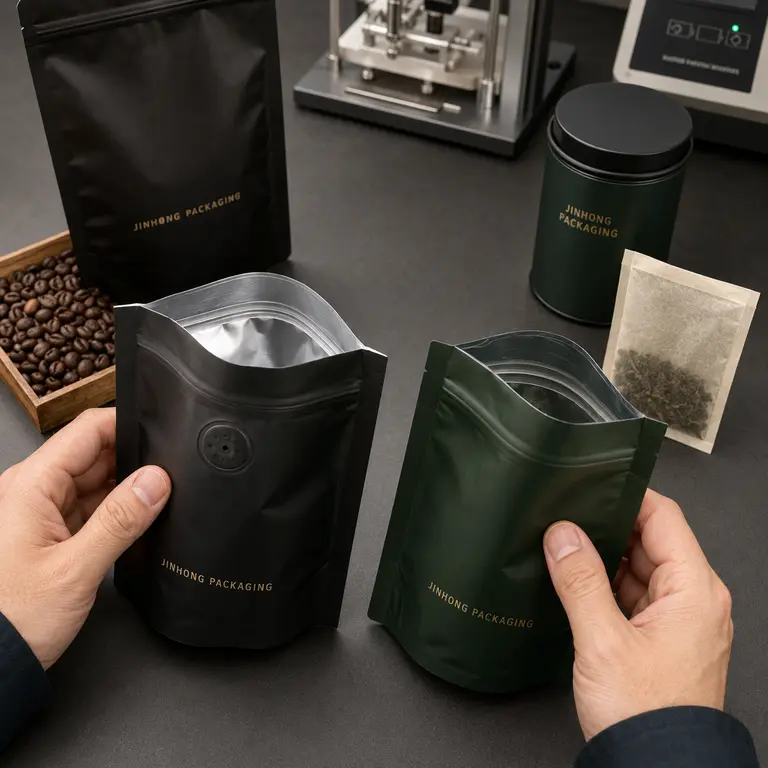
The most visible functional difference between coffee packaging and tea packaging is the use of a one-way degassing valve.
Why Fresh Coffee May Need a Valve
Roasted coffee continues releasing carbon dioxide after roasting. When recently roasted coffee is sealed without an appropriate degassing strategy, gas can build up inside the package and cause it to expand.
A one-way valve is designed to allow gas to leave the sealed package while limiting the entry of outside air under its intended operating conditions. This supports packaging soon after roasting without leaving the bag open for an extended period.
The actual need for a valve depends on:
• Whole-bean or ground coffee
• Roast level
• Time between roasting and filling
• Degassing rate
• Package size and headspace
• Target shelf life
• Filling and sealing process
• Distribution conditions
Brands evaluating this feature can review our coffee bags with valves for common formats and specification considerations.
Why Tea Usually Does Not Need a Valve
Processed tea does not normally release carbon dioxide at a level that requires a degassing valve. Adding a valve to a standard tea pouch generally increases cost and complexity without providing the same functional benefit it offers for freshly roasted coffee.
Tea packaging usually prioritizes a reliable heat seal, moisture barrier, aroma protection, and convenient reclosure.
A valve should not be added merely because a tea pouch uses the same general shape as a coffee bag. Functional components should be selected according to the product rather than copied from another packaging category.
Coffee Packaging vs Tea Packaging: Materials and Barrier Differences
Coffee and tea packaging may use some of the same material families, but their final specifications can differ.
Common flexible packaging materials include:
• PET for printability, stability, and surface durability
• PE as a sealing layer and for moisture resistance
• BOPP or CPP in selected flexible structures
• PA where additional toughness or puncture resistance is required
• Metallized film for improved barrier and an opaque appearance
• Aluminum foil for strong protection against oxygen, moisture, light, and aroma transfer
• Kraft paper as an outer presentation layer within a functional laminate
• High-barrier transparent film where product visibility is required
Aluminum foil and metallized film are different materials. Foil is a continuous metallic layer, while metallized film normally consists of a plastic film with a thin deposited metal coating. Their barrier performance, flexibility, appearance, cost, and converting behavior are not identical.
The detailed packaging materials for food and coffee guide explains how paper, plastic films, foil, and multilayer structures contribute different functions.
Typical Coffee Structures
Coffee pouches often use multilayer structures that combine:
• A printable and durable outer layer
• An oxygen, moisture, aroma, and light barrier
• An inner sealant layer appropriate for the intended application
• A one-way valve where required
• A zipper for reclosure after opening
A coffee package should normally remain heat-sealed until purchase even when it includes a zipper.
Typical Tea Structures
Tea packaging may use:
• A high-barrier resealable pouch for loose-leaf tea
• A sealed inner pouch placed inside a printed paper carton
• Individual tea sachets inside a secondary carton
• A sealed liner inside a metal tin
• A compact pouch for powdered or finely cut tea
• A larger pouch for foodservice or refill applications
A kraft paper appearance does not confirm that a tea package is made only from paper. Many kraft-style pouches contain internal film layers needed for sealing and barrier performance.
Common Coffee Packaging Formats
Flat-Bottom Bags
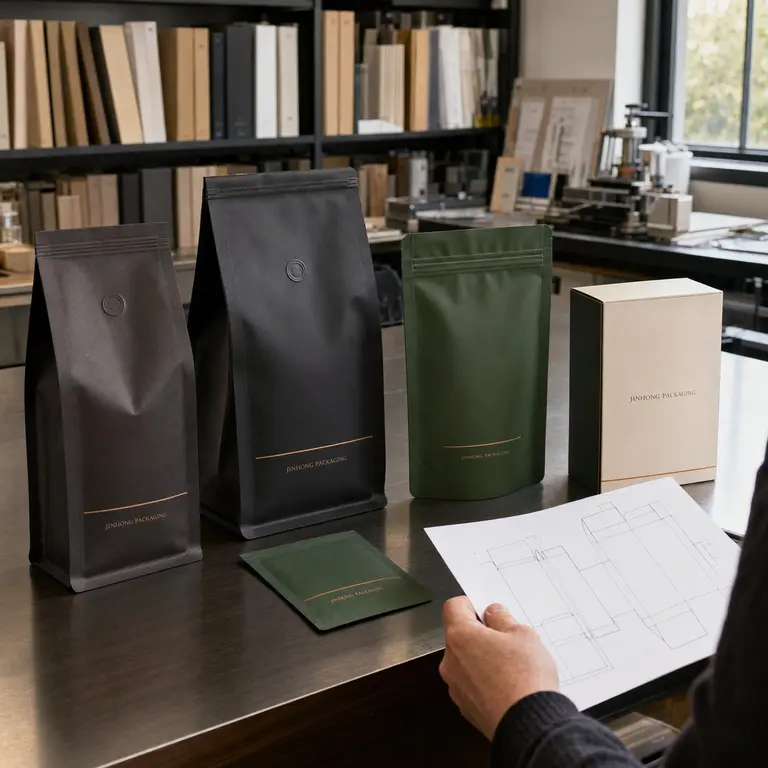
Flat-bottom bags provide a stable base, defined side panels, and a large printable area. They are commonly selected for premium whole-bean coffee and specialty retail presentation.
The structure can support a zipper and one-way valve when required. Brands can compare available flat bottom coffee bags according to fill weight, dimensions, barrier, and printing needs.
Side-Gusset Bags
Side-gusset packaging provides efficient filling capacity and a traditional coffee appearance. It is often used for medium and larger coffee quantities.
Available side gusset coffee bags may include different seal styles, material structures, and valve configurations.
Stand-Up Pouches
Stand-up pouches are commonly used for coffee because they provide retail visibility, convenient reclosure, and efficient storage. They may be appropriate for whole-bean coffee, ground coffee, samples, or smaller retail packs.
Quad-Seal Bags
Quad-seal bags use seals along the side corners to provide additional structure. They may be considered for larger volumes or brands seeking defined panels and improved shelf presence.
The most suitable format depends on fill weight, bag dimensions, filling equipment, shipping conditions, and brand presentation. Our coffee packaging solutions provide a broader comparison of coffee pouch formats and project options.
Common Tea Packaging Formats
Resealable Stand-Up Pouches
Stand-up pouches are widely used for loose-leaf tea, herbal blends, and powdered tea. A zipper supports repeated opening, while the initial heat seal provides tamper evidence and protection before purchase.
The pouch should be sized carefully. Too much unused headspace can make the package feel underfilled, while an overly tight package can damage large tea leaves.
Flat Pouches and Sachets
Flat pouches are suitable for samples, individual portions, tea bags, and smaller quantities. Sachet materials should be selected according to the filling process, aroma requirements, and whether the sachet is an individual retail package or is stored inside a secondary carton.
Paperboard Tea Cartons
Folding cartons provide strong printing possibilities and physical presentation. However, paperboard alone may not provide sufficient moisture, oxygen, or aroma protection.
An internal sealed pouch or individually wrapped sachets may therefore be needed. The primary and secondary packaging should be designed as one system.
Tea Tins
Metal tins can support premium positioning, light protection, reuse, and physical protection for delicate leaves. Seal design and the use of an inner pouch or liner should be considered because not every decorative tin provides the same level of air or moisture control.
Gift Boxes
Rigid or folding gift boxes can present multiple tea varieties, sachets, or accessories. These boxes mainly provide organization, presentation, and physical protection; each tea product still requires suitable primary packaging.
Printing and Brand Presentation
Coffee packaging often uses darker colors, origin information, roast profiles, brewing guidance, and clearly differentiated blends. The valve position, zipper, seal area, and label placement must be considered before artwork is finalized.
Tea packaging may place more emphasis on variety, ingredients, brewing temperature, steeping time, origin, and multi-product organization. Boxes and tins can provide additional printable or decorative surfaces.
Available printing methods may include digital, flexographic, and rotogravure printing. The appropriate method depends on order quantity, number of designs, material structure, color requirements, and budget.
Before printing, artwork should be checked for:
• Correct dimensions and dieline placement
• Seal, zipper, valve, and gusset areas
• Barcode size and quiet zone
• Required product and regulatory information
• Color expectations
• Readability on the selected background
• Differences between each flavor, roast, or tea variety
Packaging should not use certification marks or environmental claims unless the brand has the required authorization and evidence.
Food-Contact Compliance
“Food grade” and “FDA approved packaging” should not be used as broad, unconditional descriptions. Material suitability depends on the complete food-contact structure, intended food, contact time, temperature, and conditions of use.
The FDA resource Packaging and Food Contact Substances provides information about food-contact substances, regulatory status, food types, and conditions of use in the United States.
Depending on the destination market and package structure, a project may require:
• Material specifications
• Relevant declarations or compliance statements
• Migration testing where applicable
• Information about inks, adhesives, coatings, and sealant layers
• Supporting documents for the intended food-contact use
• Traceability documentation
• Market-specific labeling information
The coffee or tea type, filling process, and sales market should be confirmed before the material and documentation requirements are finalized.
Sustainability Considerations
A sustainability decision should consider the complete package rather than only the visible outer layer.
Possible project directions include:
• Reducing unnecessary package dimensions
• Avoiding a barrier level that the product does not require
• Evaluating mono-material-compatible structures where performance allows
• Using paper-based secondary packaging appropriately
• Reducing unnecessary decorative components
• Designing refill packaging where a genuine refill system exists
• Comparing product protection before changing materials
A mono-material-compatible structure is not automatically recyclable in every location. Zippers, valves, inks, adhesives, coatings, and regional collection systems can affect the final claim.
The FTC Green Guides explain why broad statements such as “eco-friendly” should not be used without specific evidence and why recyclable, compostable, or recycled-content claims may require qualifications.
Coffee and tea packaging should first provide the protection needed to avoid premature product deterioration. Environmental goals and product performance should be evaluated together.
Information to Confirm Before Requesting a Quote
Before requesting coffee or tea packaging, prepare the following information:
• Coffee or tea product type
• Whole bean, ground coffee, loose leaf, powder, or sachet format
• Net weight
• Product density where relevant
• Preferred bag, carton, or tin format
• Finished dimensions
• Required order quantity
• Number of designs or SKUs
• Filling and sealing method
• Roast date and valve requirement for coffee
• Leaf size and physical protection requirements for tea
• Target shelf life
• Storage and distribution conditions
• Destination market
• Barrier requirements or current material structure
• Zipper, valve, window, tear notch, or hang-hole requirements
• Printing colors and artwork status
• Required food-contact documentation
• Evidence needed for any environmental claims
Jinhong Packaging supports packaging sourcing, specification confirmation, sampling coordination, production coordination, project follow-up, documentation coordination, and delivery preparation through selected manufacturing partners.
Frequently Asked Questions
Can coffee and tea use the same pouch?
They can sometimes use a similar pouch format, but the material, barrier, valve, dimensions, and closure should be specified for the actual product. Fresh coffee may need a valve, while tea normally does not.
Does every coffee bag need a degassing valve?
No. The need depends on roast date, degassing behavior, whole-bean or ground format, filling schedule, package size, and distribution plan.
Does tea packaging need a high barrier?
Some teas benefit from strong moisture, oxygen, light, and aroma protection. The appropriate barrier depends on the tea variety, processing, shelf life, and storage conditions.
Is a kraft paper pouch suitable for coffee or tea?
It may be suitable when the complete laminated structure provides the required barrier and sealing performance. Kraft paper alone generally does not provide the same protection as a functional multilayer package.
Are tea tins airtight?
Not all tea tins provide the same seal performance. Lid design, fit, liner, and use of an internal sealed pouch should be evaluated.
Can both coffee and tea packaging include zippers?
Yes. Zippers can improve convenience after opening. The package should still use an appropriate initial heat seal to protect the unopened product.
Which packaging is more expensive?
Cost depends on size, material structure, valve, zipper, printing method, quantity, and number of designs. Coffee packaging with a high-barrier structure and valve may cost more than a simple tea pouch, but specifications should be compared individually.
Can coffee and tea packaging be described as recyclable?
Only when the claim is supported for the complete package and appropriately qualified for the intended market. The film structure, zipper, valve, inks, adhesives, and available collection systems must be considered.
Final Thoughts
Coffee and tea packaging share some materials and formats, but they solve different product-protection problems. Coffee packaging commonly requires stronger management of degassing, oxygen, aroma, and seal performance. Tea packaging usually emphasizes moisture protection, resistance to external odors, light control, and protection of delicate leaves.
The best package is not determined by whether it is called a coffee pouch or tea pouch. It should be developed from the actual product, filling process, shelf-life target, distribution conditions, consumer use, and destination-market requirements.