
Medical Header Bags for Sterilization
Medical header bags with breathable Tyvek® or medical paper header sections for large devices, procedure kits and specialized sterile barrier packaging projects.
Medical Header Bag Overview
Medical header bags are preformed packaging systems that combine a flexible film bag with a porous header section. The header provides a breathable area for sterilant penetration and aeration, while the film body provides containment, product visibility or additional barrier performance.
This format may be considered for large, bulky or heavy medical devices, procedure kits and products that do not fit efficiently into conventional paper-film sterilization pouches. Header bags can also support film-film or foil-based package structures that require a porous section for an intended gaseous sterilization process.
The header may use coated Tyvek® or selected medical-grade paper. The bag body can use transparent medical film, reinforced laminate or a project-specific barrier structure. Header material, film structure, bag dimensions, seal design and sterilization conditions must be evaluated as a complete packaging system.
Jinhong Packaging coordinates medical header bags with selected manufacturing partners. We help customers review bag structures, compare header and film options, confirm technical requirements and organize samples or available supporting documents for further packaging evaluation.
Medical Header Bag Options
The appropriate header bag depends on the medical device, required bag strength, barrier performance, opening method, sealing process and intended sterilization conditions.
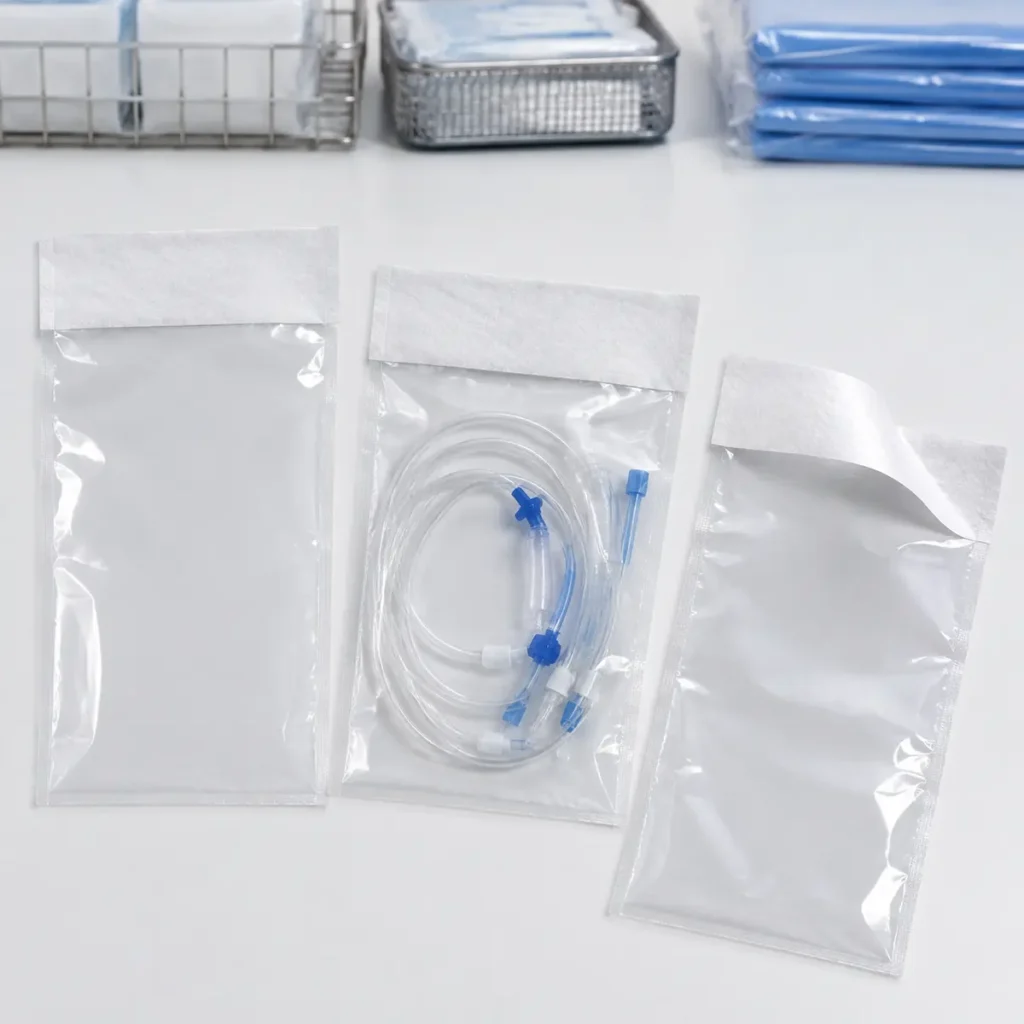
Tyvek® Header Bags
Tyvek® may be used as the porous header material for medical devices that require strength, low linting and controlled peel-opening performance.
The Tyvek® grade, coating, header size, film compatibility and seal performance should be evaluated according to the package dimensions, device weight and sterilization process. The complete header bag configuration must be confirmed for the intended application.
Medical Paper Header Bags
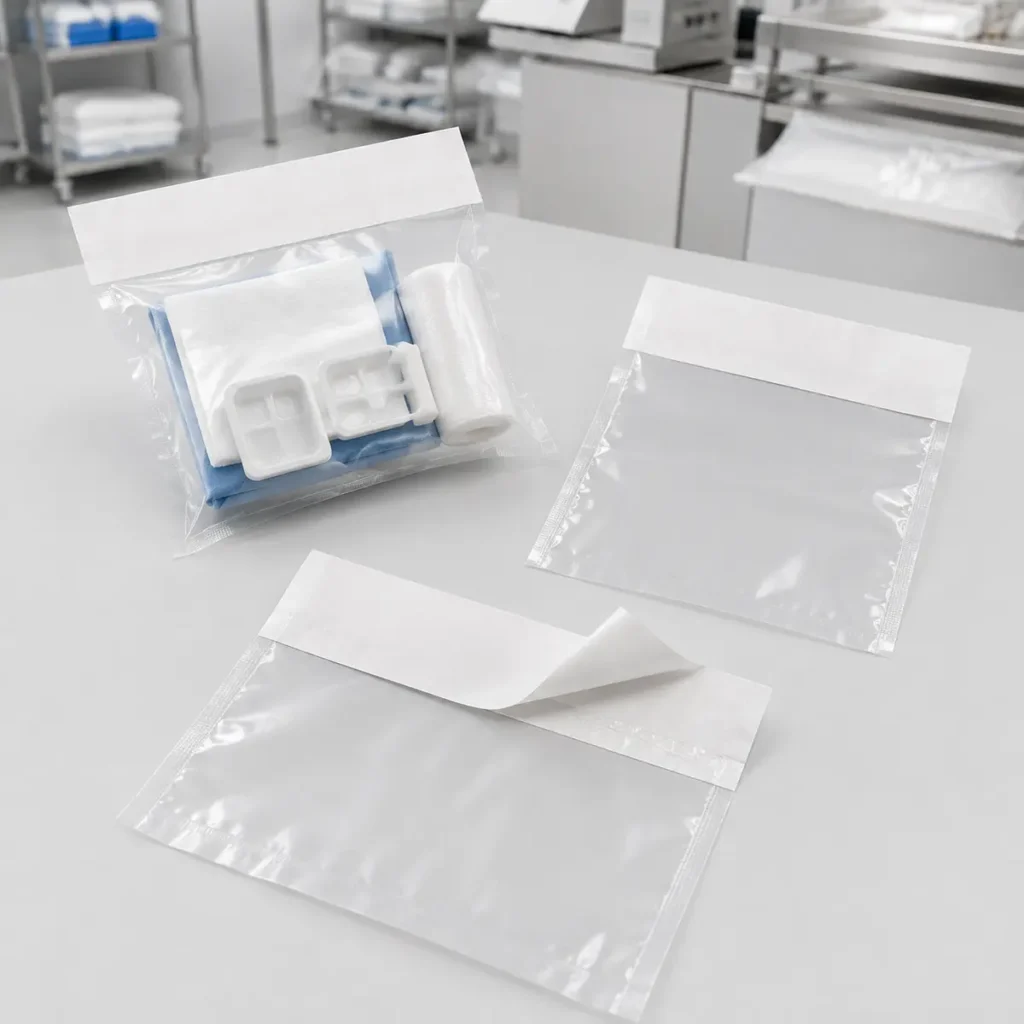
Medical-grade paper may be considered as the porous header material for selected devices and packaging applications.
Paper basis weight, coating, header size, film compatibility and peel performance should be evaluated according to the package dimensions, device weight and sterilization process. Medical paper is not automatically suitable for every heavy or sharp-edged product.
High-Barrier Header Bags
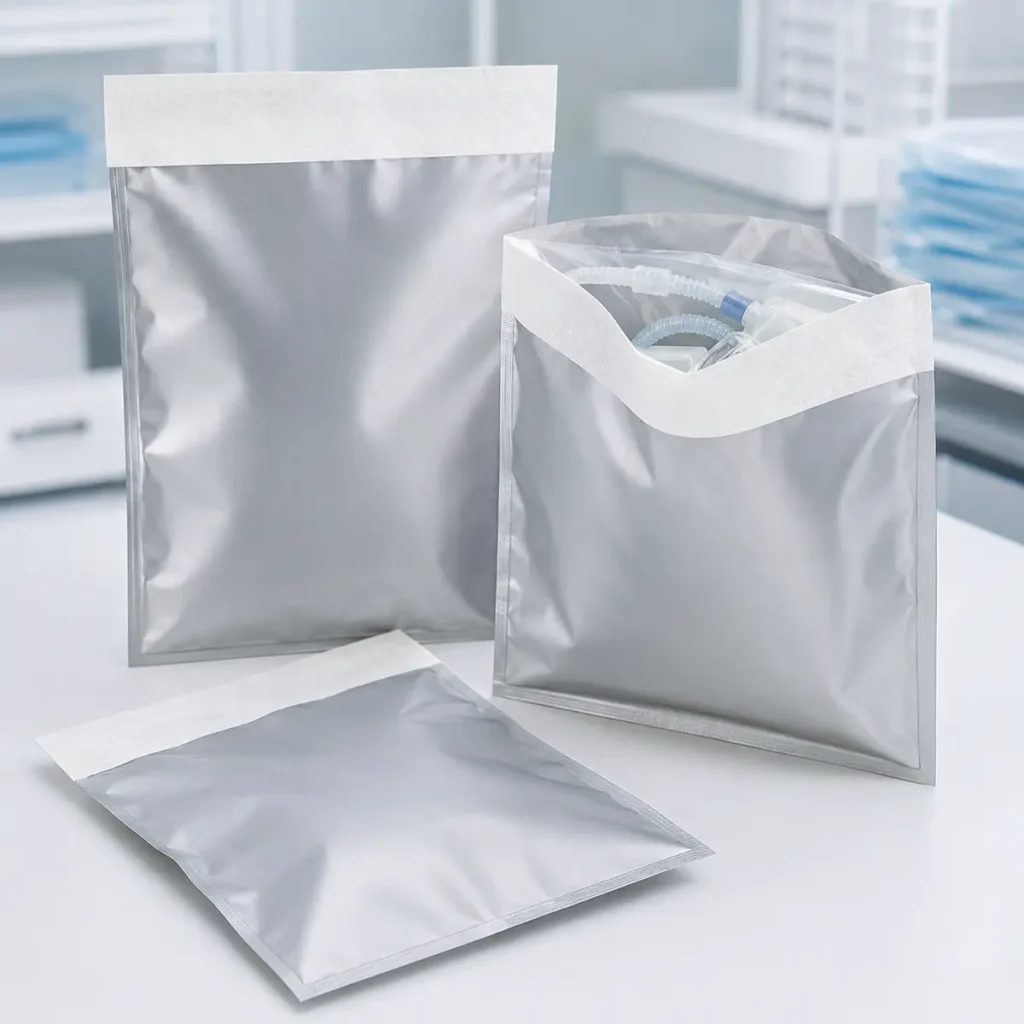
High-barrier film or foil-based bag bodies may be combined with a breathable header where the medical device requires additional protection from moisture, oxygen, light or other environmental exposure.
Barrier requirements, header construction, seal interfaces and sterilization compatibility must be confirmed for the complete package. Not every high-barrier laminate is suitable for every sterilization method.
Materials and Bag Structure
A medical header bag normally consists of a flexible bag body, a porous header section and several critical seal interfaces. These components must work together to support device protection, sterilant passage, package opening and sterile barrier performance.
Breathable Header Materials
The breathable header may use coated Tyvek® or selected medical-grade paper. The material should provide the required porosity, microbial barrier performance, mechanical strength and compatibility with the intended sealing system.
Header width and surface area can influence sterilant penetration and aeration. The required dimensions should be determined according to the bag volume, device configuration, sterilization process and packaging validation plan.
The heat-seal coating must be compatible with the selected bag film. Header material and coating should not be selected independently from the complete bag structure.
Film and Barrier Bag Structures
The bag body may use transparent polyethylene-based film, nylon-containing structures, reinforced laminates or project-specific high-barrier materials.
Film thickness and structure should be selected according to device weight, sharp edges, abrasion risk, package size and required flexibility. High-barrier laminates may be considered where protection from moisture, oxygen or light is required.
The bag body must also support the intended sealing process and sterilization conditions. A film structure that provides high barrier performance is not automatically suitable for every sterilization method.
Seal Interfaces and Opening Design
Header bags include several areas that may require separate evaluation: the film-to-film seals, the header-to-film seal and the final device-loading closure.
Seal width, uniformity and strength should be appropriate for the device and package dimensions. The opening design should support controlled peeling or tearing without creating an uncontrolled opening path or unnecessary particulate generation.
Sealing temperature, pressure and dwell time depend on the header coating, film structure, equipment and production conditions. These parameters should be developed and validated for the specific packaging process.
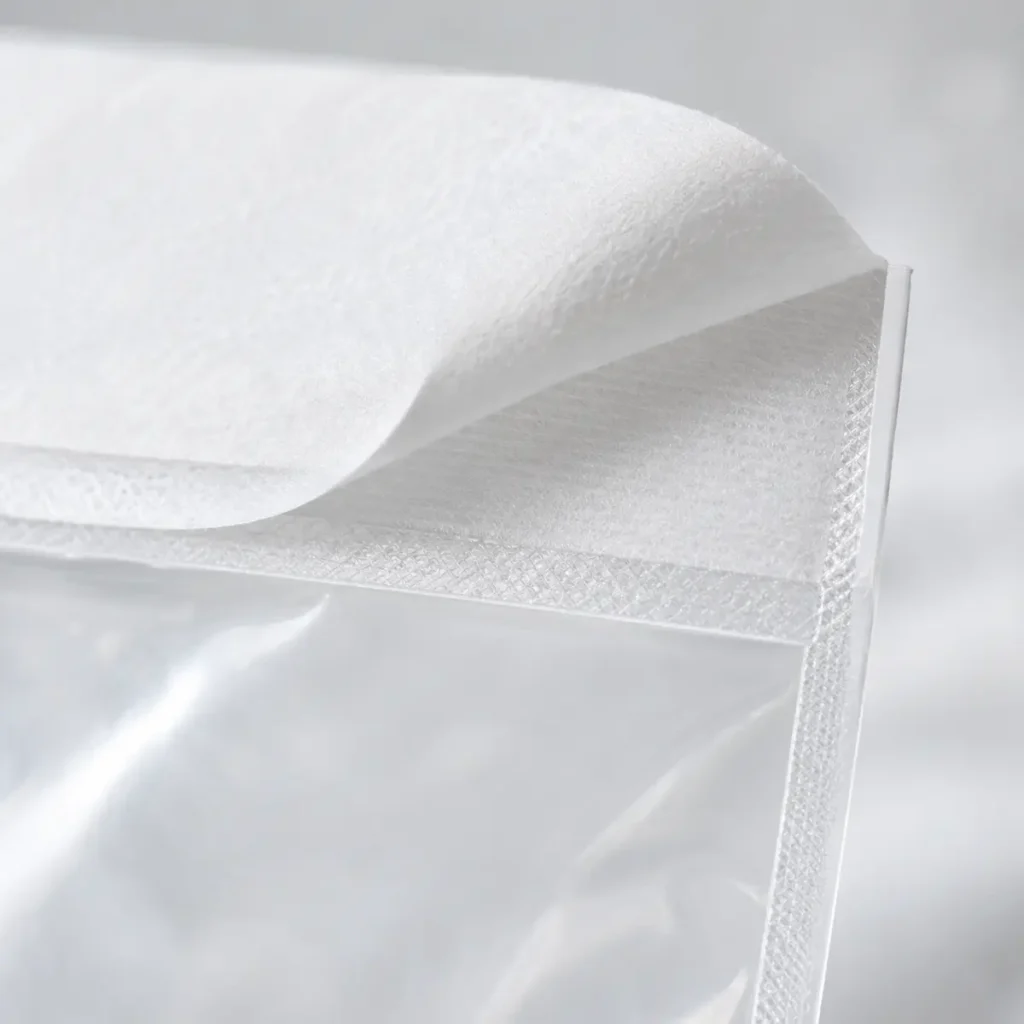
Header material, bag film and each seal interface must be evaluated as part of the complete medical header bag system.
Typical Specifications
The following information provides a general reference for medical header bags. Final specifications depend on the medical device, bag dimensions, header material, film structure, sealing process, sterilization conditions and validation requirements.
| Specification Item | Typical Options | Project Considerations |
|---|---|---|
| Bag Format | Preformed header bag with a breathable top section | Selected according to the device, loading process and required opening method |
| Header Material | Coated Tyvek® or selected medical-grade paper | Material grade and coating must match the film and intended sterilization process |
| Bag Body | Transparent medical film, reinforced laminate or high-barrier structure | Confirmed according to device weight, puncture risk and barrier requirements |
| Bag Dimensions | Custom width, length, gusset and header dimensions where applicable | Device dimensions and loading clearance should be provided before quotation |
| Film Thickness | Multiple gauges available according to the selected film structure | Confirmed according to bag size, device weight, sharp edges and handling conditions |
| Header Size | Custom header width and breathable surface area | Determined according to bag volume, sterilization process and validation requirements |
| Opening Style | Peel-open header or project-specific controlled opening design | Peel strength and opening direction depend on the material and seal design |
| Closure | Open end for customer heat sealing or project-specific configuration | Final closure parameters must be developed and validated by the packaging operation |
| Printing | Custom text, symbols and identification information where applicable | Artwork, ink system and regulatory marking requirements should be reviewed before production |
| Sterilization Compatibility | Evaluated according to the header, film, seal structure and intended process | No header bag should be assumed suitable without project-specific confirmation and validation |
| Samples and Documents | Bag samples, material specifications and available supporting documents | Availability depends on the selected configuration and manufacturing partner |
| MOQ and Lead Time | Quoted according to dimensions, materials, printing and order quantity | Custom materials and conversion requirements may affect MOQ and production schedule |
Applications and Selection Considerations
Medical header bags may be considered when a conventional pouch does not provide sufficient dimensions, strength, loading space or barrier performance for the intended medical device.
For device examples and a detailed purchasing checklist, read our medical header bag applications and selection guide.
1. Large Medical Devices
Custom-sized header bags can accommodate selected large or bulky medical devices that require more loading space than conventional paper-film pouches.
2. Procedure Kits
Header bags may be used for procedure kits, surgical sets and multiple-component products that require organized containment within a flexible package.
3. Heavy or Irregular Devices
Reinforced film structures may be considered for devices with increased weight, irregular geometry or higher puncture and abrasion risks.
4. Barrier-Sensitive Products
A high-barrier bag body with a breathable header may be evaluated where the packaged device requires additional protection from moisture, oxygen or light.
Header Bag vs Pouch vs Tray — Quick Selection Guide
| Packaging Format | Usually Considered When | Buyer Should Confirm |
|---|---|---|
| Header Bag | Large, heavy or irregular medical devices require a flexible bag format with a breathable header | Device size, weight, bag structure, header material and sterilization method |
| Sterilization Pouch | Smaller or more regular devices can be packaged in standard pouch formats | Pouch dimensions, sealing format, material structure and sterilization method |
| Tray + Lidding | The device needs controlled positioning, physical protection or a formed cavity | Tray material, cavity design, lidding grade, seal interface and sterilization method |
Important: Packaging format should be selected according to the medical device, sterilization method, sealing process, handling conditions and validated package requirements. Header bags are not automatically the best choice simply because the device is larger.
What Should Be Confirmed Before Selecting a Header Bag?
The initial evaluation should begin with the device dimensions, weight, geometry and any sharp or delicate areas. The required bag width, length, loading clearance and possible gusset dimensions should be confirmed according to the device and packing process.
The intended sterilization method and process conditions must also be identified. Header material, breathable area, bag film, printing system and seal construction can respond differently to sterilization, aging and distribution exposure.
Customers should also define the required opening direction, peel characteristics and presentation at the point of use. A large bag that provides sufficient loading space may still be unsuitable if its opening design does not support controlled device presentation.
Final testing and acceptance criteria should be established by the medical device company according to the product, sterilization process, regulatory market and packaging validation plan.
Providing a device drawing or sample, current package specification, intended sterilization method and estimated quantity can help narrow the suitable header bag structure before sampling.
Quality Documents and Project Coordination
Medical header bag projects require clear control of the header material, film structure, bag dimensions and seal configuration. Material grades, header size, film thickness, bag construction, printing requirements and applicable inspection criteria should be confirmed before the final order.
Depending on the selected structure and manufacturing partner, available documents may include material specifications, certificates of analysis, declarations of conformity, quality management certificates, inspection records and relevant test reports. Document availability and applicability must be confirmed for the specific header bag configuration.
ISO 11607-1 addresses requirements for materials, sterile barrier systems and packaging systems intended for terminally sterilized medical devices. ISO 11607-2 addresses the development and validation of forming, sealing and assembly processes.
ASTM F88/F88M may be used to measure seal strength in flexible barrier materials. Additional package integrity, aging and distribution tests may be required according to the device, package design and validation plan.
The medical device company remains responsible for determining the applicable regulatory requirements, establishing acceptance criteria and validating the final packaging system for the intended device, sterilization process, distribution environment and target market.
How Jinhong Packaging Supports Your Header Bag Project
Jinhong Packaging works with selected manufacturing partners to coordinate medical header bags according to the technical and commercial requirements of each project.
Our project coordination may include:
Reviewing device dimensions, weight and packaging requirements
Comparing Tyvek®, medical paper and compatible film structures
Confirming bag dimensions, header area, gusset and opening design
Coordinating samples and available technical documents
Coordinating quotations, production schedules and export arrangements
To begin an evaluation, customers can provide the device drawing or sample, required bag dimensions, preferred header and film materials if known, intended sterilization method, estimated quantity and target market.
For related sterile packaging formats, explore our Tyvek medical packaging, sterilization pouches and rolls, and high-barrier medical device packaging solutions.
Frequently Asked Questions About Medical Header Bags
What is a medical header bag?
A medical header bag combines a flexible film bag body with a porous header section made from Tyvek® or selected medical-grade paper. The header can provide a breathable area for sterilant penetration and aeration, while the bag body provides containment and physical or barrier protection.
When should a header bag be considered?
A header bag may be considered for large, bulky, heavy or irregularly shaped medical devices that do not fit efficiently into conventional paper-film pouches. It may also support selected film-film or high-barrier structures that require a breathable section.
Can the bag dimensions and header size be customized?
Yes. Bag width, length, gusset, film thickness and header dimensions may be coordinated according to the device and manufacturing capabilities. The required breathable area should be evaluated according to the package volume, sterilization process and validation plan.
Are all medical header bags suitable for EO sterilization?
No header bag should be assumed suitable without evaluation. The Tyvek® or medical paper grade, breathable area, film structure, seal configuration, device and EO process conditions must be assessed as part of the complete packaging system.
What information is needed to request a quotation?
Please provide the device dimensions or drawing, required bag size, device weight, preferred header and film materials if known, intended sterilization method, printing requirements, estimated quantity and target market.
Can you provide samples and supporting documents?
Samples and available supporting documents can be coordinated according to the selected header bag structure and manufacturing partner. These may include material specifications, certificates, inspection records or relevant test reports. Availability and applicability must be confirmed for each project.
Explore our complete Medical & Healthcare Packaging solutions for related sterile barrier packaging formats and project coordination support.
Discuss Your Medical Header Bag Project
Looking for medical header bags for a large device, procedure kit or specialized sterile packaging project?
Share your device drawing or sample, required bag dimensions, intended sterilization method and estimated quantity. Jinhong Packaging can coordinate suitable header and film structures with selected manufacturing partners for further evaluation.