
Moisture Barrier and Aluminum Foil Bags
Custom moisture barrier bags for electronics, precision components, instruments and products requiring controlled protection during storage and transport. We coordinate material structures, bag dimensions, sealing options, desiccants, humidity indicator cards, sampling and supporting documentation according to project requirements.
Material structures, barrier performance and accessory quantities are confirmed according to the product, storage conditions and required protection period.
What Are Moisture Barrier Bags?
Moisture barrier bags are flexible packaging structures designed to reduce the entry of water vapor and protect moisture-sensitive products during storage, transport or dry packing. Aluminum foil and other multilayer barrier materials may also provide protection from oxygen, light and external contamination.
The appropriate structure depends on the product, required protection period, storage environment, sealing process and whether desiccants or humidity indicator cards are used inside the package.
Aluminum Foil Barrier Bags
Multilayer foil structures for products requiring strong protection from moisture, oxygen and light during storage or transport.
Barrier packaging options for components that may require both humidity control and electrostatic discharge protection.
Vacuum and Heat-Seal Bags
Custom flat bags and other heat-sealable formats selected according to the product, packing equipment and required barrier performance.
Desiccants and Humidity Indicator Cards
Accessories used to help manage and monitor humidity inside sealed packaging when required by the product and storage process.
Water vapor transmission rate (WVTR) may be evaluated using recognized methods such as ASTM F1249, subject to the agreed material, test conditions and project requirements.
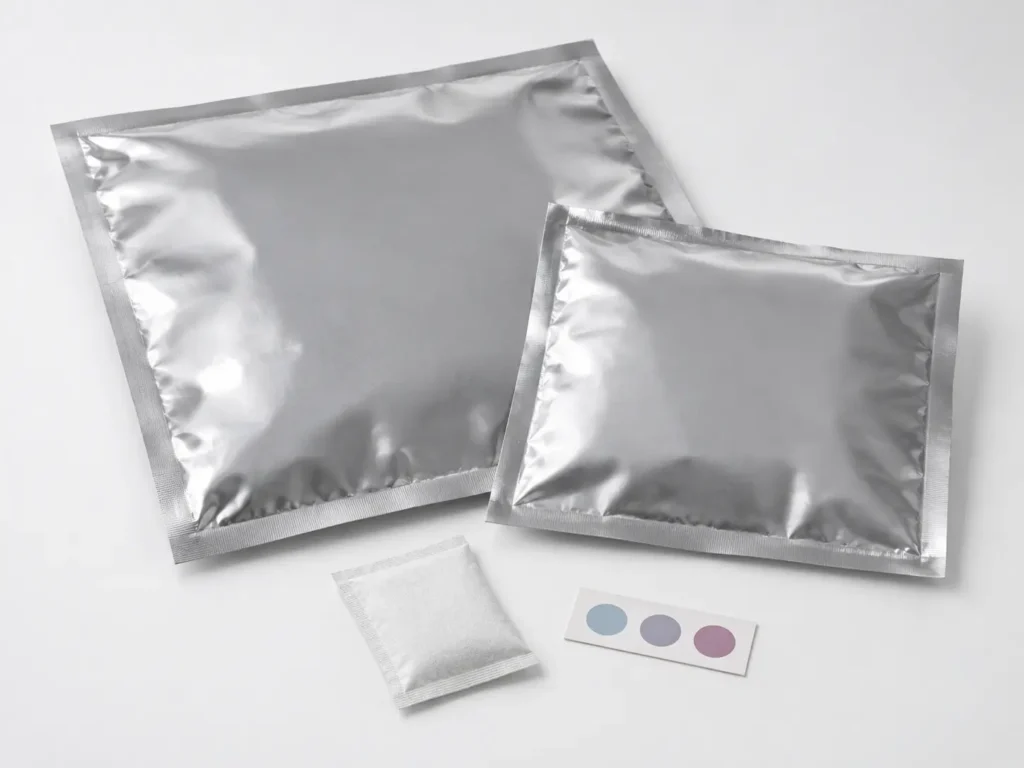
Moisture Barrier Packaging Options
Different structures provide different levels of moisture, oxygen, light, puncture and static protection. Final materials should be selected according to the product and verified project requirements.
| Packaging Option | Main Protection | Typical Applications | Points to Confirm |
|---|---|---|---|
| Aluminum Foil Barrier Bags | Moisture, oxygen and light protection | Precision components, instruments, machinery parts and products requiring protected storage | Material structure, thickness, bag dimensions, puncture risk, sealing method and storage period |
| Moisture Barrier Shielding Bags | Combined moisture and electrostatic discharge protection | PCBs, electronic assemblies, sensors and moisture-sensitive electronic components | Required ESD performance, barrier level, component sensitivity and dry-packing process |
| Vacuum and Heat-Seal Bags | Controlled sealing and reduced internal air | Industrial parts, equipment components and products packed for storage or transport | Product shape, sharp edges, vacuum level, seal width and packing equipment |
| Desiccants | Humidity adsorption inside sealed packaging | Moisture-sensitive products and long-term storage packaging | Package volume, barrier structure, storage conditions and required protection period |
| Humidity Indicator Cards | Visual indication of humidity exposure inside the package | Dry-packed electronics, precision components and monitored storage applications | Required indication points, packaging process and applicable project requirements |
Performance values, test methods, accessory quantities and minimum order requirements are confirmed according to the selected structure and project. For a wider overview, visit our protective and clean packaging solutions .
Applications for Moisture Barrier Packaging
Moisture barrier packaging is commonly considered when humidity, oxygen, light or long storage periods may affect product quality. The required protection level varies by product and should be confirmed before selecting a bag structure.
Electronic Components and PCBs
Dry packing for circuit boards, sensors, connectors and moisture-sensitive electronic assemblies. Some applications may also require ESD shielding, desiccants and humidity indicator cards.
Precision Instruments and Parts
Protective packaging for precision components, measuring instruments, machinery parts and metal products during storage, export transport or controlled handling.
Industrial Equipment and Spare Parts
Barrier and vacuum packaging options for equipment components, replacement parts and products that may be exposed to humidity during warehousing or transport.
Medical Devices and Diagnostic Components
Barrier packaging may be considered for moisture-sensitive medical devices, diagnostic components and production materials. Cleanliness, sterilization compatibility and validation requirements must be reviewed separately for each application.
How to Specify a Moisture Barrier Bag
A moisture barrier bag should not be selected by appearance alone. The product, storage conditions, barrier requirement and packing process all affect the appropriate material and format.
1. Identify the Product Risk
Confirm whether the product is sensitive to humidity, oxygen, light, corrosion, electrostatic discharge or external contamination.
2. Define Storage and Transport Conditions
Provide the expected storage period, destination, temperature and humidity conditions, transport method and whether the package may be opened during handling.
3. Confirm Bag Size and Product Shape
Specify the product dimensions, required internal bag size, weight, sharp edges and whether a flat, gusseted or custom-shaped bag is preferred.
4. Review Material and Sealing Requirements
Confirm the preferred barrier structure, thickness, heat-sealing method, vacuum requirement and compatibility with the available packing equipment.
5. Determine Accessories and Documentation
Review whether desiccants, humidity indicator cards, ESD protection, printing, labeling, test reports or other supporting documents are required.
If an existing specification is unavailable, a current packaging sample, drawing or clear product information can be used as the starting point for comparison.
Sampling, Testing Documents and Order Requirements
Sampling time, available testing documents and minimum order quantities vary by material structure, bag size, printing and production requirements. These details are confirmed after the initial specification review.
Material Confirmation
The proposed material structure, thickness, dimensions and sealing format are reviewed according to the product and required protection.
Sample Preparation
Existing material samples or custom-size samples may be arranged depending on availability and project requirements. Sample timing is confirmed separately for each specification.
Testing Documentation
Available material reports and performance-related documents can be reviewed according to the selected packaging structure. Required test methods and acceptance criteria should be provided by the buyer when applicable.
Minimum Order Quantity
MOQ varies by bag type, material, dimensions, printing and production setup. Standard structures may support more flexible quantities than fully customized materials or printed packaging.
Testing documentation is specific to the selected material or production batch and should not be assumed to apply to every moisture barrier bag.
Related Moisture Barrier Packaging Guides
For additional material selection and application guidance, explore our articles on moisture barrier bag materials, the differences between aluminum foil bags and metallized bags, and packaging for moisture-sensitive electronic components.
Frequently Asked Questions
What is an aluminum foil moisture barrier bag?
It is a multilayer flexible package containing an aluminum foil barrier layer. Depending on the complete structure, it can help reduce the entry of moisture, oxygen and light during storage and transport.
Are all silver packaging bags moisture barrier bags?
No. A silver appearance alone does not confirm barrier performance. Metallized film and aluminum foil structures can have different properties. The complete material structure and relevant test data should be reviewed before selection.
What information is needed to select a moisture barrier bag?
Useful information includes the product, dimensions, moisture sensitivity, storage period, transport conditions, required barrier performance, sealing process, order quantity and any applicable testing requirements.
Can moisture barrier bags also provide ESD protection?
Yes. Selected moisture barrier structures can also incorporate static-control or shielding properties. The required ESD performance, barrier level, material structure and testing documentation must be confirmed according to the product and packing process. A silver appearance alone does not confirm ESD or moisture-barrier performance.
When are desiccants and humidity indicator cards required?
They may be used when the dry-packing process requires moisture adsorption and visual monitoring inside a sealed package. Their type and quantity depend on the package volume, barrier structure, storage conditions and required protection period.
What is the minimum order quantity for custom bags?
MOQ depends on the material structure, dimensions, thickness, printing and production setup. It is confirmed after the required specification and estimated quantity are reviewed.
Can testing reports be provided?
Available reports can be reviewed according to the selected material and project. Buyers should provide any required test method, standard or acceptance criteria before order confirmation.
Request a Moisture Barrier Packaging Review
Tell us what you are packaging, the main protection risks and any known size, material or storage requirements. Jinhong Packaging can coordinate material comparison, custom specifications, sampling, documentation and quotation through selected production partners.
Please include the product, dimensions, estimated quantity, storage period, destination market and any current packaging reference.