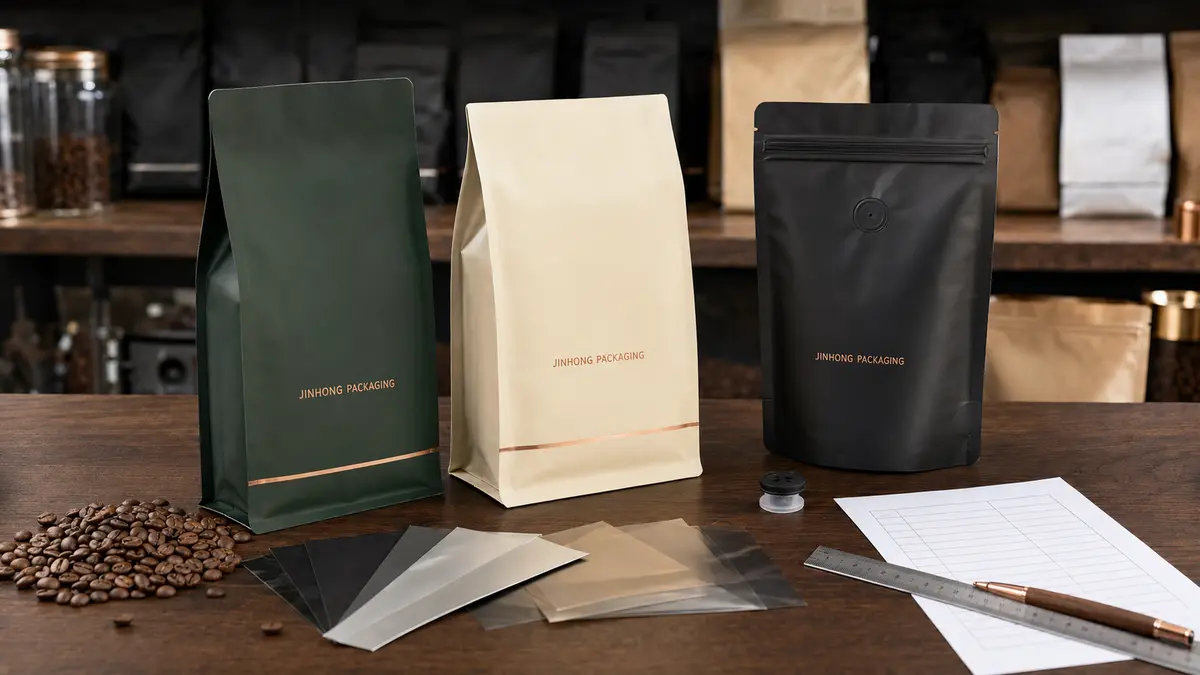
Choosing a coffee packaging supplier involves more than comparing bag prices and printed designs. The packaging must suit the coffee format, filling process, storage period, distribution channel, and intended market.
Roasted coffee can be affected by oxygen, moisture, light, heat, and loss of aroma. The correct packaging structure should support the required protection while remaining practical for filling, sealing, display, shipping, and customer use.
A supplier should be able to explain the proposed bag structure, dimensions, valve and zipper options, printing process, sample type, quantity, tolerances, packing method, and supporting documents. Statements such as “high barrier,” “food grade,” or “premium quality” are not complete specifications by themselves.
This coffee packaging supplier guide presents ten checks that coffee roasters and brands can use before requesting samples or placing an order.
1. Define the Coffee Product and Packing Process
Begin with the product and filling operation. Coffee beans, ground coffee, instant coffee, drip bags, capsules, and gift sets have different packaging requirements.
Prepare the following information:
• Coffee format
• Net fill weight
• Whole bean or ground coffee
• Roast level
• Expected time between roasting and packing
• Manual or automatic filling
• Filling temperature
• Required shelf-life target
• Storage conditions
• Retail or e-commerce channel
• Intended sales market
• Reclosing requirements
• One-time or repeated consumption
• Secondary packaging requirements
Whole Bean Coffee
Freshly roasted whole beans release carbon dioxide after roasting. Depending on the packing schedule and product strategy, a one-way degassing valve may be considered to allow internal gas to escape while limiting external air entry.
The valve does not replace an appropriate barrier structure or reliable seals. Valve specification, position, application method, and package integrity should be reviewed together.
Ground Coffee
Ground coffee has more exposed surface area than whole beans and can be especially sensitive to oxygen and aroma loss. The required barrier, fill method, headspace management, and resealing format should reflect the intended shelf life and customer use.
Instant Coffee and Single-Serve Products
Instant coffee may require moisture protection and suitable portion packaging. Stick packs, sachets, cartons, pouches, and jars involve different materials and filling equipment.
Single-serve drip coffee, pods, or capsules may also need an individual barrier package and an outer retail box.
Coffee Gift Sets
Coffee gift sets can combine flexible coffee bags with rigid boxes, folding cartons, mailer boxes, cups, brewers, or accessories.
The supplier should confirm both the primary coffee package and the presentation or transit packaging rather than treating them as one requirement.
Explore our coffee packaging solutions for common bag and secondary packaging options.
For projects combining coffee bags with presentation packaging, compare our magnetic gift boxes.
2. Compare Bag Structures Based on Use
Bag style affects shelf presentation, filling, sealing, storage, shipping volume, and customer convenience.
Flat-Bottom Coffee Bags
Flat-bottom bags have a stable base and multiple printable panels. They are often used for retail coffee because they combine shelf stability with a structured appearance.
Important details include:
• Bottom construction
• Side gusset width
• Top seal area
• Zipper position
• Valve position
• Finished dimensions
• Filling opening
• Seal compatibility
Learn more about flat-bottom coffee bags.
Side-Gusset Coffee Bags
Side-gusset bags expand along the sides and are commonly used for larger coffee quantities and traditional coffee packaging formats.
They may use a top seal, tin tie, adhesive tape, or other closure depending on the filling process and intended customer use.
The gusset, valve position, top clearance, and filled shape should be checked using the actual product weight.
See our side-gusset coffee bags for additional structure details.
Stand-Up Pouches
Stand-up pouches use a bottom gusset to create shelf stability. They can support zippers, valves, tear notches, and various printing options.
They may be suitable for smaller retail quantities, ground coffee, sample products, and e-commerce.
The base should be tested with the intended coffee weight because an empty pouch and a filled pouch can have very different proportions.
Quad-Seal Bags
Quad-seal bags use seals at the four vertical corners to create a structured pack. They may suit larger coffee quantities and automated or semi-automated filling arrangements.
Seam position, panel width, seal strength, and filling equipment compatibility should be confirmed.
Rollstock
Rollstock is supplied as printed packaging film for form-fill-seal equipment. It requires accurate specifications for web width, repeat length, registration marks, sealing layer, roll direction, core, roll diameter, and equipment compatibility.
Rollstock should not be ordered based only on a finished bag photograph. The filling equipment requirements must be confirmed first.
3. Review the Barrier Structure, Not Just the Material Name
Coffee packaging is often described using broad terms such as “kraft,” “foil,” “plastic,” or “recyclable.” These descriptions do not provide enough information to evaluate performance.
A coffee pouch may combine several layers, each serving a different function:
• Print surface
• Structural layer
• Barrier layer
• Adhesive layer
• Heat-seal layer
• Protective coating or varnish
The complete construction affects oxygen and moisture barrier, light protection, stiffness, print appearance, sealing, aroma retention, and recyclability considerations.
Ask for the Full Material Structure
The specification should identify the proposed layers and thicknesses rather than only the exterior appearance.
Examples may include combinations of:
• PET
• BOPP
• PE
• CPP
• Metallized films
• Aluminum foil
• PA or nylon
• Paper
• Coatings
The appropriate construction depends on the product, shelf-life target, filling process, storage, and distribution.
Request Relevant Barrier Data
Where barrier performance is important, ask whether data are available for:
• Oxygen transmission rate
• Water vapor transmission rate
• Test method
• Test temperature and humidity
• Overall film thickness
• Light barrier
• Seal strength
Barrier figures cannot be compared responsibly without the test conditions and complete material structure.
Understand the Role of Kraft Paper
A kraft-paper appearance does not automatically describe the full package. Some coffee bags use paper as an exterior layer combined with films that provide sealing and barrier performance.
Paper texture, color, printing, lamination, and the underlying structure should all be confirmed.
Evaluate Recyclability Claims Carefully
A mono-material-looking package is not automatically recyclable in every location. Collection systems, material combinations, valves, zippers, inks, adhesives, and local recycling facilities all influence the disposal pathway.
Ask for the specific construction and supporting information. Avoid broad claims such as “100% eco-friendly” without evidence and relevant qualifications.
4. Check the Valve, Zipper and Functional Features
Functional components affect packaging performance, filling, customer use, and cost.
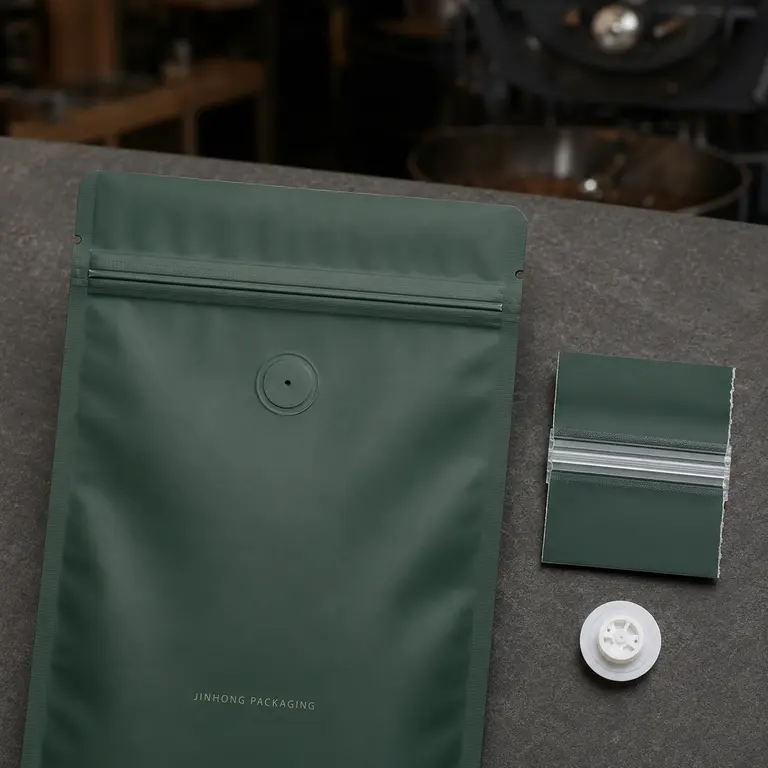
One-Way Degassing Valve
A valve may be considered for freshly roasted coffee that continues to release gas after packing.
Confirm:
• Valve type
• Valve supplier or specification
• Internal or external application
• Valve diameter
• Position from the bag edges
• Application method
• Use with the proposed film structure
• Performance testing
• Whether the valve is installed before delivery
A valve should be positioned where it does not interfere with graphics, zipper function, filling, or sealing.
Read more about coffee bags with valves.
Resealable Zipper
A zipper can help customers reclose the package after opening. The correct option depends on bag style, film thickness, filling process, product particles, and expected use.
Review:
• Zipper type
• Position
• Opening width
• Clearance above the zipper
• Tear notch position
• Seal area
• Ease of opening and reclosing
Coffee particles in the zipper area may affect closure performance, so filling and cleaning procedures also matter.
Tear Notches
Tear notches guide the customer when opening the package. They should be aligned, accessible, and positioned without weakening critical seals.
The opening path should leave enough material above the zipper and should not cut through important artwork or required information.
Tin Ties and Adhesive Closures
Tin ties and adhesive systems may be used on some side-gusset and paper-style coffee bags.
Confirm whether the closure is decorative, temporary, or intended for repeated use. Adhesive and application performance should be evaluated under the expected storage and handling conditions.
Hang Holes and Handles
Hang holes and handles affect load distribution and may require reinforcement. They should be tested with the intended filled weight and retail display method.
5. Confirm Size, Fill Weight and Sealing Requirements
A coffee bag should be sized using the actual coffee product rather than only a nominal fill weight.
Different beans and roast levels can have different bulk densities. A bag that holds 250 grams of one coffee may not present the same way with another product.
Provide the Intended Fill Weight
Common coffee quantities vary by market and brand. Do not assume that a standard bag dimension will fit every product.
The supplier may need:
• Target net weight
• Whole bean or ground coffee
• Representative product sample
• Desired headspace
• Valve and zipper position
• Filling method
• Top-seal width
• Required shelf appearance
Review Filled Dimensions
Ask to evaluate the filled package rather than only the flat dimensions.
Check:
• Front-panel distortion
• Gusset expansion
• Base stability
• Zipper usability
• Valve position
• Top-seal clearance
• Product movement
• Master-carton fit
Confirm the Top-Seal Area
The area above the zipper must allow sufficient space for filling and final sealing.
If the zipper is too close to the top, sealing equipment may not have enough clearance. If it is too low, the package may use unnecessary material or create an awkward opening.
Check Filling Equipment Compatibility
For automated or semi-automated filling, confirm:
• Maximum bag width
• Bag opening
• Gripping area
• Seal temperature range
• Seal dwell time
• Seal pressure
• Zipper clearance
• Valve location
• Static and film handling
• Required pouch orientation
The final seal settings should be established using the selected packaging structure and actual equipment.
6. Review Food-Contact Information and Target-Market Requirements
Coffee packaging components may include films, paper, inks, adhesives, coatings, valves, and zippers. The suitability of each component depends on its intended food-contact role and conditions of use.
Avoid relying only on phrases such as:
• FDA approved
• Food grade
• Food safe
• EU certified
• BPA free
These phrases are incomplete without identifying the specific material, intended use, applicable requirement, supporting document, and testing scope.
Ask What Documentation Is Available
Depending on the material and project, relevant documents may include:
• Material specification
• Declaration of compliance
• Food-contact statement
• Migration test report
• Heavy-metal or restricted-substance test
• Ink or adhesive information
• Valve specification
• Test standard and laboratory details
• Document issue date
• Intended food types and conditions of use
A report for one material structure, thickness, supplier, or condition should not automatically be applied to a different construction.
Confirm the Intended Use
Provide information about:
• Direct or indirect food contact
• Dry coffee beans or ground coffee
• Filling temperature
• Storage duration
• Room-temperature, chilled, or heated conditions
• Intended sales market
• Whether the printed surface contacts food
• Whether the packaging will be reused
Food-contact suitability is connected to the intended use rather than only the material name.
For the United States, the FDA explains that food-contact substances can include packaging components such as polymers, adhesives, colorants, and other materials. Businesses should review the regulatory status of the complete packaging construction for its intended use. See the FDA’s official information on Packaging and Food Contact Substances.
Clarify Responsibilities
The supplier can provide available material information, declarations, test reports, and production specifications.
The coffee brand or importer remains responsible for confirming that the final package, labeling, and intended use meet the requirements of the destination market. When requirements are unclear, consult an appropriate testing laboratory or regulatory specialist.
Jinhong Packaging coordinates available material documentation and testing requests through selected manufacturing partners, but does not replace the brand’s legal or regulatory review.
7. Evaluate Printing, Artwork and Brand Consistency
Printing should be reviewed according to the bag material, design, quantity, and expected repeat orders.
Common printing options for coffee packaging may include:
• Rotogravure printing
• Flexographic printing
• Digital printing
• Surface printing for selected structures
The correct method depends on material, artwork, color requirements, quantity, available equipment, and cost.
Confirm the Printing Specification
Ask the supplier to identify:
• Printing method
• Number of colors
• CMYK and spot-color use
• White ink requirements
• Matte or gloss appearance
• Printed and unprinted areas
• Interior or exterior printing
• Registration tolerance
• Plate or cylinder costs
• Repeat-order tooling arrangements
Do not describe CMYK and Pantone as printing methods. CMYK is a process-color system, while Pantone references are commonly used to communicate spot-color targets.
Prepare Artwork on the Final Dieline
Artwork should be created on the approved bag template.
The dieline may identify:
• Front and back panels
• Side or bottom gussets
• Seal areas
• Zipper position
• Valve position
• Tear notches
• Cut lines
• Registration marks
• White ink layer
• Varnish areas
• Barcode and QR code
• Required product information
Artwork completed on an approximate template may need substantial revision after the final dimensions and structure are confirmed.
Review Color on the Actual Material
Printed color changes according to:
• White, clear, metallized, or kraft substrate
• Matte or gloss surface
• White ink underbase
• Ink coverage
• Printing process
• Lamination and varnish
• Lighting
A color shown on a computer screen is not a reliable physical reference.
Use suitable proofs, printed material samples, spot-color references, or an approved production sample when color is important.
Check Barcodes and QR Codes
Codes should have sufficient contrast, size, quiet zones, and suitable placement.
Avoid placing them across:
• Gusset folds
• Seals
• Zippers
• Valves
• Strongly textured paper
• Highly reflective areas
Test the actual printed codes rather than only the digital artwork.
8. Request and Test Representative Samples
A sample should answer defined questions about the packaging.
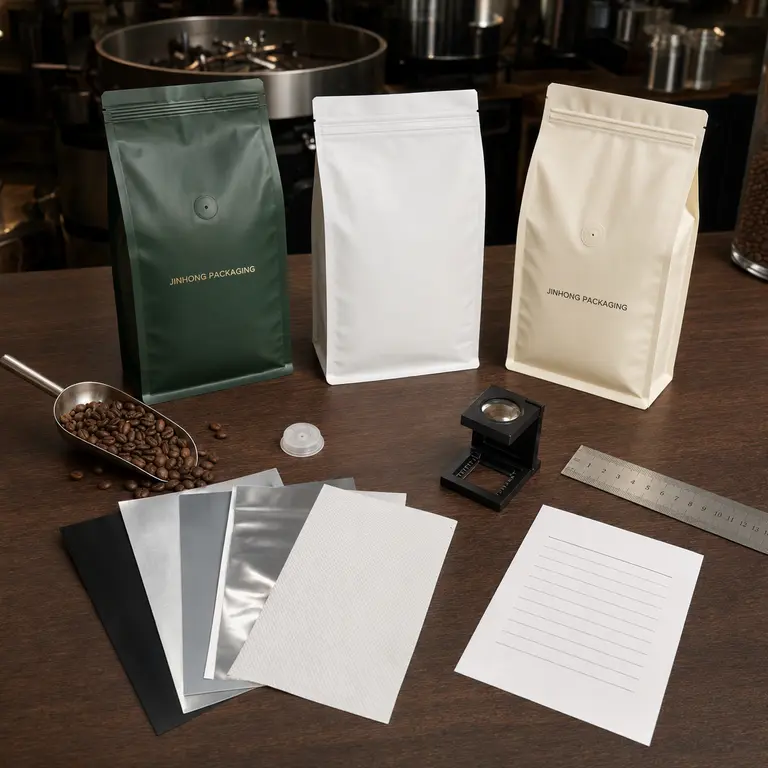
Stock Sample
A stock sample can show an existing bag structure, film feel, zipper, valve, print quality, or finish.
It may not match the required dimensions, material, or artwork.
Unprinted Custom-Size Sample
An unprinted sample can help confirm:
• Bag dimensions
• Fill volume
• Gusset expansion
• Zipper position
• Valve position
• Filling opening
• Top-seal clearance
• Filled appearance
It does not confirm final printing or color.
Digitally Printed Sample
A digitally printed sample may help review artwork placement and overall appearance.
If mass production uses rotogravure or flexographic printing, color and surface details may differ.
Production-Standard Sample
A closer production-standard sample may use final or similar material, printing, valve, zipper, and finishing processes.
It usually involves more time and cost. Ask exactly which features the sample represents before approval.
Conduct Filling and Sealing Trials
Use the intended coffee and filling process to check:
• Fill volume
• Bag opening
• Product contamination in seal areas
• Heat-seal settings
• Seal width
• Package appearance
• Zipper usability
• Valve position
• Gas release strategy
• Master-carton arrangement
Evaluate Seal Integrity
Depending on the project and risk level, evaluation may include:
• Visual seal inspection
• Manual pressure checks
• Leak testing
• Seal-strength testing
• Drop or handling trials
• Compression or transport simulation
• Filled-package storage trials
The test method, sample quantity, and acceptance criteria should be agreed according to the product and distribution requirements.
Confirm Shelf-Life Responsibility
A film supplier’s barrier data does not by itself establish the shelf life of the finished coffee product.
Shelf life can be influenced by:
• Coffee condition
• Roast
• Grinding
• Time before packing
• Residual oxygen
• Filling method
• Seal integrity
• Valve performance
• Storage temperature
• Light exposure
• Distribution
The coffee brand should validate the finished product and package together under representative conditions.
9. Compare MOQ, Pricing and Total Project Cost
The lowest bag price is not necessarily the lowest total project cost.
Request quotations using the same specification:
• Bag style
• Dimensions
• Material structure
• Thickness
• Printing method and colors
• Zipper
• Valve
• Tear notches
• Surface finish
• Quantity
• Artwork versions
• Sample requirements
• Packing method
• Delivery destination
Understand MOQ
MOQ may be influenced by:
• Film purchasing
• Printing setup
• Cylinder or plate preparation
• Bag-making setup
• Valve application
• Number of artwork versions
• Material structure
• Production-partner requirements
Digital printing may support smaller quantities for some structures, but available materials, sizes, colors, valves, and unit costs should still be compared.
Ask About One-Time Costs
Confirm whether the quotation includes:
• Printing plates or cylinders
• Dieline preparation
• Sample cost
• Sample delivery
• Valve cost
• Zipper cost
• Surface varnish
• Artwork version changes
• Inspection
• Master cartons
• Freight
• Duties and destination charges
Ask whether printing cylinders or plates can be reused for repeat orders and whether storage limits apply.
Compare Quantity Options
Requesting several quantity levels can show how setup costs affect the unit price.
However, also consider:
• Cash commitment
• Storage
• Roast portfolio changes
• Artwork updates
• Seasonal products
• New product demand
• Shipping volume
A larger quantity may reduce unit price while increasing inventory risk.
Confirm Production Quantity Tolerance
Custom production may allow an agreed overrun or underrun.
Confirm:
• Permitted variation
• How final quantities are invoiced
• Whether exact quantity is available
• How defective bags are handled
• Whether extra bags are packed separately
These details should appear in the quotation or purchase order.
10. Assess Communication, Coordination and Repeat-Order Support
A coffee packaging supplier should provide clear, specific, and traceable project information.
Evaluate the Quality of the Questions Asked
A useful partner should ask about:
• Coffee format
• Fill weight
• Bag style
• Dimensions
• Barrier needs
• Valve and zipper
• Filling method
• Printing
• Quantity
• Market
• Sample requirements
• Delivery destination
A quotation supplied without confirming these details may be based on assumptions.
Request Written Specifications
Important decisions should be recorded in a quotation, specification sheet, approved artwork, sample approval, or purchase order.
Avoid relying only on short messages or verbal descriptions such as “same as last time.”
Check Revision Control
Artwork and specification files should have clear version names and approval dates.
Before production, confirm:
• Final artwork version
• Final dimensions
• Material structure
• Valve and zipper position
• Printing colors
• Quantity
• Packing method
• Delivery information
Ask How Problems Are Handled
Before ordering, clarify the process for:
• Sample revisions
• Material changes
• Color differences
• Quantity differences
• Printing defects
• Seal or valve concerns
• Delivery delays
• Transport damage
• Claims and supporting evidence
A reliable process does not mean promising that problems will never occur. It means defining how information, inspection, corrective action, and communication will be managed.
Plan Repeat Orders
For repeat-order consistency, retain:
• Approved artwork
• Dieline
• Material specification
• Valve and zipper specification
• Color reference
• Approved sample
• Packing details
• Inspection record
• Printing cylinder or plate information
Before reordering, confirm whether material availability, artwork, product information, quantity, or regulatory requirements have changed.
Jinhong Packaging supports coffee packaging sourcing, structure and material comparison, sample coordination, production follow-up, document coordination, inspection arrangements, and shipment preparation through selected manufacturing partners.
Coffee Packaging Supplier RFQ Checklist
Include the following information when requesting a quotation:
• Coffee type: whole bean, ground, instant, or single serve
• Net fill weight
• Bag style
• Internal or finished dimensions
• Material or barrier requirements
• Valve requirement
• Zipper requirement
• Tear notch or other features
• Printing method or artwork requirements
• Number of colors or artwork versions
• Matte or gloss finish
• Quantity options
• Filling method
• Food-contact market and documentation needs
• Sample type
• Packing method
• Delivery destination
• Target schedule
• Reference images
If some details are not confirmed, identify which requirements are flexible. This makes it easier to compare technically suitable alternatives.
Common Mistakes When Choosing a Coffee Packaging Supplier
Comparing Only the Exterior Appearance
Two bags with a similar kraft or matte appearance may have different barrier structures, sealing layers, valves, and performance.
Requesting a Quote by Fill Weight Alone
A “250 g coffee bag” does not define dimensions. Coffee density, bag style, headspace, filling, and desired presentation all affect size.
Treating a Valve as the Complete Freshness Solution
A valve is one component. Barrier structure, residual oxygen, sealing, roast condition, storage, and distribution also influence product quality.
Approving Artwork Before the Bag Specification
Changing dimensions, gussets, zipper, valve, or seal areas can require artwork revision.
Accepting Broad Compliance Statements
Ask for the material, intended use, supporting document, test scope, and applicable market rather than relying only on “food grade” or “FDA approved.”
Skipping Filled-Bag Testing
An empty sample cannot fully show shelf stability, panel distortion, fill volume, zipper access, or top-seal clearance.
Ignoring Freight and Carton Packing
Finished bag quantity per carton, carton dimensions, gross weight, moisture protection, and pallet arrangement can affect delivered cost and handling.
Ordering Too Much for an Unproven Product
A lower unit price can lead to excess inventory if the coffee, artwork, size, or brand information changes.
Frequently Asked Questions About Coffee Packaging Suppliers
What information does a coffee packaging supplier need for a quotation?
Provide the coffee format, fill weight, bag style, dimensions, material requirements, valve, zipper, printing, quantity, sample needs, destination, and schedule. If dimensions are not confirmed, provide a representative coffee sample and desired filled appearance.
Which coffee bag style is best?
There is no single best style. Flat-bottom, side-gusset, stand-up, quad-seal, and rollstock formats suit different fill weights, equipment, presentation goals, and budgets.
Do all roasted coffee bags need a valve?
Not necessarily. The decision depends on the coffee, roast-to-pack timing, packaging format, distribution, and product strategy. Valve performance should be evaluated with the complete package.
What does high-barrier coffee packaging mean?
“High barrier” should be supported by a complete material specification and relevant performance data, such as oxygen and water-vapor transmission under stated test conditions.
Can kraft coffee bags protect freshness?
Kraft paper may provide the exterior appearance, but sealing and barrier performance usually depend on the complete multilayer or coated structure. Ask for the full material specification.
What sample should I request?
Use a stock sample for general structure and material review, a custom-size sample for fit and filling checks, and a closer production-standard sample when final printing, material, valve, zipper, and finishes must be evaluated.
How should I verify food-contact suitability?
Request material specifications and available declarations or test reports for the proposed structure and intended use. Confirm that the documentation applies to the target market, food type, and conditions of use.
Why do coffee packaging MOQs vary?
Can the same printing cylinders be used for repeat orders?
MOQ depends on material purchasing, printing setup, plates or cylinders, bag-making setup, valve application, artwork versions, and the selected production arrangement.
Often they can, provided the size and artwork remain unchanged and the tooling is still available and serviceable. Confirm ownership, storage period, reuse conditions, and any repeat-order charges.
How can I compare coffee packaging quotations?
Ensure every quotation uses the same dimensions, material structure, thickness, printing, valve, zipper, quantity, packing method, and delivery basis. Compare tooling, samples, freight, and excluded charges as well as unit price.
Final Thoughts
Choosing a coffee packaging supplier requires technical and commercial comparison. Bag style, size, barrier structure, valve, zipper, printing, food-contact information, sample type, MOQ, inspection, packing, and delivery should all be confirmed before production.
A useful supplier should explain the proposed specification, identify assumptions, coordinate representative samples, and record approved details for production and repeat orders.
Jinhong Packaging works as a packaging supplier and project coordination partner. We help coffee brands compare packaging options, coordinate samples, follow production, organize available documentation and inspection requirements, and prepare worldwide delivery through selected manufacturing partners.