
A coffee bag sizes guide should provide a practical starting point—not a universal answer. A 250g, 500g or 1kg coffee bag may require different dimensions depending on whether it contains whole beans or ground coffee, the selected bag structure, coffee density, required headspace and valve position.
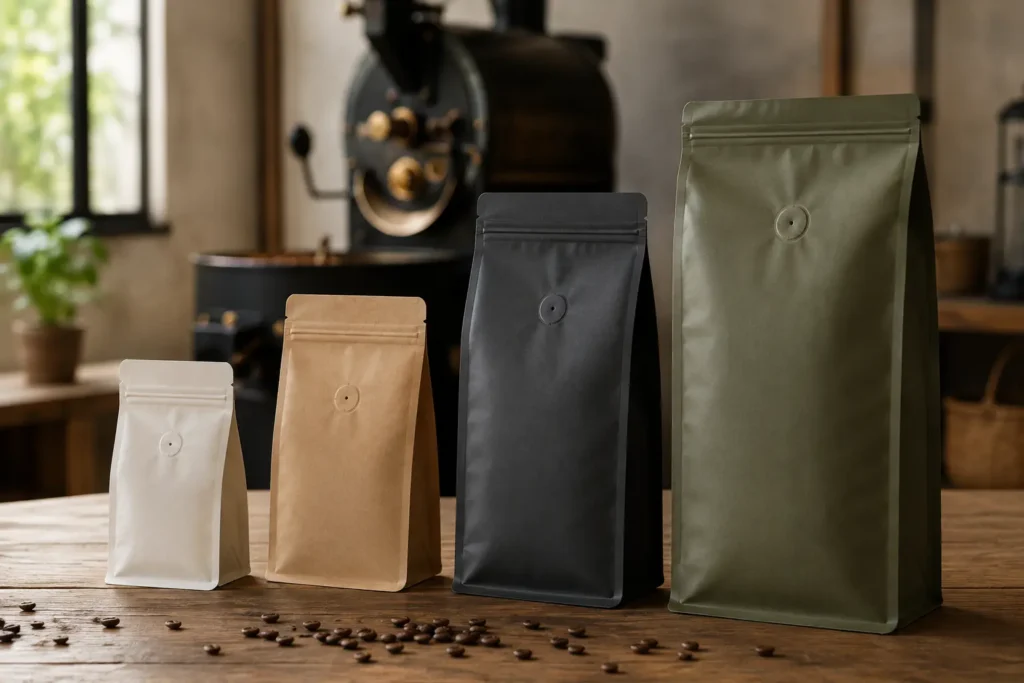
Quick Answer: How Do You Choose the Right Coffee Bag Size?
Start by confirming five details:
- Coffee format: whole bean or ground coffee
- Target filling weight
- Preferred bag style
- Coffee density and roast profile
- Required zipper, valve and sealing space
Common filling weights include 100g, 250g, 500g and 1kg, but filling weight alone is not enough to determine the final bag dimensions.
The safest process is to select an initial size, fill a blank sample with the actual coffee product and check its appearance, headspace, stability, zipper clearance, valve position and sealing area before approving production.
Why Coffee Bag Weight Does Not Equal Bag Size
Customers often request a “250g coffee bag” or “1kg coffee bag” without providing dimensions. This is understandable, but the same net weight can occupy different amounts of space.
The required dimensions may change because of:
- Whole-bean or ground coffee format
- Bean size and origin
- Light, medium or dark roast
- Coffee density
- Flat bottom, stand-up or side-gusset structure
- Required headspace
- Zipper and valve positions
- Filling equipment and sealing method
- Preferred shelf appearance
For example, two coffee products with the same net weight may not fill the same bag to the same level. One may appear properly filled, while the other may leave too much empty space or interfere with the zipper and sealing area.
Coffee Bag Sizes Guide: Common Filling Weights
The following filling weights are widely used for retail, subscription, wholesale and sample coffee packaging.
These are capacity categories rather than guaranteed bag dimensions. Final dimensions should always be confirmed using the actual coffee product.
100g coffee bags
A 100g coffee bag may be considered for:
- Coffee samples
- Trial products
- Gift sets
- Limited releases
- Multiple-origin tasting sets
- Travel or small retail formats
Stand-up pouches are commonly considered for compact sample packs, while small flat bottom bags may support a more structured presentation.
The customer should confirm whether the bag must include a zipper and valve because these features require additional space above the product.
250g coffee bags
A 250g coffee bag is a common retail format for specialty coffee, direct-to-consumer sales and subscription programs.
It can be developed as:
- Stand-up pouch
- Flat bottom pouch
- Side-gusset bag
- Coffee bag with a one-way valve
When selecting dimensions, consider whether the package should look compact and full or allow additional headspace. The bag should not be so small that coffee reaches the zipper or sealing area.
500g coffee bags
A 500g coffee bag may be used for larger retail packs, frequent coffee consumers, cafés and selected wholesale programs.
The additional product weight makes shelf stability and bag structure more important. Flat bottom and side-gusset bags may provide a structured appearance, while stand-up pouches can offer a flexible packaging format.
The bottom structure, material strength, seals and zipper should be reviewed with the actual filled product.
1kg coffee bags
A 1kg coffee bag is commonly considered for cafés, food-service customers, wholesale coffee, larger household packs and commercial distribution.
Larger bags require careful review of:
- Material strength
- Seal performance
- Bottom and side structure
- Filling method
- Valve position
- Zipper strength, if required
- Carton packing
- Handling during transportation
A bag that works for 250g should not simply be enlarged without checking the complete structure and filled-package performance.
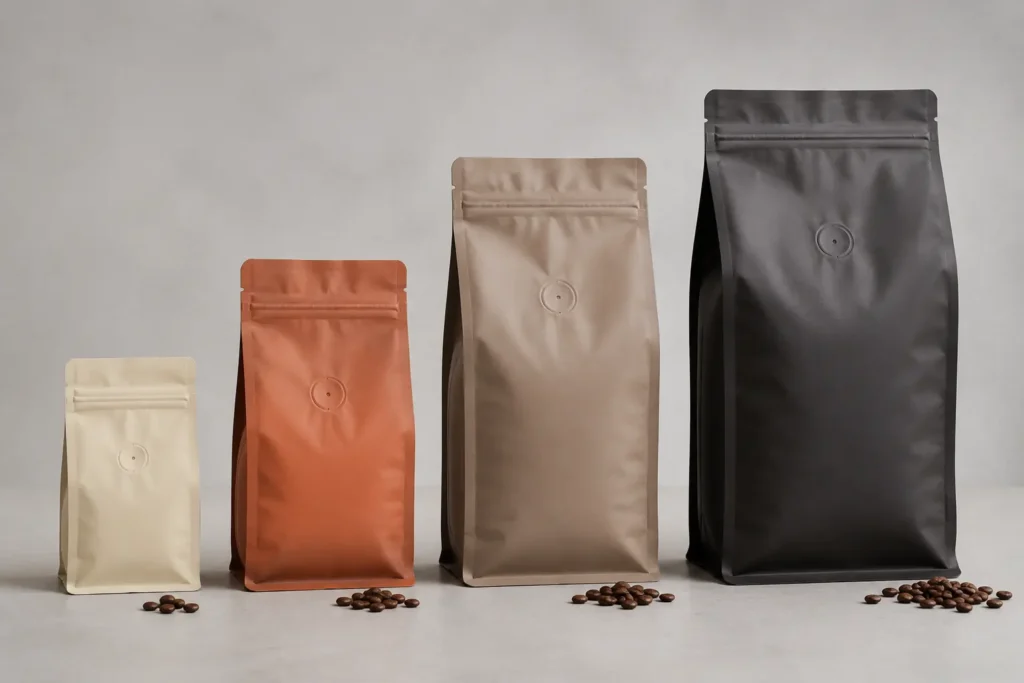
Whole-Bean Coffee vs Ground Coffee Bag Dimensions
Whole-bean and ground coffee may require different bag dimensions even when the net weight is identical.
Whole-bean coffee
Whole beans generally occupy more volume than densely packed ground coffee. Their volume can also vary according to bean size, origin and roast profile.
A darker roast may have a different density from a lighter roast. Therefore, a standard dimension that works for one whole-bean coffee may not create the same filled appearance with another.
Ground coffee
Ground coffee can settle more densely inside the package. Grind size and filling behavior should be confirmed before selecting dimensions.
Fine particles may also reach the zipper, valve or sealing area if the package has insufficient headspace or is handled incorrectly during filling.
For both formats, the actual product should be used during sample testing.
How Bag Style Changes the Required Dimensions
Different coffee bag structures use space differently. The same width and height do not provide the same usable capacity across every format.
Stand-up coffee pouches
Stand-up pouches use an expandable bottom gusset. They are flexible and commonly used for samples, ground coffee, whole beans and standard retail packs.
Important dimensions usually include:
- Bag width
- Bag height
- Bottom gusset depth
The final capacity depends on how the bottom gusset opens after filling.
Flat bottom coffee pouches
Flat bottom pouches have a structured base with front, back and side panels. Their box-like shape can provide stable shelf presentation and additional printable areas.
Important dimensions usually include:
- Bag width
- Bag height
- Side-gusset depth
- Bottom structure
A flat bottom pouch with the same front width as a stand-up pouch may have a different filling capacity because its construction is different.
Side-gusset coffee bags
Side-gusset bags expand along the sides and are commonly considered for traditional retail packs, larger quantities and commercial coffee products.
Important dimensions usually include:
- Bag width
- Bag height or length
- Side-gusset depth
The closure style, top seal and valve position should be confirmed before final dimensions are approved.
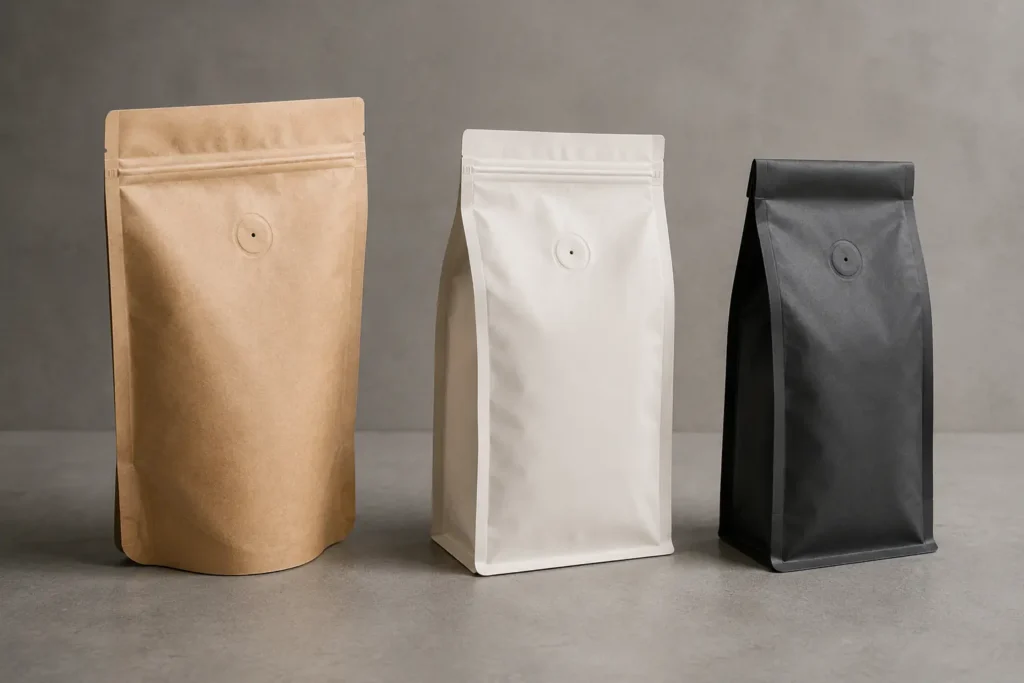
How Much Headspace Does a Coffee Bag Need?
Headspace is the space between the filled coffee and the upper functional area of the package.
The bag needs enough room for:
- Clean filling
- Zipper operation
- Valve clearance
- Top sealing
- Tear notch placement
- Consumer opening
- Coffee movement during handling
Too little headspace can cause coffee to enter the zipper or sealing area. This may affect closure operation or make it harder to create a clean seal.
Too much headspace may make the package look underfilled and can affect shelf presentation or carton efficiency.
There is no single headspace measurement suitable for every project. It should be reviewed according to the coffee, bag format, filling method and required features.
How Valve Position Affects Coffee Bag Size
When a one-way degassing valve is required, its position must be coordinated with the intended filling level.
The valve is generally placed above the coffee so that beans or ground coffee do not continuously contact the valve area. It must also remain clear of:
- The zipper
- Top and side seals
- Tear notches
- Important printed information
- Artwork registration areas
A bag with insufficient height may not provide enough room for the product, zipper, valve and final seal. Valve position should therefore be confirmed before the artwork is approved.
For additional information, read our Coffee Bag Degassing Valve Selection Guide.
How the Zipper and Top Seal Affect Bag Height
A resealable zipper improves consumer convenience but occupies space in the upper part of the bag.
Above the zipper, the package may also require:
- A tear-off section
- Tear notches
- An opening area
- A final top seal
If these areas are not considered when selecting the height, the finished bag may have insufficient filling space or an awkward opening position.
Customers should provide their required opening style before finalizing the dieline and artwork.
Why Filled Samples Are More Reliable Than Empty Samples
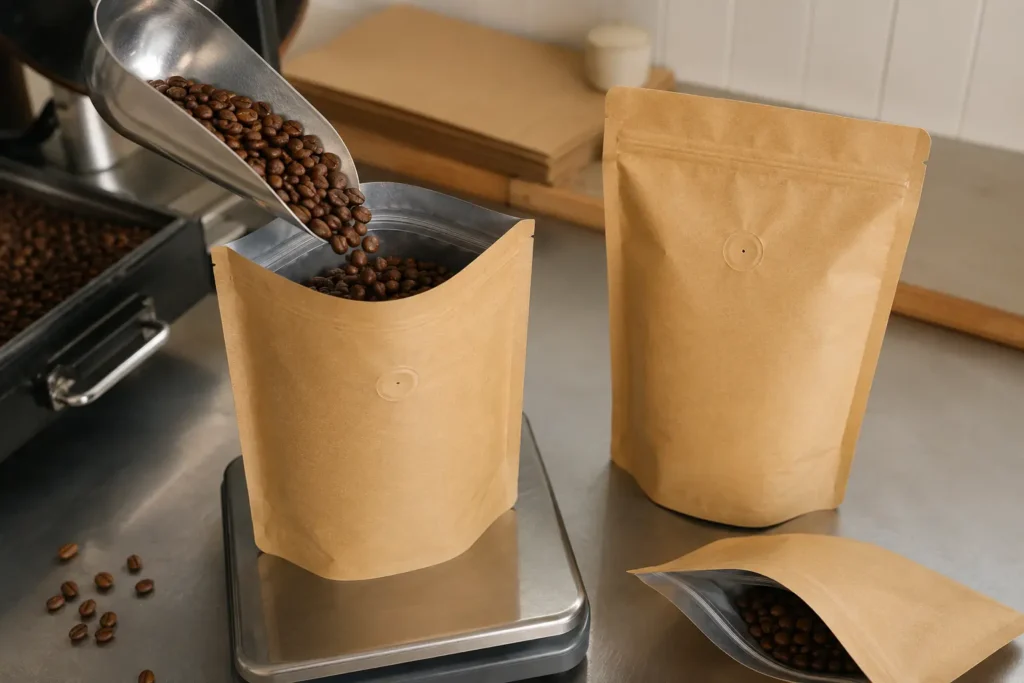
An empty pouch can help review material, printing, finish, zipper and general construction. However, it cannot fully show how the package will perform after filling.
A filled sample helps review:
- Actual capacity
- Product filling level
- Headspace
- Shelf stability
- Front and side appearance
- Bottom-gusset opening
- Zipper clearance
- Valve position
- Top sealing area
- Carton fit
Whenever possible, customers should fill samples with their actual coffee rather than using rice, water or another substitute. Different products do not behave the same way inside a flexible package.
Common Coffee Bag Sizing Mistakes
Selecting dimensions only by filling weight
A filling weight such as 250g does not confirm the product volume or required dimensions.
Copying another brand’s bag
A competitor’s package may use a different coffee density, material, structure, zipper, valve or filling process.
Approving an empty sample
The package may look suitable while empty but become unstable, overfilled or underfilled after adding the coffee.
Forgetting the zipper and valve area
Functional features require additional space and must be coordinated with the filling level.
Using one size for whole beans and ground coffee without testing
The two formats may occupy different volumes at the same net weight.
Ignoring the shipping carton
Bag dimensions affect carton quantity, stacking, transportation efficiency and finished-package presentation.
Finalizing artwork before confirming dimensions
Artwork should be prepared using the approved dieline after the bag dimensions, valve position, zipper and sealing areas have been confirmed.
What Information Should You Provide for Size Review?
Before requesting samples or a quotation, provide:
- Whole-bean or ground coffee
- Roast profile, if available
- Target filling weight
- Preferred bag style
- Current packaging dimensions, if applicable
- Required zipper and valve
- Expected shelf life
- Filling and sealing method
- Number of printed designs
- Required quantity for each size and design
- Destination country, city or port
- Product or current packaging photos
If the final dimensions are not yet known, an existing filled package or a sample of the actual coffee can help begin the review.
Frequently Asked Questions
What size bag do I need for 250g of coffee?
There is no universal dimension for every 250g coffee product. The correct size depends on whole-bean or ground format, coffee density, bag style, zipper, valve, headspace and desired appearance. A filled sample should be tested before production.
Can the same bag hold 250g of whole beans and ground coffee?
It may physically hold both, but the filled appearance and required headspace can differ. Whole beans and ground coffee should be tested separately when size accuracy is important.
What bag style is suitable for 500g of coffee?
Stand-up, flat bottom and side-gusset bags can all be considered. The final choice depends on the coffee, brand presentation, filling process, required features, quantity and budget.
Can I use a zipper and valve on a 100g sample bag?
These features may be possible, but a small bag provides limited functional space. The zipper, valve, tear notch, filling level and top seal must be coordinated carefully.
Are 1kg coffee bags suitable for retail?
Yes. They may be used for larger consumer packs, cafés, wholesale customers and food-service applications. Material strength, sealing, handling and carton packing should be reviewed for the heavier filled package.
Should I choose dimensions before designing the artwork?
Yes. Confirm the bag style, dimensions, zipper, valve and sealing areas first. The final artwork should be prepared using the approved dieline.
Can standard coffee bag dimensions be customized?
Yes. Dimensions can usually be coordinated according to the coffee format, filling weight, structure and project requirements. Custom dimensions may affect MOQ, tooling, price and production lead time.
Planning a Custom Coffee Bag Project?
Share your coffee format, filling weight, preferred bag style, required features, quantity, artwork and delivery destination.
Jinhong Packaging can coordinate specification review, samples, production follow-up and delivery preparation through selected manufacturing partners.
Contact Jinhong Packaging to discuss your coffee bag size, samples and quotation requirements.