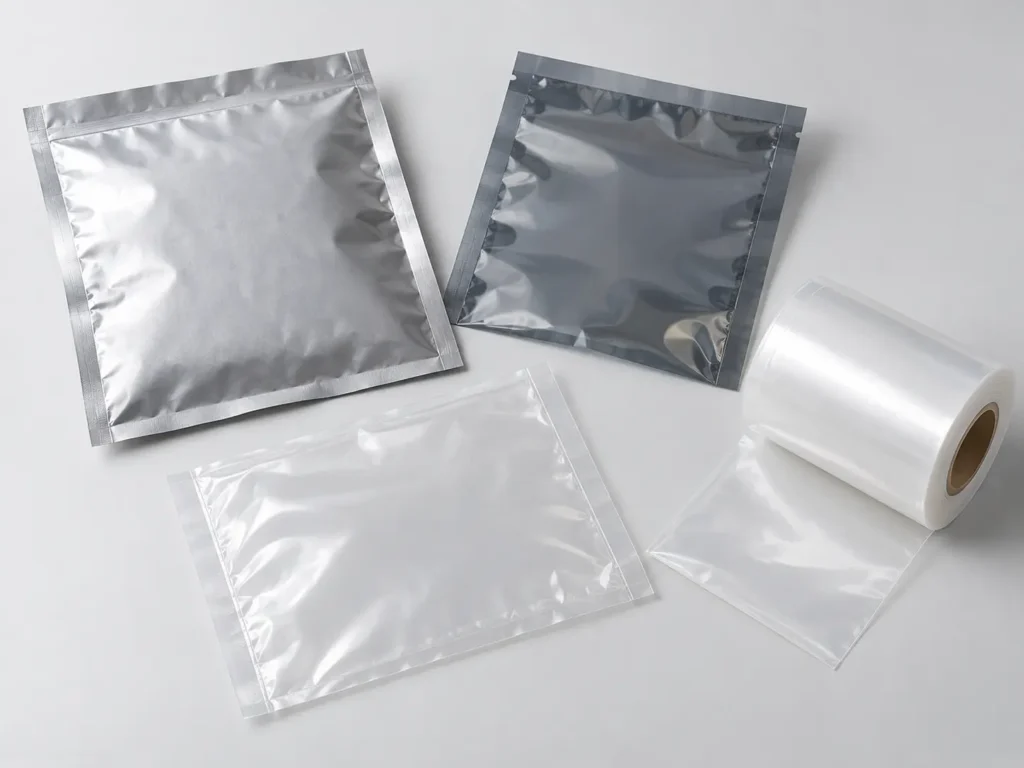
Protective and Clean Packaging Solutions
Moisture barrier, ESD and clean packaging solutions for electronics, precision components and medical device production. We coordinate material selection, custom specifications, sampling and documentation through selected production partners.
What Is Protective and Clean Packaging?
Protective and clean packaging is designed to control risks such as moisture, electrostatic discharge, dust and particulate contamination. The appropriate packaging depends on the product, sensitivity level, storage conditions, handling process and required documentation.
Jinhong Packaging supports specification-based sourcing for moisture-sensitive electronics, precision components, cleanroom materials and non-sterile medical device applications.
Moisture Barrier Packaging
Aluminum foil and multilayer barrier bags for components and products requiring protection from humidity, oxygen, light or long-term storage conditions.
ESD & Static Shielding Packaging
Anti-static, static-dissipative and shielding packaging options for electronic components, PCBs, precision instruments and other static-sensitive products.
Clean Packaging Solutions
Clean PE bags, cleanroom films and related packaging formats for controlled handling, cleanroom transfer and contamination-sensitive applications.
Medical Clean Non-Sterile Packaging
Clean packaging for medical devices, components and production materials that require particulate control and protected handling but do not require a validated sterile barrier at this stage.
Industries We Support
These packaging solutions are intended for products that require controlled protection rather than decorative retail packaging. Material and packaging recommendations are reviewed according to the product, handling process, storage conditions and required level of protection.
Electronics & PCBs
Moisture-sensitive components, printed circuit boards, sensors and assemblies requiring ESD, humidity or contamination protection.
Semiconductors & Precision Components
Sensitive parts, wafers, instruments and precision components requiring clean handling, static control or long-term barrier protection.
Medical Device Production
Medical devices, components and production materials requiring clean non-sterile packaging before assembly, transfer or further processing.
Cleanroom & Controlled Environments
Materials, tools and components transferred into cleanrooms or controlled production areas using clean PE bags, films or multiple-bag configurations.
How to Choose the Right Protective Packaging
The correct packaging format depends on the main risk to the product. Some applications require only particulate control, while others may need moisture protection, electrostatic shielding or a combination of several functions.
| Protection Requirement | Packaging Options | Typical Applications |
|---|---|---|
| Moisture and Humidity Control | Aluminum foil barrier bags, multilayer moisture barrier bags , desiccants and humidity indicator cards | Electronic components, precision parts, instruments and long-term storage |
| Electrostatic Discharge Protection | Anti-static bags, static-dissipative bags, shielding bags, ESD bubble bags and trays | PCBs, sensors, electronic assemblies and static-sensitive components |
| Particulate and Contamination Control | Clean PE bags, cleanroom films and multiple-bag configurations | Cleanroom materials, precision components and controlled production |
| Clean Non-Sterile Medical Protection | Clean PE, nylon or barrier packaging selected according to the device and process | Medical device components, production materials and pre-processing protection. For sterile barrier applications, see our medical and healthcare packaging solutions . |
| Combined Protection | Clean ESD bags or moisture barrier shielding structures | Products sensitive to moisture, static and contamination simultaneously |
Final material structures, performance requirements, testing documentation and minimum order quantities are confirmed according to the specific product and project.
Our Protective Packaging Project Process
Protective packaging projects begin with the product and its actual risk conditions. We coordinate the specification, sampling and production process so that buyers can evaluate an appropriate packaging option before placing a full order.
1. Application Review
We review the product, industry, handling process, storage period and the main risks that the packaging needs to control.
2. Protection Requirements
The required moisture barrier, ESD protection, cleanliness, puncture resistance and sealing method are identified according to the application.
3. Material & Format Selection
Suitable bag materials, structures, thicknesses, dimensions and accessory options are compared through selected production partners.
4. Sampling & Documentation
Samples can generally be prepared in around 10 days, depending on the product and specification. Available testing documents are reviewed according to the selected material and project requirements.
5. Production Coordination
After sample and specification approval, we coordinate order details, quality requirements, packaging, documentation and delivery arrangements.
Please include the product, required protection, dimensions, quantity and destination market when requesting a quotation.
Information Needed for a Protective Packaging Quote
Protective packaging cannot be selected by bag size alone. Providing the following information helps us compare suitable materials, confirm feasibility and prepare a more accurate quotation.
Product & Application
• Product or component being packed
• Industry and intended use
• Main protection requirement
• Whether the product is moisture-sensitive, static-sensitive or contamination-sensitive
• Storage and transport conditions
• Destination market
Packaging Specifications
• Bag or film dimensions
• Required thickness, if known
• Preferred material or existing structure
• Sealing method
• Printing or labeling requirements
• Estimated order quantity
• Required testing or documentation
• Reference sample, drawing or current packaging photo
If the complete specification is not yet available, send us the product details, application and current packaging information. We can help organize the questions required for an initial material comparison.
Frequently Asked Questions
What is the difference between anti-static and static shielding packaging?
Anti-static packaging helps reduce charge generation on the packaging surface. Static shielding packaging is designed to provide additional protection against electrostatic discharge from outside the package. The appropriate option depends on the sensitivity of the component and the required ESD protection level.
Do moisture barrier bags always require desiccants and humidity indicator cards?
Not always. Desiccants and humidity indicator cards may be used when the product, storage period or handling process requires controlled humidity inside the package. The quantity and configuration should be confirmed according to the bag structure, package volume and protection requirements.
What is the difference between a clean PE bag and an ordinary PE bag?
Clean PE bags are intended for applications where particulate contamination and handling conditions must be controlled. Material formulation, production environment, cleaning, packaging and testing requirements may differ from ordinary general-purpose PE bags.
Is clean non-sterile medical packaging the same as sterile barrier packaging?
No. Clean non-sterile packaging can help protect medical devices or components from particles, dust and handling contamination, but it does not automatically provide a validated sterile barrier. Sterile barrier packaging requires separate material, sealing, sterilization and validation considerations.
Can protective packaging combine moisture, ESD and cleanliness control?
Yes. Some applications require more than one type of protection. Clean ESD bags, moisture barrier shielding structures and related accessories can be evaluated according to the product, handling process and required performance. The final material structure, testing requirements and supporting documentation must be confirmed for each project.
What is the minimum order quantity?
MOQ varies by product type, material, thickness, dimensions, printing and packaging requirements. Standard products may support smaller quantities, while custom structures, sizes or printing generally require project-specific confirmation.
Can you provide samples and testing documentation?
Samples can generally be prepared in around 10 days, depending on the product and specification. Available testing reports and supporting documents are reviewed according to the selected material and project requirements.
Discuss Your Protective Packaging Requirements
Tell us what you are packaging, the risks that need to be controlled and any known material, size or documentation requirements. Jinhong Packaging can coordinate an initial specification review, sampling and quotation through selected production partners.
Helpful details include product type, required protection, dimensions, quantity, destination market and any current packaging reference.