
REAL SHIPPING REVIEW
Mailer Box Shipping Protection Review
A practical review of a 25 × 20 × 7 cm corrugated mailer box used for an actual international air courier shipment from China to Japan. This page examines the folding structure, closure details, internal packing space and condition after delivery.
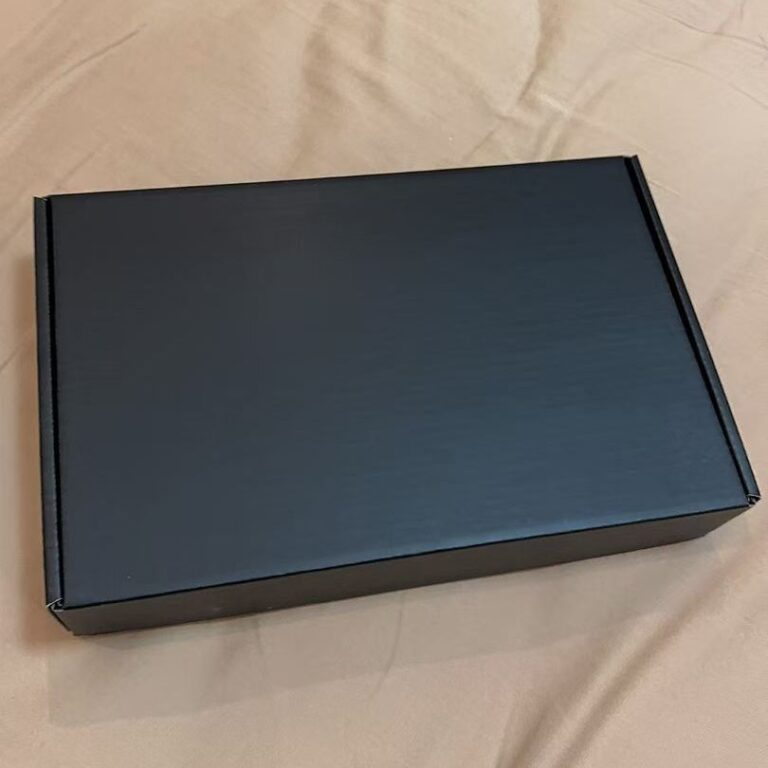
Physical sample personally inspected and photographed by Jinhong Packaging.
About This Mailer Box Shipping Protection Review
This mailer box shipping protection review is based on a physical packaging sample personally inspected and photographed by Jinhong Packaging. The box was used for an actual international air courier shipment from China to Japan.
The observations on this page reflect the condition of this specific box and its approximately 250 g contents after delivery. They should not be interpreted as certified laboratory drop, compression or vibration test results, or as a guarantee of performance under every shipping condition.
This sample is presented as a practical structure and packing reference. It is not represented as a verified Jinhong customer order or as packaging manufactured directly by Jinhong Packaging.
Mailer Box Specifications and Material Structure
This compact corrugated mailer box combines a folding structure with a relatively low profile, making it suitable for lightweight products that require organized presentation and basic protection during delivery.
Size
25 × 20 × 7 cm
Board Thickness
Approximately 1.8 mm
Material Structure
Two high-basis-weight liner layers with a corrugated medium between them
Box Style
One-piece folding corrugated mailer box
Shipping Route
China to Japan by international air courier
Packed Product
Approximately 250 g decorative art piece
Board thickness alone does not determine shipping performance. Product weight, internal clearance, flute profile, paper strength, folding accuracy, closure design and cushioning materials should be considered together when developing a mailer box specification.
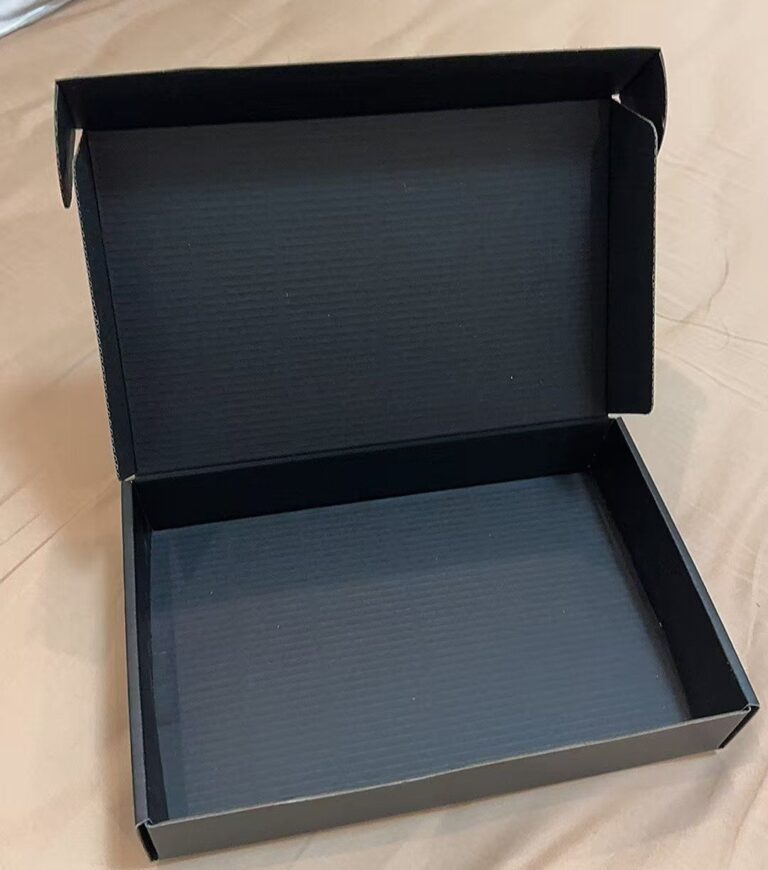
Open-box view showing the integrated lid, folded side walls and internal packing area.
Folding Structure and Closure Details
The mailer box is formed from a single corrugated board blank. The hinged lid, folded side walls and front tuck closure create an integrated structure without requiring a separate lid.
The side panels fold inward to reinforce the edges, while the side flaps help limit open gaps around the lid when the box is closed. The front tuck section holds the lid in position during handling and delivery.
Accurate die-cutting and crease placement are important for this style. If the crease lines, slots or tuck sections are not coordinated correctly with the board thickness, the box may become difficult to assemble, fail to close evenly or develop unnecessary pressure around the corners.
Tuck Flap and Corner Closure Review
The front tuck flap slides into the folded side section to keep the lid closed. This detail avoids the need for a separate lid and allows the box to remain compact during packing and handling.
The close-up view shows how the corrugated board thickness, folded edge and insertion gap interact. The opening must provide enough clearance for easy assembly without becoming so loose that the lid can move during transportation.
The corners are common pressure points on a mailer box. Repeated folding, inaccurate creasing or excessive force during closure can weaken the paper surface around these areas. For custom production, a physical sample should be assembled and checked before the final structure and board specification are approved.
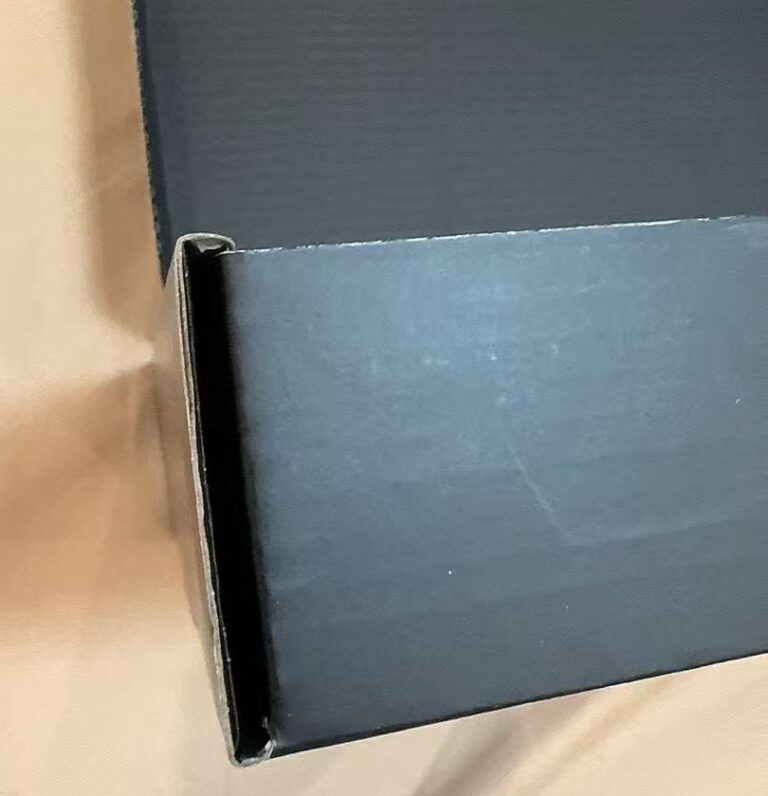
Close-up view of the tuck flap, folded board edge and corner closure.
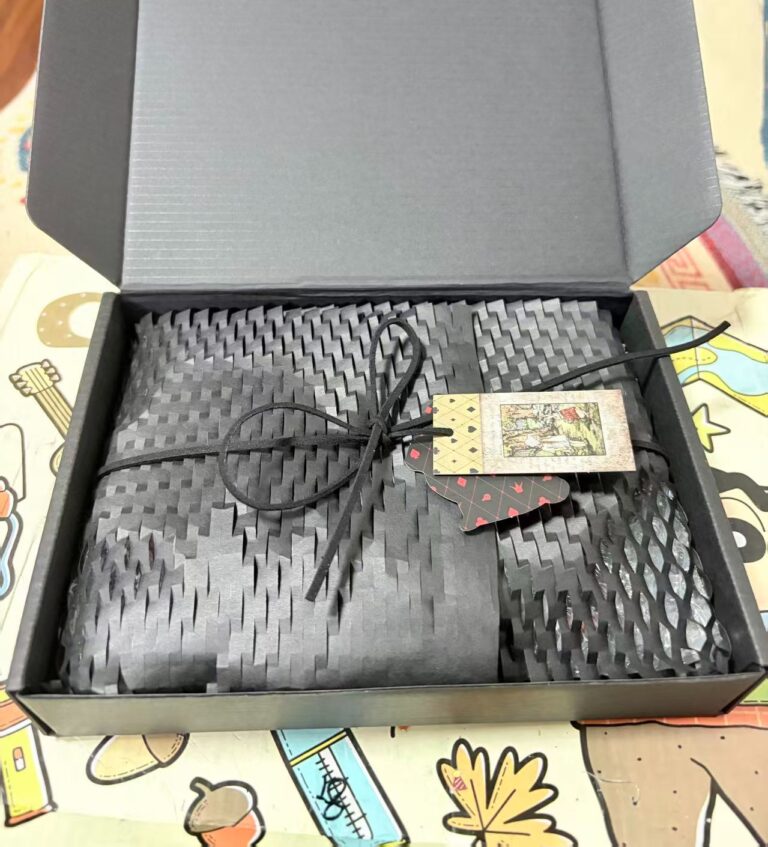
Actual packing arrangement using black honeycomb paper around the decorative item.
Internal Positioning and Protective Filling
For this shipment, an approximately 250 g decorative art piece was wrapped and supported with black honeycomb paper. The cushioning material helped reduce direct contact with the corrugated walls and limited movement within the available packing space.
A mailer box should not be selected only according to the external product dimensions. Additional space may be required for wrapping, inserts or other cushioning materials. However, excessive empty space can allow the product to move and may increase the risk of impact during handling.
The internal dimensions, product shape and selected protective material should therefore be reviewed together. For fragile, sharp-edged or higher-value items, a fitted insert or additional edge protection may be more appropriate than loose paper filling alone.
Condition After International Air Courier Delivery
The packed mailer box was shipped from China to Japan by international air courier. During international transportation, individual parcels may be consolidated with other shipments and placed under varying levels of contact or pressure.
After delivery, the decorative art piece inside remained undamaged. The mailer box showed no tearing, opening or significant structural deformation. Its folding structure and closure remained intact.
Minor pressure marks were visible on the outer surface. These marks were consistent with the type of contact that may occur when parcels are packed closely with other items during consolidated transportation. They slightly affected the surface appearance but did not cause the box to break or expose the product.
This result documents one actual shipment only. It does not guarantee identical performance for different products, weights, packing methods, courier networks or handling conditions.
Product Condition
No visible damage after delivery
Box Structure
No tearing, opening or significant deformation
Surface Condition
Minor pressure marks from transportation contact
Condition After International Air Courier Delivery
What Was Observed
• The box completed an actual courier shipment from China to Japan.
• The approximately 250 g product arrived without visible damage.
• The box remained closed and structurally intact.
• Minor pressure marks appeared on the exterior surface.
What Was Not Tested
• No certified drop test was performed.
• No laboratory compression value was recorded.
• No vibration or moisture-resistance test was conducted.
• The result does not confirm performance for heavier or more fragile products.
Shipping Risks to Consider Before Custom Production
The condition of this sample shows that a mailer box can remain structurally intact during an international courier shipment, but packaging specifications should still be matched to the product and expected handling environment.
Product Movement
Excessive internal space can allow the product to shift during handling. The box size, wrapping thickness and product position should be coordinated before production.
Corner and Edge Pressure
Corners and folded edges may receive concentrated pressure when parcels are stacked or packed closely together. Fragile products may require additional edge protection or a fitted insert.
Surface Marks
Dark solid-colour surfaces can make rubbing, scratches and pressure marks more visible. Material, coating and finishing choices should be reviewed when appearance after delivery is important.
Weight and Fragility
The approximately 250 g item used in this shipment was lightweight. Heavier, sharper or more fragile products may require a stronger board structure, additional cushioning or a different packaging format.
Domestic and International Courier Considerations
A short domestic shipment and an international air courier shipment may expose the same box to different handling conditions. International parcels may pass through additional sorting, consolidation, transfer and delivery stages, increasing the opportunities for surface contact and external pressure.
In this shipment, the box reached Japan without tearing or significant deformation, although minor pressure marks appeared on the exterior. Similar marks had not been observed during the shorter domestic handling of this sample.
This comparison is an observation from the handling of this particular box rather than a general guarantee. Courier practices, parcel consolidation, route length, weather exposure and the surrounding shipment load can all affect the final condition.
Surface Appearance and Printing Considerations
The black outer surface gives the mailer box a clean and understated appearance, but dark solid colours can reveal pressure lines, edge wear, dust and rubbing more easily than lighter or patterned designs.
When a box is intended to serve as both shipping packaging and part of the customer’s unboxing experience, surface durability should be considered alongside visual design. Depending on the project, options such as surface coating, lamination, lighter background colours or intentional graphic patterns may help reduce the visual impact of minor handling marks.
Printing and finishing should not be selected independently from the board structure. Dark ink coverage, folding direction, crease placement and surface treatment should be reviewed together during sampling because folded and high-contact areas may respond differently from flat display surfaces.
Specification and Sampling Coordination
A mailer box specification should be developed around the product rather than selected from board thickness alone. Product dimensions, weight, fragility, internal clearance, cushioning method, closure design and expected shipping conditions all affect the final structure.
Jinhong Packaging helps coordinate packaging specifications with selected manufacturing partners, including box dimensions, corrugated board options, printing requirements, surface finishing and sample preparation. Physical samples can then be assembled and reviewed before production details are confirmed.
For shipping-oriented packaging, the sample review should include more than appearance. The product fit, folding resistance, tuck-flap clearance, corner formation, empty-space control and packing process should also be checked. When a project requires formal transport verification, the appropriate test standard and third-party testing requirements should be confirmed separately.
1. Product Review
Confirm dimensions, weight, shape and fragile areas.
2. Structure Selection
Coordinate the box style, board structure and closure method.
3. Packing Plan
Allow space for wrapping, inserts or protective filling.
4. Physical Sample
Assemble and inspect the fit, folds, corners and closure.
5. Final Confirmation
Confirm printing, finishing, quantity and production details.
Information Needed for a Mailer Box Assessment
To evaluate a custom mailer box project more accurately, please provide the following information:
- Product dimensions and packed weight
- Product photos or a physical reference sample
- Fragile areas and surface-protection requirements
- Preferred internal packing or insert method
- Expected shipping destination and courier method
- Required box quantity and quantity per design
- Printing artwork, colours and finishing preferences
- Any required drop, compression or transport-test standard
If every technical detail is not yet available, the project can begin with the product size, approximate weight, destination and intended quantity. The remaining packaging specifications can then be coordinated during sampling.
For projects involving growing brands, new product launches or flexible order quantities, see our custom packaging for growing brands service page. You can also review our custom mailer boxes options for additional structure and customization references.
Frequently Asked Questions
Is this mailer box shipping protection review based on a real shipment?
Yes. The physical box shown on this page was personally inspected and photographed by Jinhong Packaging. It was used to send an approximately 250 g decorative art piece from China to Japan by international air courier.
Did the product arrive without damage?
Yes. The product showed no visible damage after delivery. The box remained closed and showed no tearing or significant structural deformation, although minor pressure marks were visible on the outer surface.
Does this result prove that the box is suitable for every product?
No. This page documents one actual shipment and is not a guarantee for other products or shipping conditions. Product weight, fragility, internal clearance, cushioning, courier handling and route conditions can all affect packaging performance.
Was the box tested in a certified laboratory?
No. The shipment was a practical courier-use observation rather than a certified drop, compression, vibration or moisture-resistance test. Formal testing requirements should be confirmed separately when needed.
Is 1.8 mm corrugated board suitable for international shipping?
Thickness alone is not enough to determine suitability. The paper strength, corrugated structure, product weight, box dimensions, closure design, internal protection and shipping environment should be evaluated together.
Can the box size, colour and internal packing be customized?
Yes. Dimensions, board options, printing, surface finishing and internal packing can be coordinated according to the product and order requirements. Final feasibility and minimum order quantity depend on the selected specifications.
What information is needed to prepare a quotation?
Please provide the required box dimensions, product size and weight, quantity, printing artwork or colour requirements, preferred finishing, internal packing method and delivery destination. If some details are not yet confirmed, the project can begin with the basic product information.
Planning a Custom Mailer Box Project?
Share your product dimensions, packed weight, order quantity and expected shipping destination. Jinhong Packaging can help coordinate the box structure, material options, printing details and physical sampling with selected manufacturing partners.
Minimum order quantities generally range from 500 to 10,000 pieces, depending on the packaging type, dimensions, material structure, printing method, finishing requirements and quantity per design.