
A coffee bag degassing valve is a small one-way component that allows carbon dioxide released by freshly roasted coffee to leave a sealed package while helping limit outside oxygen from entering. However, selecting a valve should not be treated as an isolated decision. Coffee format, packing schedule, bag material, valve position, filling process and distribution requirements should be reviewed together.
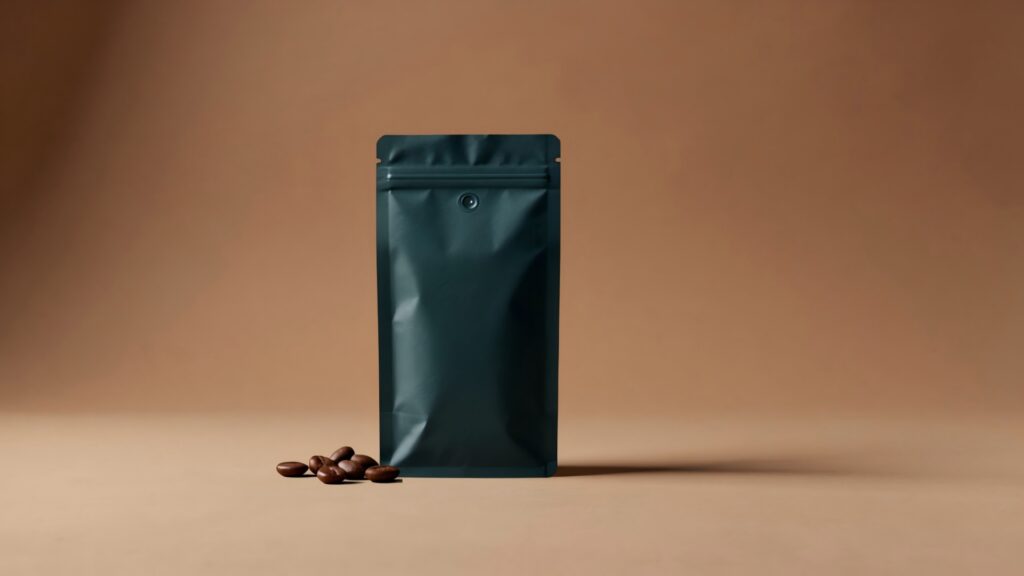
Quick Answer: How Should You Select a Coffee Bag Degassing Valve?
Start by confirming whether the product is whole-bean, ground or instant coffee, how soon it will be packed after roasting, the required bag format and barrier structure, and how the valve will be applied.
The appropriate configuration should then be checked through samples and packaging trials under the customer’s actual filling, sealing, storage and distribution conditions.
What Does a Coffee Bag Degassing Valve Do?
Freshly roasted coffee continues to release carbon dioxide after roasting. If the coffee is packed and sealed while it is still actively degassing, pressure may build inside the package and cause the bag to expand.
A one-way degassing valve provides a controlled route for this gas to escape. At the same time, its one-way design helps reduce the entry of outside air through the valve. This supports package stability while the coffee continues to degas.
The valve is only one part of the freshness-protection system. The packaging film, barrier performance, seals, zipper and filling process also affect the final performance of the package.
Important: A degassing valve does not compensate for a low-barrier film, an unsuitable seal or an incorrect filling process. Valve and bag specifications should be evaluated as one packaging system.
Does Every Coffee Bag Need a Degassing Valve?
Not every coffee product automatically requires a valve. The decision depends mainly on the product and the time between roasting, filling and sealing.
A valve is commonly considered when:
- Whole-bean or ground coffee is packed relatively soon after roasting.
- The coffee will continue releasing gas after the package is sealed.
- The package must remain sealed during retail, e-commerce or wholesale distribution.
- Package expansion could affect shelf presentation, carton packing or transportation.
- The roaster wants to combine degassing control with a suitable high-barrier bag.
A valve may not be necessary when:
- The coffee has already completed the required resting or degassing period before packing.
- The product is instant coffee rather than freshly roasted coffee.
- The package is a small single-use or sample format intended for rapid consumption.
- The packaging process uses a different validated approach for controlling gas and oxygen.
Because roast profile, grind size, packing time and distribution conditions vary, customers should confirm the final requirement through their own product and packaging evaluation.
Coffee Bag Degassing Valve Selection Guide
Coffee format
Confirm whether the product is whole bean, ground coffee or instant coffee.
Different products may release gas at different rates and may require different valve or filtration considerations.
Packing schedule
Confirm the time between roasting, filling and final sealing.
Coffee packed soon after roasting may continue releasing a greater amount of carbon dioxide inside the sealed bag.
Bag format
Confirm whether the packaging will be a stand-up pouch, flat-bottom bag or side-gusset bag.
The available panel area, filling line and package shape affect the practical valve position.
Packaging material
Confirm the film structure, thickness and required barrier performance.
The valve must be compatible with the packaging structure and application process.
Valve position
Confirm whether the valve will be placed on the front or back panel and ensure that it is normally above the intended filling level.
Suitable positioning helps keep coffee particles away from the valve and avoids interference with seals, zippers and printed information.
Filling process
Confirm whether the coffee will be packed manually, semi-automatically or automatically.
The filling process helps determine whether pre-applied valves or valve application during packing should be considered.
Distribution
Confirm whether the coffee will be sold through retail, e-commerce, wholesale or export distribution.
Storage duration, carton packing, stacking and transportation conditions can affect the complete packaging requirement.
Testing
Review samples, conduct filling trials and check the seals and finished packaging.
Testing helps confirm compatibility under the customer’s actual operating and distribution conditions.
Whole-Bean Coffee vs Ground Coffee
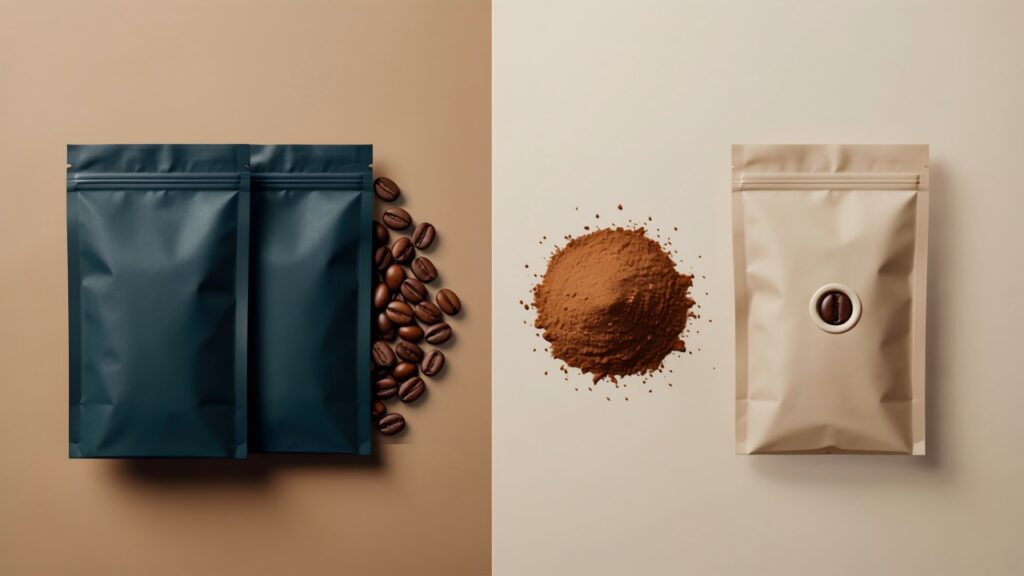
Both whole-bean and ground coffee can be packed in bags with one-way degassing valves. However, the valve configuration should be reviewed according to the actual coffee product.
Fine coffee particles may present a greater risk of reaching the valve area than whole beans. For ground coffee projects, the customer should clearly specify the grind format so that suitable valve and filtration options can be reviewed with the selected packaging configuration.
The coffee format should therefore be confirmed before samples or quotations are finalized. It is not enough to specify only the bag size and printing design.
Why Valve Position Matters

A valve is generally positioned in the upper section of a coffee bag and above the intended filling level. The exact location should be coordinated with the bag shape, zipper, tear notch, sealing area and artwork.
Placing the valve too close to the filling level may increase the possibility of coffee contacting the valve area. Placing it too close to a seal, zipper or important printed information may create production or design problems.
Before confirming the artwork, the valve position should be marked clearly on the packaging template. This helps the designer keep logos, text and other important visual elements away from the valve area.
Valve Performance Depends on the Complete Coffee Bag
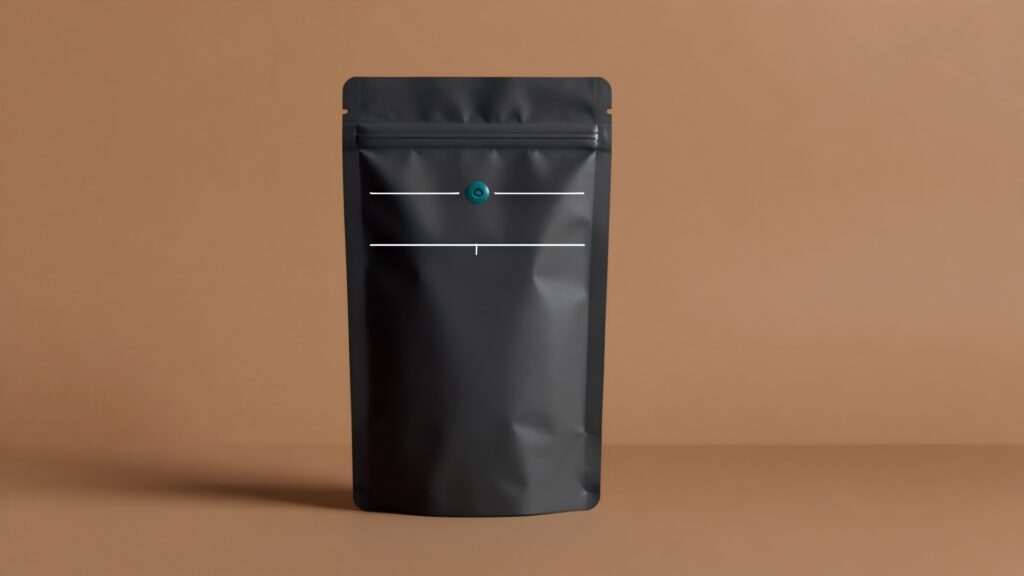
A one-way valve controls the release of gas through the valve opening, while the bag material and seals help control exposure through the rest of the package.
For this reason, the required barrier structure should be selected according to the coffee type, expected shelf life, storage environment and distribution method.
Customers can review different formats through our coffee packaging solutions or compare material, size, closure and printing options for custom coffee bags.
What Information Should You Provide Before Requesting a Quote?
To review a coffee bag and valve project efficiently, prepare the following information:
- Coffee type: whole bean, ground or instant coffee
- Time between roasting and packing
- Target filling weight, such as 250 g, 500 g or 1 kg
- Preferred bag format and approximate dimensions
- Required barrier or shelf-life expectations
- Valve requirement and preferred valve position
- Zipper, tear notch and other functional features
- Printing artwork and number of designs
- Required quantity for each size and design
- Filling and sealing method
- Destination country and delivery location
If some specifications are not yet confirmed, a product photo, current packaging sample or reference bag can help begin the review.
Frequently Asked Questions
What is a coffee bag degassing valve?
It is a one-way component that allows carbon dioxide released by roasted coffee to leave a sealed bag while helping limit outside oxygen from entering through the valve.
Do coffee bags for whole beans need a valve?
A valve is commonly considered when whole-bean coffee is packed while it is still releasing carbon dioxide. The final decision depends on the roasting and packing schedule, bag structure, storage requirements and the customer’s packaging evaluation.
Can ground coffee use a one-way degassing valve?
Yes. Ground coffee can use a degassing valve, but the grind format and the possibility of coffee particles reaching the valve area should be considered when reviewing the valve configuration.
Does a degassing valve replace high-barrier packaging?
No. The valve and packaging material perform different functions. The valve manages gas release, while the selected film structure, seals and closures contribute to the overall protection of the coffee.
Can the valve position be customized?
The position can usually be coordinated according to the bag format, filling level, zipper, sealing area and artwork. It should be confirmed before final production files are approved.
Should coffee brands test the finished package?
Yes. Samples and packaging trials help customers review the valve, bag material, dimensions, filling process and seal performance under their actual product and distribution conditions.
Planning a Custom Coffee Bag Project?
Share your coffee format, filling weight, preferred bag style, quantity, artwork and delivery destination.
Jinhong Packaging can coordinate specification review, samples, production follow-up and delivery preparation through selected manufacturing partners.
Contact Jinhong Packaging to discuss your coffee bag specifications and sample requirements.