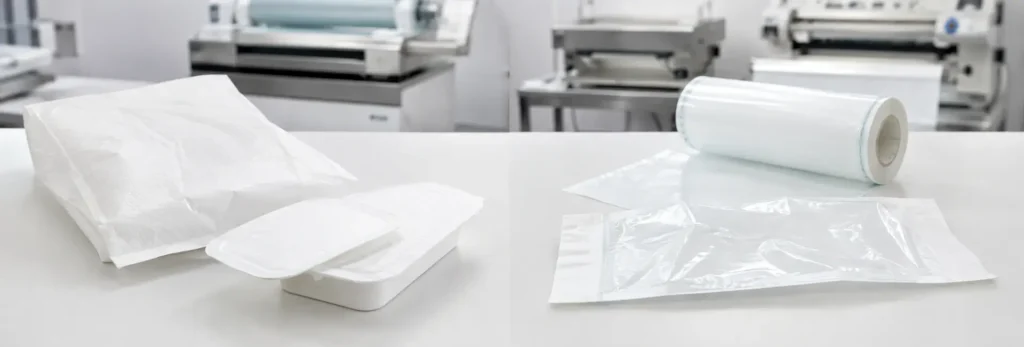
Tyvek vs medical-grade paper is an important comparison when selecting porous sterile barrier packaging for medical devices. Both materials can be combined with films, trays or other packaging components, but their structures, strength, opening behaviour, sterilization considerations and costs are different.
Medical-grade paper is widely used for sterilization pouches and rolls, particularly for relatively lightweight instruments and disposable medical products. Tyvek® is commonly considered when higher resistance to tearing and puncture, cleaner opening or broader sterilization flexibility is required.
Neither material should be selected by name alone. The final decision must consider the medical device, package design, sterilization method, sealing process, distribution risks, opening requirements and validation plan.
What Is Medical-Grade Paper?
Medical-grade paper is a porous packaging material designed for selected healthcare and sterile barrier applications. It is commonly combined with transparent multilayer film to form sterilization pouches and rolls or used as lidding for compatible formed packages.
Depending on the product and supplier, medical-grade paper may vary in:
- Basis weight
- Fibre composition
- Porosity
- Tensile and tear strength
- Surface treatment
- Seal coating
- Printability
- Microbial barrier performance
- Sterilization compatibility
- Peel characteristics
Its porous structure can allow a compatible sterilizing agent to enter and leave the package while the finished sterile barrier system is designed to help prevent microbial entry after sterilization.
Medical-grade paper is commonly used for:
- Dental sterilization pouches
- Self-seal sterilization pouches
- Heat-seal sterilization pouches
- Medical sterilization rolls
- Lightweight disposable medical devices
- Selected medical paper–film packages
- Compatible tray-lidding applications
The expression “medical-grade paper” does not describe one universal material. Different papers can have different performance characteristics and intended applications.
Learn more about available material considerations on our Medical-Grade Paper and Films page.
What Is Tyvek for Medical Packaging?
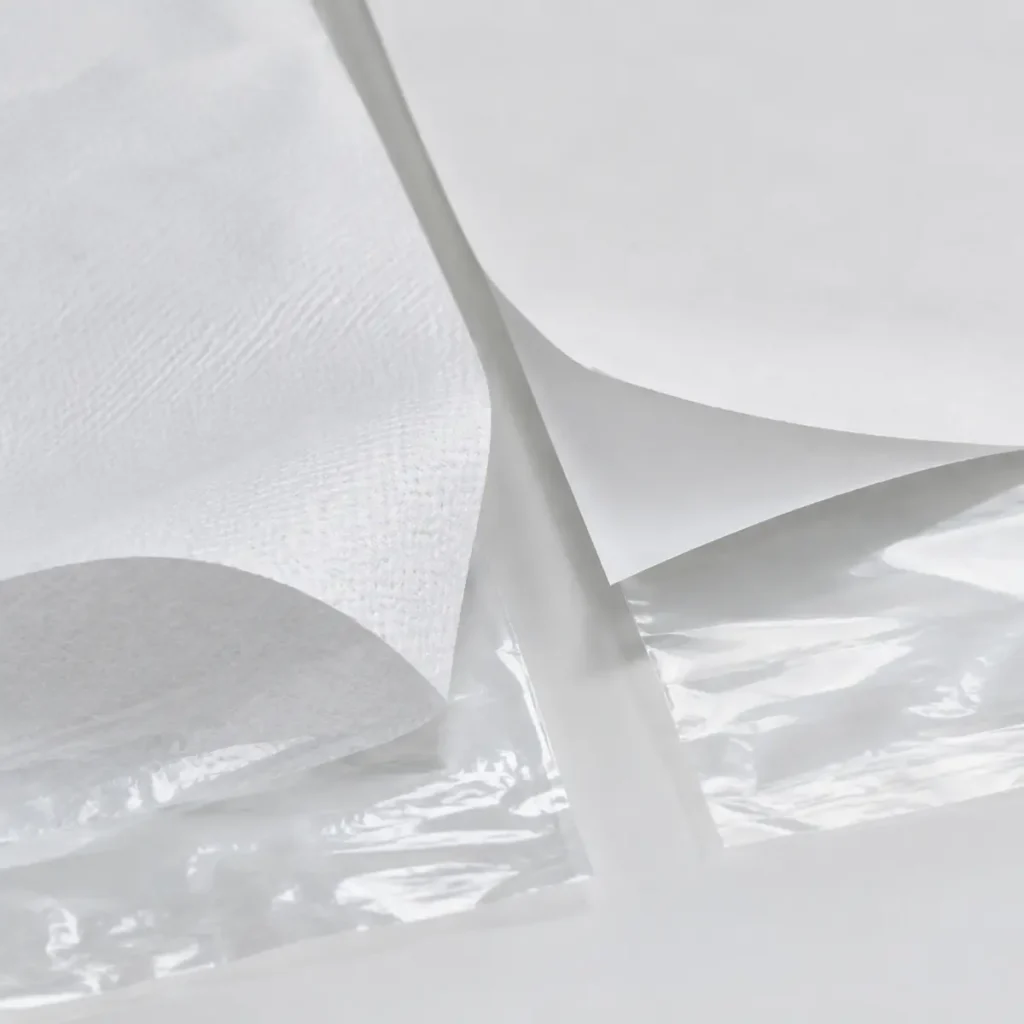
Tyvek is a synthetic material made from high-density polyethylene fibres. Although its appearance may resemble paper, its structure and performance are different from conventional medical paper.
Tyvek used for healthcare packaging is known for characteristics that may include:
- High resistance to tearing
- Puncture resistance
- Breathability
- Microbial barrier performance
- Low particle generation
- Clean-peel potential
- Resistance to moisture
- Compatibility with different package formats
- Compatibility with a broad range of sterilization methods
Tyvek may be used as:
- One side of a medical pouch
- Header material for a medical bag
- Lidding for a formed blister or tray
- Roll stock for form-fill-seal packaging
- A porous component within a specialized packaging system
Different Tyvek styles are available for different applications. The appropriate grade, coating, basis weight, sealant and converting process must be confirmed for the specific project.
According to DuPont’s healthcare packaging information, Tyvek is used in medical packaging because of its durability, breathability, clean-peel characteristics and microbial barrier performance.
More information about possible pouch and lidding formats is available on our Tyvek Medical Packaging page.
Tyvek vs Medical-Grade Paper: Main Differences
The following comparison provides general guidance. Actual performance depends on the selected grade, coating, film, sealant, sterilization process and finished package configuration.
| Comparison point | Tyvek | Medical-grade paper |
|---|---|---|
| Material structure | Synthetic high-density polyethylene fibre structure | Cellulose-based porous paper structure |
| Tear resistance | Generally higher resistance to tearing | Depends on paper grade and basis weight |
| Puncture resistance | Often considered for more demanding applications | Suitable for many lightweight devices but may require additional protection |
| Moisture response | Does not absorb water in the same way as paper | Paper properties may be affected by moisture and handling conditions |
| Particle generation | Commonly selected for low-linting and clean-peel applications | Fibre tear and particle performance depend on paper and seal design |
| Breathability | Porous and breathable | Porous and breathable |
| Package formats | Pouches, header bags, tray lidding and form-fill-seal structures | Pouches, rolls, paper–film packages and selected lidding applications |
| Sterilization | Compatible with a broad range of methods when the selected structure and conditions are suitable | Compatibility depends strongly on paper, film, coating and sterilization process |
| Cost | Generally higher | Usually more economical for standard pouch and roll applications |
| Typical selection reason | Strength, puncture resistance, clean opening and demanding device applications | Familiarity, availability and cost-effectiveness for suitable devices |
This table should not be used as a substitute for material specifications, package testing or finished-system validation.
Strength and Puncture Resistance
Strength is one of the clearest considerations when comparing Tyvek vs medical-grade paper.
Tyvek is frequently selected for medical devices that present greater puncture, tearing or handling risks. Its synthetic fibre structure can provide high strength while remaining breathable.
Medical-grade paper can be suitable for many lightweight devices and instruments, but performance depends on the particular paper grade and package construction.
Device characteristics that can affect material selection include:
- Sharp points
- Irregular edges
- Heavy components
- Rigid instruments
- Protruding parts
- Movement inside the package
- Contact with the seal area
- Vibration and impact during transportation
A stronger porous material does not eliminate every risk. Sharp devices may still require protective caps, inserts, a stronger film or a rigid tray.
For heavy, delicate or irregular products, a medical blister tray and lidding system may provide better positioning and physical protection than a flexible pouch.
Breathability and Sterilant Penetration
Both Tyvek and medical-grade paper can provide porous components within a sterile barrier system. This can be important when the sterilization process requires the sterilizing agent to enter and leave the package.
However, breathability alone does not establish sterilization compatibility.
The complete package may include:
- Porous web
- Transparent film
- Seal coating
- Adhesive
- Ink
- Process indicator
- Label
- Tray or pouch structure
- Medical device load
Each component can affect the way the finished package responds to sterilization.
Gas penetration, air removal, drying and residual removal can also be influenced by package dimensions, loading pattern and sterilization-cycle conditions.
The medical device manufacturer or other responsible organization must confirm that the complete packaging system is suitable for the selected process.
Opening Performance and Particle Generation
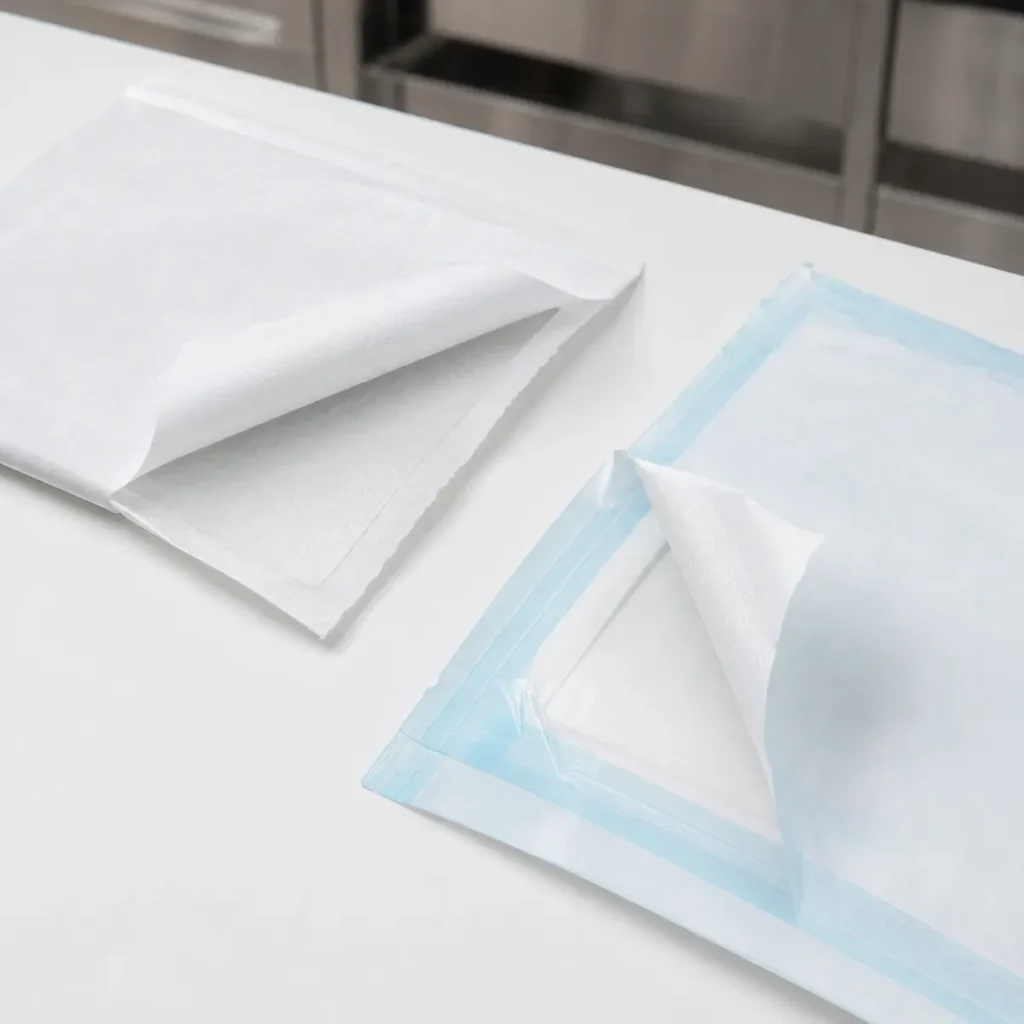
A sterile barrier package must protect its contents until the point of use while supporting controlled opening.
Possible opening problems include:
- Fibre tear
- Film splitting
- Delamination
- Inconsistent peel
- Sudden opening
- Excessive opening force
- Particles released during opening
- Difficulty presenting the device aseptically
Tyvek is often selected when low particle generation and clean-peel performance are important. This can be relevant for sensitive medical devices, operating-room products, implants, diagnostic components and clean environments.
Medical-grade paper can also provide controlled peel performance when the paper, coating, film and seal design are compatible. However, the risk of fibre tear or inconsistent peeling should be evaluated for the selected structure.
Opening performance depends on more than the porous material. Sealant chemistry, sealing temperature, pressure, dwell time, seal width and package geometry can all influence the result.
Samples should therefore be evaluated after sealing and after the intended sterilization exposure, not only before processing.
Sterilization Compatibility
Sterilization compatibility is a central part of the Tyvek vs medical-grade paper decision.
Ethylene Oxide Sterilization
Both suitable medical-grade paper structures and selected Tyvek structures may be considered for ethylene oxide sterilization because they can provide a porous path for gas penetration and removal.
The complete structure must still be evaluated for:
- EO penetration
- Aeration
- Material strength
- Seal performance
- Residual considerations
- Package integrity
- Device compatibility
A material being described as breathable does not automatically validate it for a specific EO cycle.
Steam Sterilization
Medical-grade paper–plastic pouches are commonly associated with selected steam-sterilization applications, particularly in healthcare and dental instrument processing.
Steam exposes packaging to heat and moisture. Paper, film, adhesive, seal coating and process indicators must therefore be suitable for the intended cycle.
Selected Tyvek healthcare packaging styles may also be used with steam under controlled conditions. This should not be generalized to every Tyvek grade or every steam cycle.
DuPont provides specific information about the use of Tyvek with steam sterilization under controlled conditions. The selected grade and actual process conditions must still be verified.
Gamma and Electron-Beam Irradiation
Radiation can affect colour, flexibility, strength, sealants and polymer layers. Selected Tyvek structures are used with gamma and electron-beam processes, but the radiation dose and complete package must be considered.
Medical-grade paper alone does not determine whether a paper–film package is suitable for radiation. The film, coating, ink and adhesive system may be equally important.
Low-Temperature Oxidative Processes
Some low-temperature sterilization processes impose specific material restrictions. Compatibility should be confirmed using information for the exact packaging material, device and sterilizer process.
General statements such as “suitable for plasma sterilization” or “suitable for all low-temperature methods” should not be made without supporting evidence.
Our guide to medical packaging for sterilization methods provides a broader comparison of EO, steam, gamma and e-beam considerations.
Sealing Process Considerations
Tyvek and medical-grade paper may require different seal coatings, films and sealing conditions.
Important sealing variables include:
- Temperature
- Pressure
- Dwell time
- Seal width
- Equipment design
- Material orientation
- Sealant compatibility
- Cleanliness of the sealing area
- Device placement
- Cooling and handling after sealing
A sealing range supplied by the material converter or pouch producer can provide a starting point, but the final process should be established using the actual packaging materials and equipment.
The same heat-sealer setting should not automatically be used when changing:
- Paper grade
- Tyvek grade
- Film structure
- Seal coating
- Pouch supplier
- Material thickness
- Package dimensions
ISO 11607-2 addresses the development and validation of forming, sealing and assembly processes for medical device packaging intended for terminal sterilization.
Changing from medical-grade paper to Tyvek may therefore require more than purchasing a different pouch. It may affect sealing parameters, equipment setup, testing, specifications and validation documentation.
Package Formats
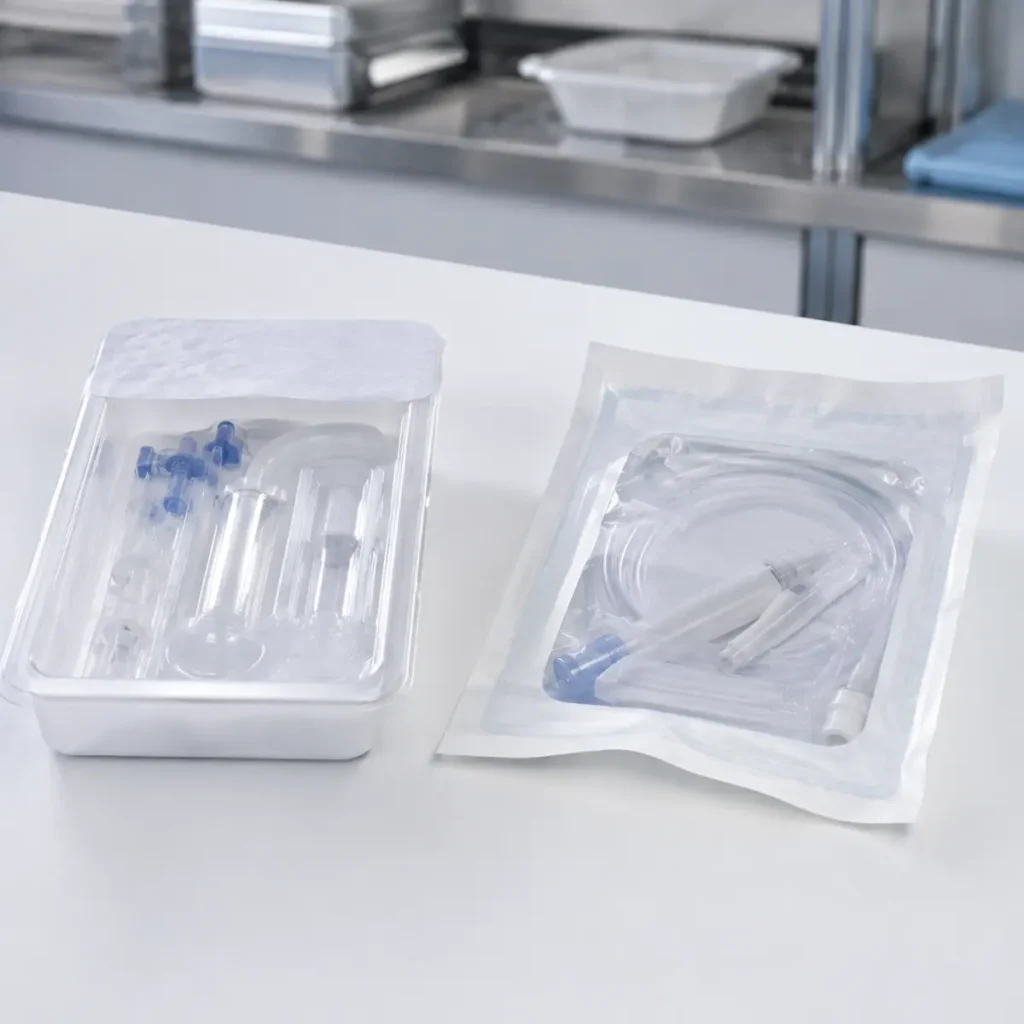
Paper–Plastic Sterilization Pouches and Rolls
Medical-grade paper is widely used with transparent film in:
- Self-seal pouches
- Heat-seal pouches
- Sterilization rolls
- Dental sterilization pouches
- Standard medical instrument packaging
These formats can be practical and economical for suitable lightweight products.
See our comparison of self-seal vs heat-seal sterilization pouches for more information about closure methods and roll formats.
Tyvek Pouches
Tyvek can be combined with a compatible transparent film to create peelable medical pouches. These may be considered when greater puncture resistance, low linting or a cleaner opening is required.
The Tyvek grade, coating and film must be selected as part of the complete structure.
Header Bags
A header bag normally combines a nonporous bag body with a porous header section. The header may provide a pathway for a compatible gaseous sterilization process.
Header bags are commonly considered for larger, heavier or irregular medical devices that may not be suitable for a conventional paper–plastic pouch.
Learn more on our Medical Header Bags for Sterilization page.
Tray Lidding
Tyvek and selected medical-grade papers may be used as lidding materials for compatible formed trays.
The choice depends on:
- Tray material
- Flange design
- Sealant
- Device weight
- Puncture risk
- Opening requirements
- Sterilization process
- Package validation plan
Tyvek is often considered for tray systems containing sensitive, rigid or higher-value devices, but the decision must be based on actual performance requirements.
Cost and Project Requirements
Medical-grade paper is generally more economical than Tyvek for standard pouches and rolls. This makes paper a practical choice for many suitable instruments and disposable medical devices.
Tyvek’s higher material cost may be justified when the device requires:
- Greater resistance to tearing
- Higher puncture resistance
- Cleaner opening
- Lower particle generation
- More demanding handling performance
- A strong porous component for a tray or header bag
- Compatibility with a wider range of sterilization processes
The lowest material price does not always create the lowest total project cost.
Possible total costs include:
- Material
- Converting
- Printing
- Sealing equipment
- Tooling
- Testing
- Validation
- Product damage
- Packaging failures
- Material waste
- Storage and transportation
The material should match the device risk and performance requirements rather than simply being upgraded or downgraded based on price.
How to Choose Between Tyvek and Medical-Grade Paper
Before requesting samples or quotations, prepare the following information.
1. Device Information
Provide the device name, dimensions, weight, intended use, photographs and technical drawings.
Identify sharp edges, protrusions, fragile areas and surfaces that may be damaged during packing or transportation.
2. Packaging Format
Confirm whether the project requires:
- Preformed pouch
- Sterilization roll
- Header bag
- Form-fill-seal structure
- Formed tray with lidding
- Another specialized configuration
3. Sterilization Method
State the intended sterilization method and available process parameters.
Do not select the porous material without considering the film, tray, coating, sealant and device.
4. Barrier and Strength Requirements
Clarify the expected requirements for:
- Microbial barrier
- Puncture resistance
- Tear resistance
- Moisture exposure
- Package integrity
- Transportation protection
5. Opening Requirements
Confirm the required peel direction, opening force, aseptic presentation and particle-control expectations.
6. Sealing Process
Provide information about the sealing equipment, seal width and available process controls.
If the equipment has not been selected, explain the intended production process.
7. Project Stage
State whether the requirement is for:
- Material evaluation
- Initial samples
- Engineering quantities
- Validation production
- Pilot production
- Commercial supply
8. Documentation
Discuss specifications, technical data sheets, quality certificates, sterilization information, test reports, batch records and change-control requirements.
Testing and Validation Responsibilities
The material supplier’s technical data can support initial screening, but it does not validate the customer’s finished medical device packaging system.
Testing may need to consider:
- Seal strength
- Package integrity
- Visual seal quality
- Burst or creep performance
- Dye or bubble-leak methods
- Peel characteristics
- Sterilization exposure
- Accelerated and real-time aging
- Distribution simulation
- Device protection
- Aseptic presentation
The applicable tests and acceptance criteria depend on the device, package specification, risk assessment and target market.
ISO 11607-1 establishes requirements and test methods for materials, sterile barrier systems and packaging systems intended to maintain the sterility of terminally sterilized medical devices until the point of use.
Our Medical Packaging Testing and Validation Support page explains how Jinhong Packaging can coordinate project information and available supplier documentation without replacing the customer’s validation responsibilities.
Common Selection Mistakes
Assuming Tyvek Is Always Necessary
Tyvek offers important performance advantages, but medical-grade paper may be sufficient and more economical for many suitable lightweight devices.
Selecting Paper Only Because It Costs Less
A lower material price may not compensate for inadequate puncture resistance, fibre tear or package damage.
Treating Every Tyvek Grade as Identical
Different Tyvek styles, coatings and converting structures can have different intended applications and sealing requirements.
Treating Every Medical Paper as Identical
Basis weight, strength, porosity, coatings and peel performance vary between medical-grade papers.
Ignoring the Film or Tray
The porous material is only one part of the package. Film structure, tray design and sealant can determine whether the complete system performs correctly.
Relying on General Sterilization Claims
Compatibility must be confirmed for the exact material structure and process conditions.
Skipping Evaluation After Sterilization
A package that appears acceptable before sterilization may respond differently after exposure, aging or distribution.
How Jinhong Packaging Supports Material Selection
Jinhong Packaging supports medical packaging sourcing and project coordination through selected manufacturing partners.
Depending on the project information provided, we can help coordinate options for:
- Medical-grade paper–film pouches
- Self-seal and heat-seal sterilization pouches
- Medical sterilization rolls
- Tyvek pouches
- Tyvek header bags
- Tyvek and paper lidding materials
- Formed trays and compatible lidding
- Printed and unprinted medical packaging
Our role may include communicating specifications, comparing available formats, coordinating samples, collecting applicable supplier information and following production details.
Final material suitability remains subject to the medical device, package design, sterilization process, sealing conditions, target market and validation requirements.
Supporting documents are provided by the relevant manufacturing partner when applicable and available. They should not be presented as certificates issued by Jinhong Packaging.
Frequently Asked Questions
Is Tyvek the same as medical-grade paper?
No. Tyvek is a synthetic material made from high-density polyethylene fibres. Medical-grade paper is generally cellulose-based. Their strength, moisture response, opening behaviour and sterilization considerations are different.
Is Tyvek stronger than medical-grade paper?
Tyvek generally provides higher tear and puncture resistance than many medical-grade papers. Actual performance still depends on the selected grade, coating and finished package construction.
Is medical-grade paper suitable for sterile barrier packaging?
Selected medical-grade papers can be used in sterile barrier systems such as paper–plastic pouches, rolls and compatible tray-lidding structures. The exact material and finished package must be evaluated for the intended device and sterilization process.
Can Tyvek be used with EO sterilization?
Selected Tyvek healthcare packaging structures are commonly used with ethylene oxide sterilization. The specific Tyvek grade, film, sealant, device load and EO cycle must still be evaluated and validated.
Can Tyvek be steam sterilized?
Some Tyvek healthcare packaging grades may be suitable for steam sterilization under controlled conditions. This should not be generalized to every Tyvek grade or cycle. The exact material specification and process conditions must be confirmed.
Why is Tyvek more expensive than medical-grade paper?
Tyvek’s synthetic structure can provide greater tear resistance, puncture resistance, durability and clean-opening performance. Whether these benefits justify the additional cost depends on the device and package requirements.
Does choosing Tyvek eliminate the need for package validation?
No. Selecting Tyvek does not validate the finished packaging system. The medical device manufacturer or responsible organization must evaluate the complete package, sealing process, sterilization exposure, aging and distribution performance.
Discuss Your Sterile Barrier Packaging Project
The Tyvek vs medical-grade paper decision should be based on the actual medical device and packaging process—not on material reputation or price alone.
Device dimensions, puncture risk, opening requirements, sterilization method, sealing process, package format and validation plan all affect the final choice.
Jinhong Packaging can help coordinate suitable material and package options through selected manufacturing partners based on the project information provided.
Please send the device details, required packaging format, sterilization method, expected quantity and documentation requirements for an initial review.
Discuss your medical packaging project
Tyvek® is a registered trademark of affiliates of DuPont de Nemours, Inc.