Cleanroom Packaging Bags
Protect electronics, precision parts, optical components and other sensitive products handled in cleanrooms or controlled environments with packaging selected according to cleanliness, material and process requirements.
Jinhong Packaging supports material comparison, bag specifications, custom sizing, sampling and project coordination through selected manufacturing partners.
What Is Cleanroom Packaging?
Cleanroom packaging is used to help reduce particles, fibers, residues and other contamination when products are handled, stored or transferred in cleanrooms and other controlled environments.
Unlike sterile barrier packaging, cleanroom packaging is not automatically sterile. The appropriate material, cleanliness requirement, bag configuration and packing process depend on the product, cleanroom classification, handling method and customer specifications.
Common applications include electronics, semiconductor components, precision parts, optical products, laboratory items and components used in controlled manufacturing areas.
Cleanroom Packaging Options
Cleanroom packaging bags can be coordinated in different materials, structures and packing formats according to the product, cleanliness requirements, handling process and storage conditions.
Cleanroom Polyethylene Bags
Polyethylene bags may be used for general particle and contamination control when packaging electronics, components and other non-sharp products handled in controlled environments.
Nylon and Nylon-PE Bags
Nylon and nylon-polyethylene structures may be considered when additional strength, puncture resistance or vacuum-packaging compatibility is required. The final structure should be confirmed for the application.
Cleanroom Barrier Bags
Barrier structures may be coordinated for products that also require moisture, vapor or oxygen protection. Material performance and sealing requirements should be confirmed for each project.
Cleanroom Liners and Double-Bagging
Cleanroom liners and double-bagging configurations can support staged product transfer between packaging, storage and controlled production areas. Bag size, closure and packing method are confirmed according to the handling process.
Cleanroom Polyethylene Bags
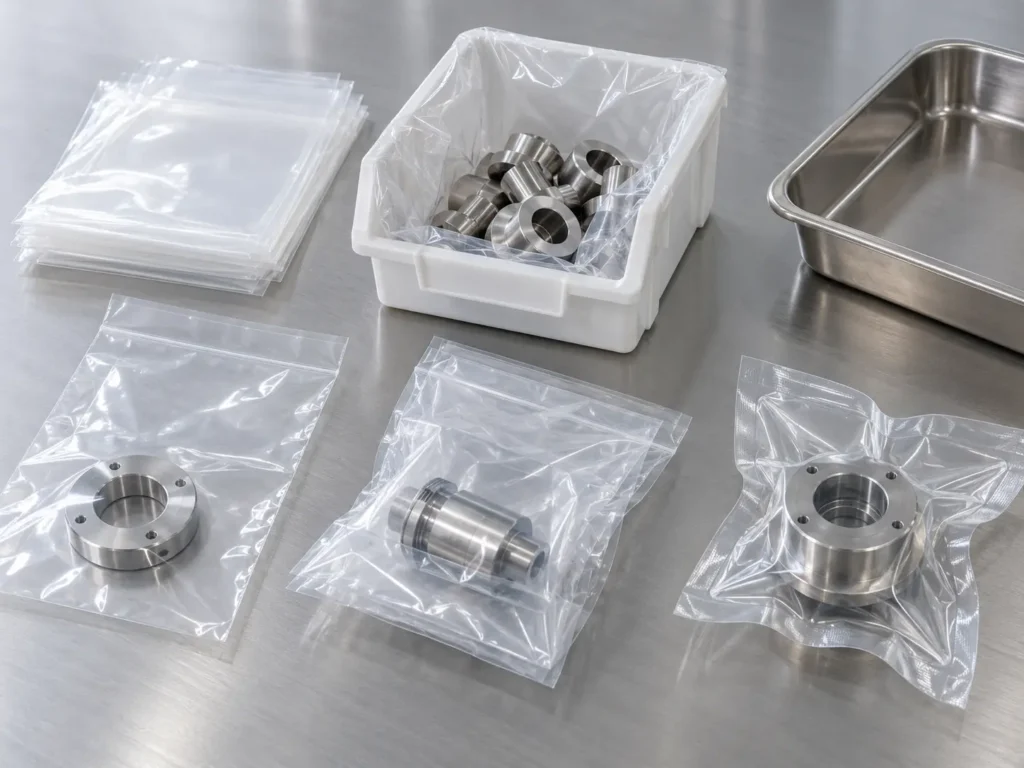
Cleanroom polyethylene bags are commonly considered for electronics, precision components and other products that require cleaner handling and protection from dust, fibers and handling contamination.
Available configurations may include flat bags, gusseted bags, open-top bags, heat-sealable bags and selected reclosable formats. Single-bag or double-bag arrangements can also be reviewed according to how the product moves between packing, storage and controlled production areas.
Film type, thickness, bag dimensions, closure method and cleanliness requirements should be confirmed according to the product and handling process.
• Flat and gusseted bag formats
• Heat-seal, open-top and selected reclosable options
• Custom widths and lengths
• Single-bag and double-bag configurations
• Clear or selected colored film options
If the packaged product is sensitive to electrostatic discharge, review our ESD packaging and anti-static bag options.
Nylon and Nylon-PE Cleanroom Bags
Nylon and nylon-polyethylene cleanroom bags may be considered for heavier components, products with edges or applications that require greater mechanical strength than a standard polyethylene bag.
Depending on the material structure and sealing process, these bags may also support vacuum packaging or reduced package volume during storage and transportation. Suitability should be confirmed according to the product shape, required seal strength and handling conditions.
Available structures, thicknesses, cleanliness preparation and packing methods vary between manufacturing partners and should be reviewed for each project.
• Flat and gusseted bag formats
• Heat-sealable structures
• Vacuum-packaging options where suitable
• Custom dimensions and film thicknesses
• Single-bag or double-bag configurations
Cleanroom Barrier Bags
Some products handled in cleanrooms also require protection from moisture, vapor, oxygen or light during storage and transportation. In these cases, a barrier bag structure may be considered in addition to the cleanliness requirements.
Possible options may include transparent barrier films, metallized structures and aluminum foil laminates. The appropriate structure depends on the product sensitivity, required barrier level, sealing process and expected storage conditions.
A barrier material is not automatically suitable for cleanroom use. Film cleanliness, converting conditions, inner packaging and handling requirements should be confirmed with the selected manufacturing partner for each project.
• Transparent barrier film structures
• Metallized packaging options
• Aluminum foil laminate bags
• Heat-sealable and vacuum-packaging configurations
• Custom sizes and project-specific material comparison
For projects primarily focused on moisture and vapor protection, explore our moisture barrier and aluminum foil bag options.
Cleanroom Liners and Double-Bagging
Cleanroom liners and double-bagging configurations may be used when products, parts or materials need to move between packing areas, warehouses and controlled production environments.
In a double-bagging process, the outer bag may be removed at a designated transfer point while the inner bag continues into the cleaner area. The exact number of packaging layers and the removal procedure should follow the customer’s contamination-control process.
Bag dimensions, film structure, closure method, labeling position and packing sequence can be coordinated according to the container, product and transfer requirements.
• Equipment and container liners
• Component and material transfer bags
• Single-, double- or project-specific bagging arrangements
• Flat, gusseted and custom-sized formats
• Heat-seal, tie and selected reclosable closures
How to Choose the Right Cleanroom Packaging
The appropriate cleanroom packaging depends on the product, contamination risks, handling process, storage conditions and any additional moisture or electrostatic protection requirements.
| Project Requirement | Possible Packaging Option | Information to Confirm |
|---|---|---|
| General particle and handling protection | Cleanroom polyethylene bags | Product dimensions, film thickness, closure method and cleanliness requirements |
| Greater strength or products with edges | Nylon or nylon-PE bags | Product weight, edge conditions, seal strength and vacuum-packaging requirements |
| Moisture- or oxygen-sensitive products | Cleanroom barrier bags | Required barrier level, storage period, sealing process and material compatibility |
| Transfer between controlled areas | Liners or double-bagging configurations | Number of bag layers, removal procedure, labeling and transfer process |
| Static-sensitive electronic components | Clean ESD packaging options | Required ESD protection, cleanliness requirements and handling environment |
Final material and packaging specifications should be reviewed according to the actual product and the customer’s controlled-environment process.
Applications for Cleanroom Packaging Bags
Cleanroom packaging bags may be used for products and materials that require controlled handling during production, storage, internal transfer or shipment.
Electronics and Semiconductor Components
Packaging support for circuit boards, electronic assemblies, semiconductor-related components and other products handled in controlled production areas.
Precision Components
Bag and liner options for machined parts, precision assemblies and sensitive components that require cleaner handling and protection from particles.
Optical Products
Clean packaging options for lenses, optical components and related products where dust, fibers and surface contamination may affect handling or further processing.
Cleanroom Equipment Parts
Custom-sized bags, covers and liners for equipment parts, tools and accessories transferred into controlled manufacturing environments.
Laboratory Components
Packaging options for selected laboratory components, containers and non-sterile items that require organized and cleaner handling.
Material Transfer and Kitting
Single- or multi-layer bagging arrangements for grouped components, production kits and materials moving between storage, preparation and controlled areas.
Information Needed for a Cleanroom Packaging Project
Providing the following information helps us compare suitable materials, bag formats and manufacturing options for the project.
Product and Application
Describe the product, component or material being packaged and how it will be handled, stored or transferred.
Controlled Environment Requirements
Provide the cleanroom classification or customer cleanliness specification if one has already been defined.
Product Dimensions and Weight
Share the product dimensions, weight, shape and any edges or surfaces that may affect the bag structure.
Material and Protection Requirements
Confirm whether the project also requires moisture barrier, electrostatic protection, puncture resistance, light protection or vacuum packaging.
Packing and Sealing Process
Explain where the product will be packed, whether single or double bagging is required and which sealing or closure method will be used.
Quantity and Destination
Provide the estimated order quantity, required packing format, delivery destination and any project timeline requirements.
Sampling, Cleanliness and Order Coordination
Cleanroom packaging projects often require more than selecting a bag size. Material structure, cleanliness preparation, packing method and available documentation should be reviewed before production.
Material and Sample Review
Available material structures and bag formats can be compared according to the product and handling requirements. Existing samples, blank samples or custom samples may be coordinated depending on the project.
Cleanliness and Packing Requirements
Cleanliness level, converting environment, inner packing, double-bagging and sealing requirements should be confirmed with the selected manufacturing partner before production.
Documentation Review
Available material information, inspection records and other supporting documents can be reviewed according to the manufacturing partner and the customer’s project requirements.
Production and Delivery Coordination
After specifications are confirmed, Jinhong Packaging can coordinate sampling, production follow-up, packing details, export documentation and delivery preparation.
Cleanroom Packaging Project Coordination Process
1. Application Review
We review the product, handling process, controlled-environment requirements, packaging dimensions and any additional protection needs.
2. Material and Format Comparison
Suitable bag materials, structures, closures and single- or double-bagging options are compared through selected manufacturing partners.
3. Sampling and Specification Confirmation
Available samples or custom samples may be coordinated so that dimensions, material structure, sealing and packing requirements can be reviewed before production.
4. Production and Delivery Coordination
After the specifications are approved, we coordinate production follow-up, packing details, available documentation and delivery preparation.
Cleanroom Standards and Project Requirements
Cleanroom classifications are commonly defined with reference to ISO 14644-1, which classifies air cleanliness according to airborne particle concentration. This standard describes the controlled environment and does not by itself certify a packaging bag.
ISO 14644-18 provides guidance for assessing the suitability of consumables used in cleanrooms and controlled zones based on product and process requirements, cleanliness attributes and functional properties.
The required cleanroom classification, packaging cleanliness, testing and supporting documentation should be defined according to the customer’s application and controlled-environment process.
Related Cleanroom Packaging Guide
For more information about material selection, particulate control, additives, sealing and controlled handling, read our guide to cleanroom packaging materials and cleanliness considerations.
Cleanroom Packaging Bags FAQ
Are cleanroom packaging bags sterile?
Not necessarily. Cleanroom packaging is intended for controlled handling and contamination management, but it should not be described as sterile unless the complete packaging and sterilization process has been separately specified and validated.
What materials are available for cleanroom packaging bags?
Possible materials may include polyethylene, nylon, nylon-polyethylene, transparent barrier films, metallized structures and aluminum foil laminates. Availability and suitability depend on the application and manufacturing partner.
Can you supply bags for a specific cleanroom classification?
Cleanroom requirements should be confirmed for each project. Please provide the required cleanroom classification, product application, packing process and any customer cleanliness specifications so suitable manufacturing options can be reviewed.
When is double-bagging used?
Double-bagging may be used when products move between areas with different cleanliness controls. The outer bag can be removed at a designated transfer point while the inner bag continues into the cleaner area, according to the customer’s procedure.
Can cleanroom bags also provide moisture or ESD protection?
Yes, selected barrier or ESD packaging structures may be considered when additional protection is required. Cleanliness, barrier performance and electrostatic protection should be evaluated separately because one material does not automatically meet every requirement.
What information is needed for a cleanroom packaging quotation?
Please provide the product type, dimensions, weight, required quantity, cleanroom or cleanliness requirements, bag format, closure method, additional protection needs and delivery destination.
Explore our complete Protective and Clean Packaging Solutions for moisture barrier, ESD, cleanroom and medical clean non-sterile packaging options.
Discuss Your Cleanroom Packaging Requirements
Looking for cleanroom bags, liners, double-bagging configurations or packaging with additional moisture or ESD protection?
Send us your product dimensions, cleanliness requirements, preferred bag format, estimated quantity and delivery destination. We will review the project and coordinate suitable material, sampling and production options through selected manufacturing partners.