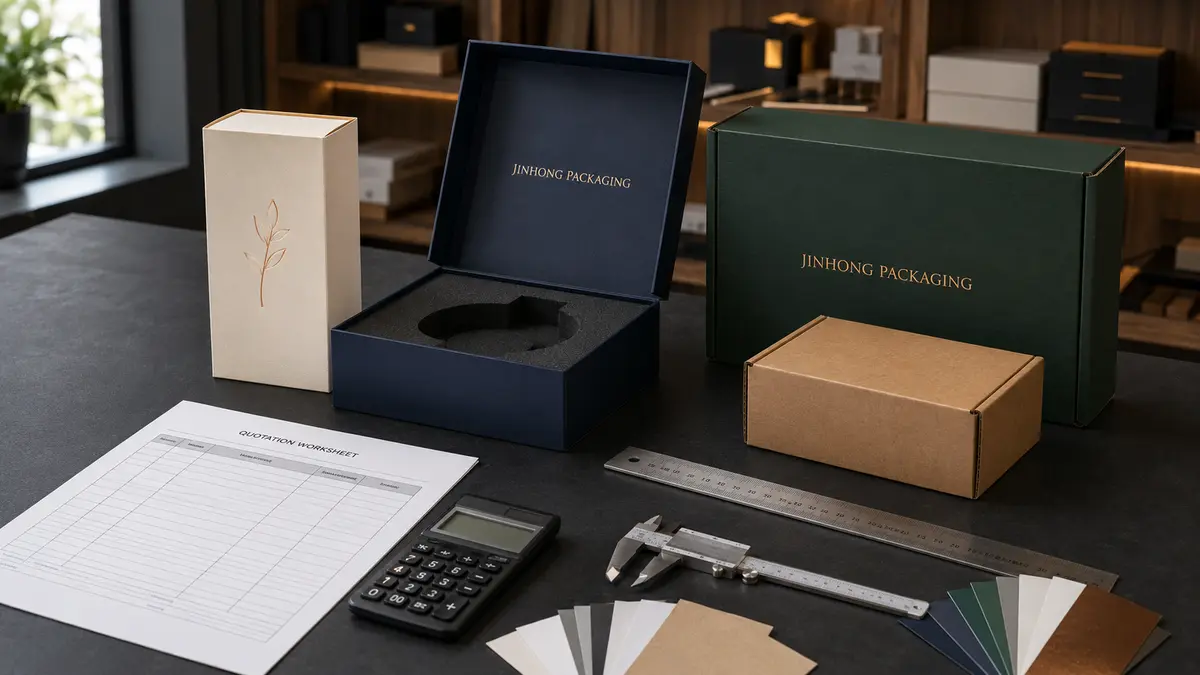
Understanding custom packaging cost is important when planning a new product launch, changing suppliers or improving an existing package. However, there is no reliable universal price per box because each project has different specifications.
The final cost depends on the packaging structure, material, dimensions, printing, finishes, order quantity, inserts, packing method and delivery terms. A simple folding carton and a presentation-focused rigid box may hold products of similar size but have very different material, labor and shipping requirements.
This guide explains the seven main factors that affect custom packaging cost, what should be included in a quotation and how to control expenses without making the packaging unsuitable for the product.
What Is Included in Custom Packaging Cost?
A complete packaging budget may include more than the unit price of the finished box.
Depending on the project, the total can include:
- Structural development
- Dieline preparation
- Plain or printed samples
- Printing plates or cutting tools
- Packaging materials
- Printing and surface finishes
- Inserts and accessories
- Assembly and individual packing
- Export cartons
- Freight and insurance
- Import duties, taxes or local delivery
Some charges are one-time setup costs, while others apply to every unit. This is why comparing only the unit price can be misleading.
A low unit price may exclude tooling, special packing or delivery. A higher quotation may include more services or a different delivery term. Before comparing suppliers, confirm that every quotation is based on the same specification and scope.
1. Packaging Structure
Structure is one of the biggest influences on custom packaging cost because it determines material usage, production steps, assembly requirements and shipping volume.
Folding Cartons
Folding cartons are made from foldable paperboard and are usually supplied flat. They can be economical for lightweight retail products, especially when the structure is simple and quantities are suitable for the selected printing process.
Common uses include cosmetics, personal care products, food, supplements and small consumer products.
Rigid Boxes
Rigid boxes use thick board wrapped with printed or decorative paper. They offer substantial construction and premium presentation but normally involve more material, assembly and storage space.
Magnetic closures, ribbon pulls, wrapped edges and fitted inserts add further production steps.
Mailer and Corrugated Boxes
Mailer boxes and corrugated boxes can provide additional protection for e-commerce and transportation. Cost depends on board grade, flute type, printing method, size and whether the box requires inserts or special coatings.
When deciding between structures, compare protection, packing efficiency and shipping performance—not only appearance.
Read Rigid Boxes vs Folding Cartons for a more detailed comparison.
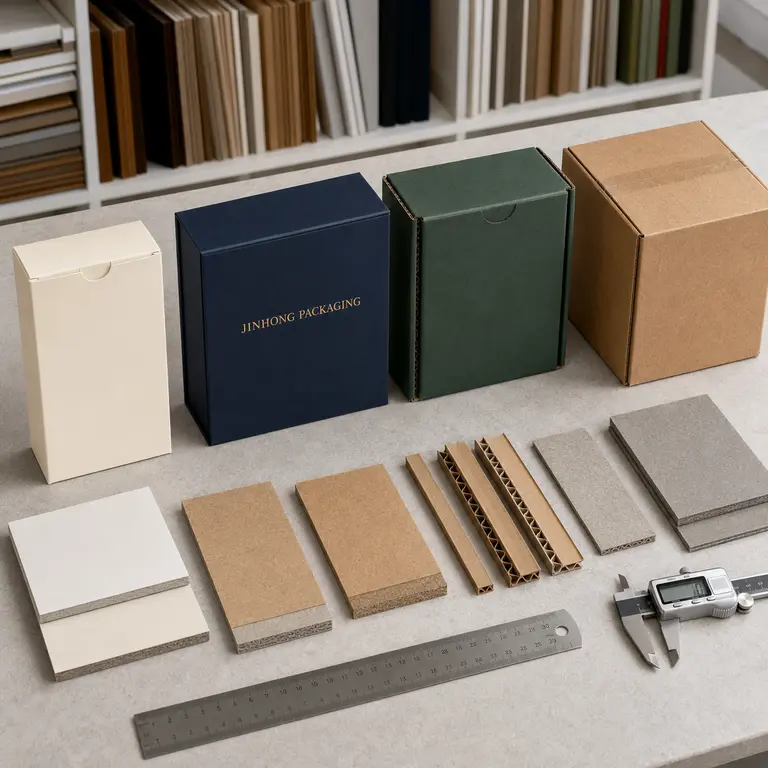
2. Material and Board Thickness
Material affects strength, print appearance, finishing compatibility and price.
Common options include:
SBS and FBB Paperboard
Solid bleached sulfate and folding boxboard provide smooth printing surfaces and are widely used for folding cartons. Price varies according to grade, thickness, finish and sourcing requirements.
Kraft Paperboard
Kraft paperboard provides a natural brown appearance. It may work well for simple designs, but printing colors can appear different on an uncoated brown surface.
Corrugated Board
Corrugated board combines liner sheets with a fluted inner layer. Different flute profiles and board combinations provide different strength, cushioning and print surfaces.
Greyboard
Greyboard is commonly used inside rigid boxes. Cost depends on board thickness, wrapping paper, box construction and finishing requirements.
Using heavier material does not automatically produce better packaging. Excessive thickness can increase cost and shipping weight without adding meaningful protection.
The material should be selected according to product weight, box structure, distribution conditions and presentation requirements. See our Packaging Box Materials Comparison for more guidance.
3. Box Size and Material Efficiency
Larger boxes generally require more material, but size affects more than paper consumption.
Oversized packaging can also increase:
- Insert size
- Export carton dimensions
- Storage space
- Packing material
- Dimensional shipping weight
- Pallet or container space
The most economical size is not always the smallest possible box. The package must still provide enough clearance for the product, insert, material thickness and production tolerances.
An efficient design balances product protection with material and shipping efficiency.
Before requesting a quotation, provide actual product dimensions and weight. Specify whether the measurements are internal or external and confirm the order of length, width and height.
For detailed sizing guidance, read our Packaging Box Size Guide.
4. Printing Method and Artwork Requirements
Printing cost depends on the selected process, artwork complexity, number of colors, material and order quantity.
Offset Printing
Offset printing is frequently used for detailed paperboard packaging and larger production quantities. Setup may involve printing plates and color adjustment, but the unit economics can become more suitable as quantity increases.
Digital Printing
Digital printing can be practical for prototypes, smaller quantities and multiple artwork versions. It usually requires less traditional plate setup, but available materials, finishes and color capabilities vary.
Flexographic Printing
Flexographic printing is commonly used for corrugated packaging, flexible packaging and labels. Artwork may need to be adapted to the capabilities of the process.
CMYK and spot colors such as Pantone references are color approaches, not separate printing methods. Spot colors may add setup or printing requirements depending on the artwork and equipment.
Custom packaging cost can also increase when an order includes:
- Several product variants
- Frequent artwork changes
- Difficult color-matching requirements
- Full-coverage dark colors
- Printing on uncoated or textured material
- Different languages for separate markets
Review Custom Packaging Printing Methods before selecting a process.
5. Finishes, Inserts and Accessories
Decorative finishes can improve shelf presence and customer experience, but each additional process may affect tooling, setup, production time and waste allowance.
Common options include:
- Matte or gloss lamination
- Protective coatings
- Foil stamping
- Embossing or debossing
- Spot UV
- Window patching
- Textured or specialty paper
- Ribbons or magnetic closures
A restrained finish applied to one important design element can be more effective than combining several finishes across the entire box.
Inserts also affect cost. Common options include:
- Folded paperboard inserts
- Corrugated inserts
- Molded pulp
- Foam
- Thermoformed trays
- Fabric-covered inserts
The insert should be designed together with the product and outer box. An unnecessarily complex insert can increase material, assembly time and shipping volume.
Before approving a finish or insert, ask whether it improves protection, usability or brand presentation enough to justify the additional cost.
6. Order Quantity and Setup Costs
Order quantity affects the unit cost because many packaging projects include fixed setup expenses.
These may include:
- Structural design
- Sampling
- Printing plates
- Cutting dies
- Foil or embossing dies
- Machine setup
- Color adjustment
- Production preparation
When these costs are divided across a small order, the cost per unit is higher. At larger quantities, the fixed costs are spread across more units.
However, ordering more packaging is not automatically more economical. Excess inventory can create other expenses and risks:
- Storage costs
- Artwork becoming outdated
- Product changes
- Regulatory information changing
- Damage during long-term storage
- Capital tied up in unused packaging
The best order quantity balances unit price with realistic sales volume and storage capacity.
Our Custom Packaging MOQ Guide explains how structure, printing and customization influence minimum order requirements.
7. Packing, Freight and Delivery Terms
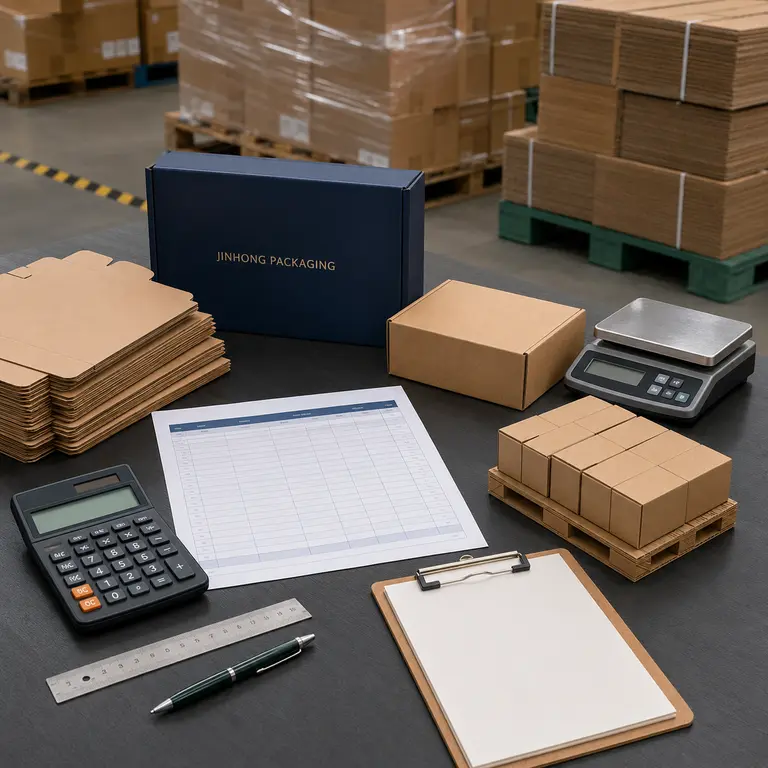
Freight can represent a significant part of the total packaging budget, especially for assembled rigid boxes and other bulky structures.
Packaging may be supplied:
- Flat-packed
- Pre-assembled
- Individually bagged
- Bundled
- Packed in export cartons
- Palletized
Flat-packed folding cartons normally use less shipping and storage space than assembled rigid boxes. However, the buyer must also consider the time and labor required for assembly.
Freight cost depends on:
- Shipment volume and weight
- Destination
- Air, sea, rail or courier service
- Delivery schedule
- Seasonal freight conditions
- Export carton and pallet requirements
- Incoterm
- Import duties and local charges
Ask whether the quotation is EXW, FOB, CIF, DAP, DDP or another agreed term. Prices based on different Incoterms should not be compared as though they include the same services and risks.
The International Chamber of Commerce provides official information about Incoterms rules.
How Is Custom Packaging Cost Calculated?
A simplified total-cost calculation is:
Total Packaging Cost = Setup and Tooling + Sampling + Unit Packaging Cost + Packing + Freight + Import and Local Charges
The effective cost per usable unit should also consider damage, production tolerance and unused inventory.
For example, a quotation with a lower box price may not be the better option if it requires expensive assembly, uses more shipping space or excludes important components.
When evaluating quotations, compare the total delivered solution rather than one isolated number.
Why Packaging Quotations Can Change
A preliminary estimate may change after the specification becomes more detailed.
Common reasons include:
- Final dimensions differ from the original estimate
- Board thickness changes
- Artwork uses more colors or coverage
- Special finishes are added
- The insert becomes more complex
- Order quantity changes
- Several artwork versions are required
- Packing requirements change
- Freight rates or delivery terms change
To reduce unexpected revisions, confirm the final structure, dimensions, material, printing, finish, quantity and delivery scope before approving the quotation.
Information Needed for an Accurate Quotation
A supplier cannot calculate a dependable custom packaging cost from a reference photograph alone.
Provide as much of the following information as possible:
- Product type
- Product dimensions and weight
- Desired box structure
- Internal or external box dimensions
- Preferred material and thickness
- Estimated order quantity
- Number of artwork versions
- Printing colors
- Finishing requirements
- Insert requirements
- Packing method
- Delivery destination
- Required delivery date
- Preferred shipping method or Incoterm
- Artwork or reference samples
If you are unsure about the specifications, explain the product, sales channel, protection requirements and target presentation. A packaging supplier can then help evaluate suitable options.
How to Compare Packaging Quotations
Create one specification sheet and send the same information to each potential supplier.
Confirm whether each quotation includes:
- Material type and thickness
- Internal or external dimensions
- Printing process
- Color requirements
- Surface finishes
- Insert material
- Tooling and setup
- Sampling
- Individual packing
- Export cartons
- Production quantity tolerance
- Lead time
- Freight
- Delivery term
- Quote validity period
If two prices are significantly different, check the specification before assuming one supplier is simply cheaper. The quotations may be based on different board grades, dimensions, finishes or delivery scopes.
How to Reduce Custom Packaging Cost
Cost optimization should preserve the functions that matter to the product.
Optimize the Box Size
Reduce unnecessary empty space while maintaining suitable clearance and protection.
Simplify the Structure
A well-designed standard structure may require fewer materials and assembly steps than an overly complicated box.
Prioritize One Important Finish
Use foil, embossing or spot UV only where it provides clear visual value.
Review the Insert
A folded paperboard or molded pulp insert may be more appropriate than a complex multi-component insert, depending on the product.
Limit Artwork Versions
Combining compatible product variants or using labels for low-volume differences may reduce setup requirements. Feasibility should be confirmed for each project.
Plan Quantities Realistically
Compare price levels at several quantities, but include storage, sales forecasts and the risk of obsolete packaging.
Confirm Specifications Before Sampling
Late changes to dimensions, materials or finishes can require new samples and tooling.
Consider Freight During Structural Design
A slightly different structure or flat-packed format may reduce shipping volume.
When Is Premium Packaging Worth the Additional Cost?
Premium materials and finishes may be appropriate when packaging contributes directly to:
- Gift presentation
- Retail shelf impact
- High-value product protection
- Unboxing experience
- Reusable packaging
- Brand differentiation
- Influencer or promotional kits
For everyday or price-sensitive products, a simpler structure with strong artwork may deliver better overall value.
The goal is not to choose the cheapest or most elaborate packaging. It is to select specifications that support the product, customer experience and commercial requirements.
Working With a Packaging Solutions Partner
Jinhong Packaging works as a packaging supplier and project coordination partner rather than presenting itself as a direct manufacturer.
We help clients clarify packaging requirements, compare suitable materials and structures, coordinate samples with selected manufacturing partners and follow up on production and shipping arrangements.
The accuracy of any quotation depends on the information available. Providing the actual product, final dimensions, artwork requirements, quantity and destination helps reduce uncertainty and unnecessary revisions.
If your specifications, printing method or initial quantity are still developing, explore our Custom Packaging for Growing Brands support before requesting a detailed quotation.
Conclusion
Custom packaging cost is influenced by structure, materials, size, printing, finishes, quantity and delivery requirements. A useful quotation should show what is included and be based on a clearly defined specification.
Instead of comparing unit price alone, consider setup costs, packing, freight, storage and the suitability of the packaging for the product. Careful planning can reduce unnecessary expense while maintaining protection, usability and brand presentation.
Need a Custom Packaging Cost Estimate?
Share your product dimensions, desired packaging style, estimated quantity, artwork requirements and destination with Jinhong Packaging. We can help review the project, coordinate sampling and obtain pricing based on the confirmed specification.
Request a Packaging Cost Estimate
Frequently Asked Questions
What is the average custom packaging cost?
There is no dependable universal average. Cost depends on structure, dimensions, material, printing, finishes, quantity, packing and delivery terms. A supplier needs project specifications before providing a meaningful estimate.
Why does a small custom packaging order cost more per unit?
Sampling, tooling and machine setup are fixed or semi-fixed expenses. With a smaller order, these costs are divided across fewer units.
Which packaging factors affect price the most?
Structure, material, dimensions, order quantity, printing, finishes, inserts and freight are usually the main factors. Their relative importance varies by project.
Is a rigid box more expensive than a folding carton?
Rigid boxes generally involve thicker board, wrapping material, more assembly and greater shipping volume. However, final pricing still depends on dimensions, design, quantity and finish.
Does using fewer printing colors always reduce cost?
Not always. The effect depends on the printing method, equipment, material and artwork. Ask the supplier to compare practical printing options for the specific design.
Can I reduce cost by increasing the order quantity?
A larger quantity often reduces the unit price, but it also increases inventory and storage requirements. Compare several quantity levels against realistic sales demand.
Are samples and tooling included in the unit price?
This varies between quotations. Ask whether sampling, printing plates, cutting dies, foil dies and other setup charges are listed separately or included.
How can I receive a more accurate packaging quotation?
Provide product dimensions and weight, box structure, material, quantity, artwork versions, finishes, inserts, packing method, destination and delivery requirements. Physical product samples can also help when fit and protection are important.