
Medical header bags are commonly considered for larger, heavier or irregularly shaped medical devices that may not fit a conventional flat sterilization pouch.
Their structure normally combines a film or barrier-material bag body with a porous header. The header can provide a pathway for a compatible sterilizing agent while also supporting controlled opening.
Selecting a header bag requires more than confirming the bag dimensions. Buyers should review the device, bag-body material, porous header, sealing process, sterilization method, opening requirements, samples, documentation and validation plan.
This guide explains common medical header bag applications and the information needed before requesting a quotation.
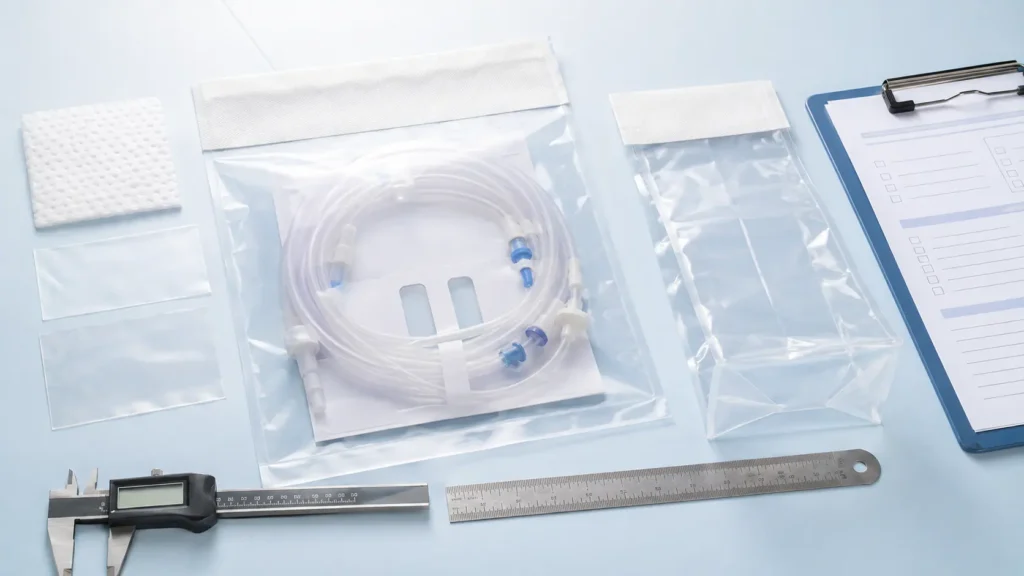
What Is a Medical Header Bag?
A medical header bag is a flexible packaging format with a porous material incorporated into one end or section of the bag.
The main bag body may be made from:
- Transparent film
- Multilayer film
- High-barrier film
- Foil laminate
- Other compatible flexible structures
The porous header may use:
- Tyvek
- Medical-grade paper
- Another specified porous medical packaging material
The header can allow a compatible gaseous sterilant to enter and leave the package. It may also form part of the peel-opening area.
The complete package must be designed around the device, materials, seal system, sterilization process and intended use.
Learn more about available formats on our Medical Header Bags for Sterilization page.
Why Use a Header Bag Instead of a Conventional Pouch?
Conventional flat pouches work well for many lightweight and relatively flat devices. However, they may not provide enough space, strength or loading flexibility for larger or irregular devices.
A header bag may be considered when:
- The device is too large for a standard pouch
- The device has an irregular profile
- Additional bag depth is required
- The device is relatively heavy
- A film–film bag body is preferred
- A foil or high-barrier body is required
- A porous area is needed for a compatible sterilization process
- The package needs a defined peel-open header
- The device requires a customized bag configuration
A header bag is not automatically better than a pouch or tray. The appropriate format depends on the complete project.
Common Medical Header Bag Applications
Medical header bag applications vary according to device geometry, weight, sterilization process and packaging requirements.
Surgical Procedure Kits
Procedure kits may contain several components with different shapes and materials.
A header bag can provide:
- More internal space
- Flexible loading
- A porous sterilization pathway
- Visibility where transparent film is used
- A controlled opening area
- Space for printing and identification
The kit components should be organized to reduce movement and prevent sharp items from damaging the bag.
Catheters and Tubing Sets
Long catheters, tubing sets and fluid-management components may require packaging with greater length and flexibility than a conventional pouch.
Important considerations include:
- Overall device length
- Coiling configuration
- Retention of the device
- Sharp connectors
- Header position
- Opening direction
- Sterilant access
- Device presentation
The device should not place excessive force on the header or side seals during transportation.
Drapes and Gowns
Folded drapes, gowns and related procedural components may create a relatively bulky package.
A header bag may allow:
- A wider loading opening
- Additional package depth
- A breathable section for compatible sterilization
- A defined peel-open area
The folded product dimensions, compression and expansion after loading should be considered when selecting the bag size.
Surgical Instruments
Selected surgical instruments or instrument assemblies may require a stronger or larger flexible package.
Review:
- Instrument weight
- Sharp edges
- Protective caps
- Movement inside the bag
- Film strength
- Puncture risk
- Seal stress
- Opening method
A protective tray or insert may still be required inside the bag.
Orthopedic Devices
Selected orthopedic devices, fixation components or procedure sets may be heavier and more demanding than lightweight disposable devices.
A header bag may be reviewed when a flexible package is preferred, but heavy or sharp devices can also require a formed tray and lidding system.
Compare the format with Medical Blister Trays and Lidding before confirming the package.
Diagnostic and Monitoring Components
Diagnostic components, sensors, tubing assemblies and monitoring accessories may use header bags when the device geometry requires additional loading space or a customized package length.
Device sensitivity, connector protection, cleanliness and opening requirements should be evaluated.
Wound-Care and Procedure Products
Bulky dressings, procedure packs and selected wound-care products may be considered for header bags when a standard flat pouch does not provide sufficient capacity.
The required moisture barrier, product compression and sterilization method should be confirmed before selecting the bag-body material.
Irregularly Shaped Medical Devices
Devices with handles, curves, connectors, multiple components or uneven profiles may not fit efficiently in flat pouches.
A header bag can provide more dimensional flexibility, but buyers should still evaluate:
- Device movement
- Concentrated pressure points
- Puncture risk
- Seal contact
- Package presentation
- Secondary protection
Header Bag Material Structure
The material structure should be defined before quotations are compared.
A typical specification may include:
- Bag-body film or laminate
- Film thickness
- Barrier properties
- Porous header material
- Header coating
- Header width
- Sealant layer
- Peelable or permanent seals
- Printing
- Process indicator
- Bag dimensions
Two header bags with the same external dimensions may use very different materials.
Tyvek Header Bags
Tyvek is commonly used as a porous header material because it combines breathability with tear resistance, puncture resistance, low linting and microbial-barrier performance.
DuPont explains that Tyvek headers can enable ethylene oxide sterilization for devices packaged in film–film or foil-pouch structures by allowing moisture, heat and EO to pass into and out of the package.
However, the use of Tyvek does not automatically confirm that the finished header bag is suitable for the device or sterilization cycle.
Confirm:
- Exact Tyvek style
- Coated or uncoated structure
- Header dimensions
- Compatible film or laminate
- Sealing surface
- Recommended sealing range
- Sterilization compatibility
- Material documentation
Our Tyvek pouch specifications guide explains many of the material and sealing questions that also apply to Tyvek header structures.
Medical-Grade Paper Headers
Medical-grade paper may be considered for selected header bag applications.
Its suitability depends on:
- Paper grade
- Basis weight
- Porosity
- Coating
- Seal system
- Device weight
- Puncture risk
- Sterilization process
- Opening requirements
Paper and Tyvek should not be treated as equivalent porous materials.
For a direct comparison, read our guide to Tyvek vs Medical-Grade Paper.
Film–Film Header Bags
A film–film bag body may provide visibility from both sides and allow buyers to inspect the packaged device.
Confirm:
- Film composition
- Total thickness
- Transparency
- Puncture resistance
- Flexibility
- Sealant layer
- Sterilization compatibility
- Peel behaviour
- Printing surface
Film selection should be based on the device and process rather than appearance alone.
High-Barrier and Foil Header Bags
Some devices or kits may require protection against moisture, oxygen or light.
A high-barrier or foil-laminate bag body can be combined with a porous header where the package design and sterilization process require it.
This structure may involve a balance between:
- Barrier performance
- Sterilant entry and removal
- Seal integrity
- Package flexibility
- Opening performance
- Device visibility
- Residual or aeration considerations
Learn more about High-Barrier Medical Device Packaging.
Confirm the Intended Sterilization Method
The sterilization method should be stated before the header material and bag-body structure are selected.
Ethylene Oxide
Ethylene oxide is a common application for porous-header packaging.
The header can provide a pathway for EO, moisture and heat to enter and leave a compatible package.
The project should still confirm:
- Header material
- Header area
- Bag-body structure
- Device load
- Package arrangement
- Cycle parameters
- Aeration requirements
- Seal compatibility
- Residual considerations
The amount and position of porous material should be evaluated as part of the package and sterilization process.
Radiation
Gamma, electron-beam and X-ray sterilization do not require a porous header for sterilant entry.
A header bag may still be selected for packaging or opening reasons, but the complete material structure, film, Tyvek, paper, coating, ink and seals must be evaluated for the intended radiation dose.
Low-Temperature Oxidative Processes
Selected Tyvek structures may be considered for compatible low-temperature oxidative sterilization processes.
Suitability depends on:
- Exact material grade
- Film structure
- Coating
- Device
- Packaging configuration
- Cycle conditions
Steam
Header bags are not automatically suitable for steam sterilization.
Heat, moisture, pressure and drying conditions can affect the bag body, header, coating, printing and seals.
Compatibility must be confirmed for the complete package and controlled cycle.
For additional information, review our guide to medical packaging for sterilization methods.
The FDA overview of medical device sterilization describes several technologies used for medical devices.
Define the Header Size and Position
The porous header should be defined as part of the package specification.
Confirm:
- Header width
- Header length
- Header position
- Coated area
- Seal area
- Peel direction
- Opening tab
- Relationship to the device
- Printing and indicator position
A larger header is not automatically better.
Header dimensions may influence:
- Sterilant flow
- Seal length
- Package strength
- Opening force
- Material cost
- Device presentation
The appropriate porous area should be determined according to the device, package design and validated sterilization process.
Choose the Correct Bag Dimensions
Header bag dimensions should be based on the loaded device configuration.
Provide:
- Device length
- Device width
- Device height
- Device weight
- Final folded or coiled dimensions
- Insert or tray dimensions
- Required loading clearance
- Header dimensions
- Final closure area
Clarify whether the quoted size is:
- Internal usable size
- External finished size
- Width × length
- Length × width
- Size including the header
- Size excluding the header
The device should fit without excessive compression or concentrated stress on the seals.
Unnecessary extra space may allow movement during distribution.
Review Gussets and Three-Dimensional Space
Some header bags may use side or bottom gussets to provide additional volume.
Gussets may be considered for:
- Bulky kits
- Folded textiles
- Irregular devices
- Tray assemblies
- Multiple components
Confirm:
- Gusset depth
- Fold direction
- Internal usable space
- Loading method
- Seal design
- Device orientation
- Risk of creasing
- Opening behaviour
Gussets can improve capacity but also create more complex folds and potential seal challenges.
Evaluate Device Protection
A flexible header bag should not be expected to protect every device without support.
Devices with sharp, heavy or rigid components may require:
- Protective caps
- Tip protectors
- Retention cards
- Inserts
- Inner trays
- Additional cushioning
- Stronger films
- A rigid or semi-rigid package
Package protection should be evaluated after sterilization, distribution and aging conditions where applicable.
Confirm the Sealing Process
A header bag may involve several seals:
- Film-to-film seals
- Film-to-header seals
- Factory seals
- Final closure seal
- Peelable seals
- Permanent seals
Prepare information on:
- Sealing equipment
- Temperature
- Pressure
- Dwell time
- Seal width
- Conveyor speed
- Jaw design
- Material orientation
- Cooling conditions
- Inspection method
Supplier recommendations can support process development but do not replace validation using the actual equipment and package configuration.
ISO 11607-2 addresses validation requirements for forming, sealing and assembly processes used for terminally sterilized medical device packaging.
Plan the Opening Method
A medical package must protect the device while also supporting controlled opening.
Evaluate:
- Peel direction
- Opening tab
- Peel force
- Peel consistency
- Fibre tear
- Film delamination
- Sudden opening
- Particulate generation
- Device presentation
- User grip
- Risk of touching the device
- Required aseptic technique
The header should not be designed only as a sterilization vent. It may also play an important role in opening and presentation.
Printing and Process Indicators
Header bags may include:
- Product identification
- Lot or batch information
- Manufacturing date
- Expiry date
- Opening instructions
- Peel direction
- Sterilization method
- Process indicators
- Symbols
- Traceability codes
Confirm:
- Printing surface
- Number of colours
- Ink system
- Artwork area
- Header or film printing
- Indicator type
- Sterilization compatibility
- Barcode requirements
- Variable information
A process indicator generally shows exposure to defined conditions. It should not be described as proof that the device is sterile.
Documentation to Request
Depending on the product and selected manufacturing partner, buyers may request:
- Product specification
- Material structure
- Header-material identification
- Film or laminate information
- Technical data
- Certificate of analysis
- Certificate of conformity
- Quality-management certificates
- Available test reports
- Recommended sealing conditions
- Sterilization compatibility information
- Lot traceability
- Change-notification policy
- Approved drawing
- Packing specification
Check whether each document applies to the exact quoted construction.
A report for a Tyvek sheet, film or generic bag does not automatically validate the finished device-specific header bag.
Evaluate Representative Samples
Samples should use the proposed:
- Bag-body material
- Header material
- Header dimensions
- Coating
- Film thickness
- Seal design
- Bag dimensions
- Printing
- Process indicator
- Production process
Sample evaluation may include:
- Device fit
- Loading
- Seal appearance
- Header position
- Puncture risk
- Sealing trials
- Sterilization exposure
- Peel behaviour
- Package integrity
- Distribution
- Aging
- Aseptic presentation
Generic samples may support early review but may not represent the final commercial specification.
Medical Header Bag RFQ Checklist
Before requesting a quotation, prepare:
- Device name and intended use
- Device dimensions and weight
- Photographs or drawings
- Sharp or fragile features
- Number of components
- Preferred bag format
- Internal usable dimensions
- Gusset requirement
- Bag-body material
- Transparent or high-barrier requirement
- Preferred header material
- Header dimensions
- Sterilization method
- Sealing equipment
- Opening direction
- Printing
- Process indicator
- Quantity for each size
- Sample quantity
- Required documents
- Validation stage
- Packing requirements
- Delivery destination
If a material or dimension has not been confirmed, clearly identify it for technical review.
Common Header Bag Purchasing Mistakes
Choosing a Header Bag Only Because the Device Is Large
Large devices may also require trays, inserts or another package format.
Ignoring Device Weight and Sharp Areas
A bag can fit dimensionally while still being unsuitable for the mechanical demands of the device.
Requesting “Tyvek Header” Without a Material Specification
The exact Tyvek style, coating, header dimensions and traceability should be confirmed.
Assuming Every Header Bag Is Suitable for EO
EO suitability depends on the complete package, porous area, device load and validated process.
Comparing Only External Dimensions
Internal usable space, header area, seals and gussets can change the actual fit.
Using Generic Samples for Final Evaluation
Stock samples may not use the same materials or process as the proposed commercial package.
Treating Supplier Reports as Finished-Package Validation
Supplier documents support evaluation but do not replace device-specific package and process validation.
Review more sourcing risks in our guide to common sterilization packaging purchasing mistakes.
Validation Responsibilities
The medical device company or other responsible organization should determine:
- Applicable requirements
- Device and package risks
- Acceptance criteria
- Test methods
- Sealing-process validation
- Sterilization validation
- Distribution studies
- Aging and shelf-life studies
- Change control
- Final approval
Jinhong Packaging can coordinate packaging specifications, samples and available supplier documents. We do not replace the customer’s regulatory assessment or finished-system validation responsibilities.
Use our medical packaging validation preparation guide to organize the required information before requesting validation samples.
How Jinhong Packaging Supports Header Bag Projects
Jinhong Packaging is a packaging supplier and project coordination partner.
Based on the customer’s project information, we can help coordinate:
- Device and packaging requirement review
- Header bag structures
- Tyvek or paper header options
- Transparent or high-barrier bag bodies
- Standard and customized dimensions
- Gusseted formats
- Printing and indicators
- Representative samples
- Available supplier documents
- Quotation and production follow-up
- Export packing and delivery preparation
Available materials, documents and test information depend on the specific package and selected manufacturing partner.
Recommendations remain subject to the device, sterilization process, sealing equipment, target market and customer validation requirements.
Frequently Asked Questions
What medical devices are commonly packaged in header bags?
Header bags may be considered for selected surgical kits, catheters, tubing sets, folded drapes, gowns, instruments, orthopedic components and other large or irregular medical devices. Suitability depends on the complete device and packaging requirements.
Why does a medical header bag have a porous section?
The porous header can provide a pathway for a compatible gaseous sterilant to enter and leave the package. It may also support controlled peel opening and aseptic presentation.
Are medical header bags used for ethylene oxide sterilization?
Header bags with a suitable porous material are commonly considered for EO sterilization. The complete bag construction, porous area, device load, seals and cycle conditions must be evaluated and validated.
Is Tyvek always required for a medical header bag?
No. Selected header bags may use Tyvek, medical-grade paper or another specified porous material. Selection depends on the device, required strength, bag body, sealing process, sterilization method and validation requirements.
Can header bag sizes and gussets be customized?
Standard and customized dimensions and gusseted configurations may be available. Feasibility, MOQ and pricing depend on the materials, bag size, header structure, printing and quantity.
Who is responsible for validating a medical header bag?
The medical device company or other responsible organization must define the applicable requirements and validate the finished package and processes. Supplier documents and samples may support this work but do not replace device-specific validation.
Discuss Your Medical Header Bag Requirements
Medical header bag applications should be reviewed according to the actual device rather than selected only from a standard size list.
Before requesting a quotation, confirm the device, dimensions, weight, bag-body material, porous header, sterilization process, sealing method, printing, quantity and validation stage.
Jinhong Packaging can help coordinate suitable header bag options, samples and available supplier documents through selected manufacturing partners.
Please send your device drawings or photographs, required bag dimensions, sterilization method, expected quantity and documentation requirements for an initial review.
Discuss your medical header bag project
References
- DuPont Tyvek for Header Bags
- ISO 11607-1: Packaging for terminally sterilized medical devices
- ISO 11607-2: Validation requirements for forming, sealing and assembly processes
- FDA: Sterilization for Medical Devices
Tyvek® is a registered trademark of affiliates of DuPont de Nemours, Inc.