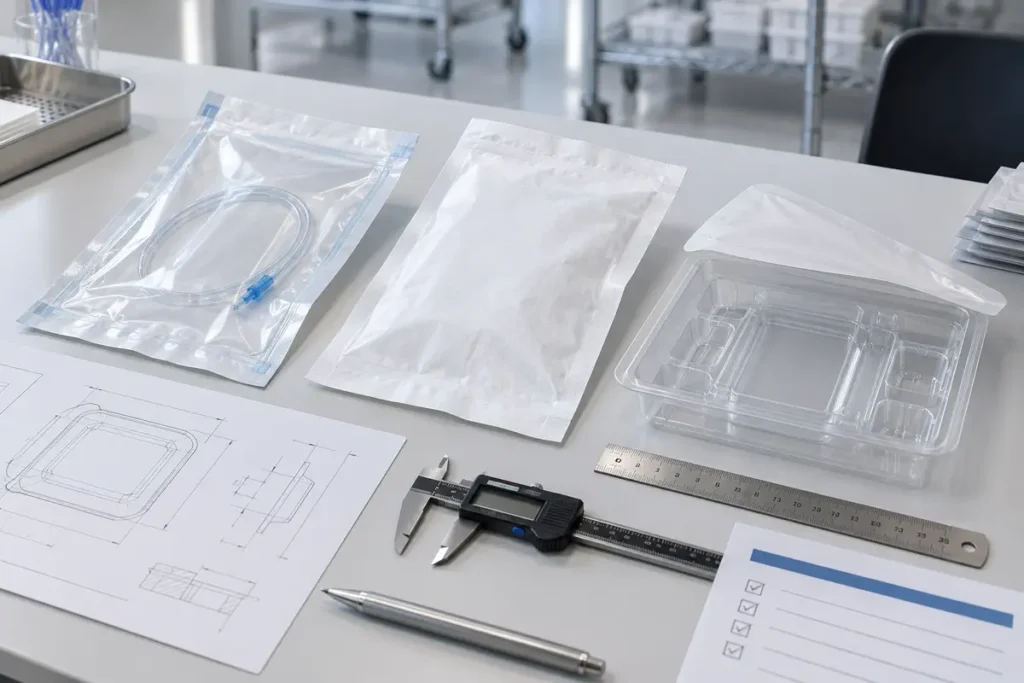
Medical device packaging design should begin before a pouch, tray or lidding material is selected. The packaging must be considered as a complete system involving the device, materials, sealing process, sterilization method, distribution environment, opening requirements and validation plan.
When these inputs are incomplete, the project can move into sampling too early. This often leads to repeated size changes, unsuitable material comparisons, unclear sealing requirements or test plans that do not reflect the final package. A structured design input review helps the medical device company, packaging supplier, manufacturing partner and testing laboratory work from the same requirements.
This guide explains the main inputs to define and includes a practical medical device packaging design input checklist for early project discussions.
Important: This checklist supports requirement collection and supplier communication. It is not a substitute for device-specific risk management, regulatory review, packaging validation or qualified laboratory testing.
What Are Medical Device Packaging Design Inputs?
Design inputs are the documented requirements that the packaging system is expected to meet. They translate the needs of the device, sterilization process, users, supply chain and target market into measurable or reviewable packaging requirements.
Useful inputs should be specific enough to guide material selection, package sizing, seal development, sampling and validation planning. Statements such as “the pouch must be strong” are difficult to evaluate. A clearer input identifies the source of risk and the expected performance—for example, protection against puncture from a defined device feature during the expected distribution cycle.
The packaging design inputs should also remain traceable. When the device, sterilization cycle, supplier, material, seal process or distribution route changes, the team should be able to identify which packaging requirements and validation activities may need review.
1. Define the Device and Its Packaging Risks
Start with the device rather than the packaging material. Record the device dimensions, weight, geometry and configuration at the time it will be packaged. Identify sharp edges, tips, hinges, heavy components or areas that could abrade, stretch or puncture the package.
Confirm whether the device is packaged individually or as part of a kit. Include any caps, retainers, trays, protective sleeves, instructions or accessories that will be inside the package. If the device can move during transportation, the design may require restraint, cushioning or a formed tray rather than relying only on a flexible pouch.
Questions to define include:
- What are the maximum device dimensions and weight?
- Are there sharp, rigid, heavy or movable features?
- Does the device require orientation or restraint?
- Could the device damage the sterile barrier during handling or distribution?
- Is the device dry, moisture-sensitive or sensitive to light or oxygen?
- Is the final configuration a single device, multi-component kit or procedure set?
2. Confirm the Sterilization Method and Process Conditions
The intended sterilization method must be known before the material structure is finalized. Steam, ethylene oxide, irradiation and other processes expose packaging materials and seals to different conditions.
Do not record only the sterilization method name. Where available, include the relevant process range, number of exposures and whether the package may experience repeated processing during validation or product handling. Materials, inks, adhesives, coatings and seals should be reviewed for the intended process.
The packaging team should confirm:
- Intended sterilization method
- Expected process conditions and exposure range
- Number of sterilization exposures to be considered
- Need for a breathable microbial barrier
- Potential effects on color, brittleness, dimensional stability, seal performance or opening behavior
- Whether sterilization will occur before or after final cartoning
3. Select the Packaging System, Not Just One Material
A medical device package may include a preformed sterile barrier system, protective packaging and a distribution package. These components should be reviewed together.
Possible formats include sterilization pouches and rolls, Tyvek® medical packaging, header bags, medical blister trays with compatible lidding, high-barrier pouches and protective secondary packaging. The choice depends on device geometry, barrier needs, sterilization method, handling risk and opening requirements.
Material discussions should identify the complete structure, including the porous or nonporous web, sealant layer, film construction, coating or adhesive where applicable. For formed packages, the tray material, cavity design, flange and lidding interface must work as one system.
For a broader explanation of material selection, package integrity and sterile barrier functions, see our sterile barrier packaging for medical devices guide.
Review:
- Primary sterile barrier format
- Protective or secondary packaging
- Material grade and complete multilayer structure
- Required breathability or environmental barrier
- Visibility requirements
- Puncture, abrasion and flex-crack risks
- Tray and lid compatibility, where applicable
- Availability of material specifications and relevant supporting data
4. Establish Package Dimensions and Product Fit
Package dimensions should provide enough space for loading, sealing and opening without allowing excessive movement. The usable internal area is affected by seal width, header area, chevron or opening features and manufacturing tolerances.
For a pouch, confirm whether the quoted dimensions are internal or external. For a tray, drawings should define the cavity, radii, flange, undercuts, product clearance and any retention features. Samples should be reviewed using the intended device configuration, not only an approximate substitute when fit or puncture risk is critical.
Useful inputs include:
- Device envelope and tolerances
- Required internal package dimensions
- Seal width and seal location
- Loading and sealing clearance
- Product movement allowance or restraint
- Opening direction and presentation orientation
- Carton and shipping-case constraints
5. Define Barrier and Shelf-Life Requirements
“High barrier” is not a complete design input. Identify what the package must protect against and why. Depending on the device, this may include microbial ingress, moisture, oxygen, light, particulate contamination or physical damage.
Shelf-life requirements should be connected to the final device, packaging system, sterilization process and storage conditions. Accelerated aging may support a study plan, but real-time aging remains important for confirming shelf-life performance.
Document:
- Required sterile barrier function
- Moisture, oxygen or light sensitivity
- Target shelf life
- Expected storage temperature and humidity
- Transportation and handling conditions
- Required package-integrity and seal-performance criteria over time
- Aging and stability strategy to be reviewed by the responsible validation team
6. Define Seal and Manufacturing Requirements
The seal is part of the packaging system. Design inputs should address both seal integrity and the ability to open the package as intended.
For heat-sealed packaging, relevant inputs may include the proposed sealing equipment, process window, seal width, seal pattern, coated surface and inspection approach. The responsible manufacturer or device company should establish and validate the forming, sealing and assembly processes applicable to the final package.
Confirm:
- Sealing method and equipment interface
- Seal location, width and pattern
- Peelable or permanent seal requirement
- Target opening behavior
- Critical seal defects to control
- Process-development and validation responsibilities
- In-process monitoring and acceptance approach
- Traceability and change-notification expectations
7. Consider Usability and Aseptic Presentation
A package can remain intact and still be difficult to use correctly. Opening force, peel direction, material curl, fiber tear, device orientation and the risk of touching a nonsterile surface can affect presentation.
The intended user and use environment should therefore be included in the inputs. A hospital procedure kit, dental pouch and implant tray may have very different opening and presentation needs.
Consider:
- Intended user and use environment
- Gloves, lighting or space limitations
- Opening direction and grip area
- Peel consistency and visual opening cues
- Device orientation after opening
- Aseptic presentation requirements
- Legibility of labels and instructions
- Need for usability evaluation with representative users
8. Define Distribution and Handling Conditions
The packaging system must protect the device through its expected distribution route. A generic test plan may not represent every product or supply chain.
Document the expected shipping mode, case configuration, palletization, climatic exposure, stacking, vibration, shock and handling. Include foreseeable distribution events such as parcel shipment, air freight, warehouse storage or delivery to multiple healthcare facilities.
Inputs may include:
- Shipping modes and destinations
- Unit carton, shipper and pallet configuration
- Product quantity and orientation per case
- Expected vibration, shock, compression and drop hazards
- Temperature, humidity or altitude exposure
- Special handling and storage instructions
- Distribution simulation approach to be confirmed by the validation team
9. Plan Verification, Validation and Documentation Early
Packaging testing should connect back to defined risks and design inputs. The exact test methods and acceptance criteria depend on the device, package and applicable requirements. They should be established by the responsible medical device company with qualified regulatory, quality and testing personnel.
Depending on the project, planning may consider material characterization, visual inspection, seal strength, package integrity, distribution simulation, aging and usability or aseptic-presentation evaluation. Not every test applies to every package, and one supplier report cannot replace device-specific validation.
Before sampling, clarify:
- Applicable standards and market requirements
- Risk-management links
- Verification and validation responsibilities
- Proposed test methods and acceptance criteria
- Sample quantities and production conditions
- Sterilized, aged and distributed sample groups
- Required supplier documents
- Record retention, traceability and change control
For additional planning considerations, see our medical packaging validation and testing support page.
Medical Device Packaging Design Input Checklist
Use the checklist below before requesting a quotation, sample or packaging trial. Mark items as Confirmed, To Be Confirmed or Not Applicable and identify the person responsible for each open item.
A. Device Information
- Device name, model and intended use recorded
- Device dimensions, weight and tolerances recorded
- Final packaged configuration defined
- Sharp edges, tips, hinges or puncture risks identified
- Device movement, restraint and orientation requirements defined
- Accessories, instructions and protective components listed
- Moisture, oxygen, light, ESD or other sensitivities identified
- Cleanliness and particulate-control requirements identified
B. Sterilization Inputs
- Intended sterilization method confirmed
- Relevant process range and exposure conditions recorded
- Number of expected sterilization exposures considered
- Breathability requirement confirmed
- Material, ink, adhesive and coating compatibility to be reviewed
- Post-sterilization appearance and functional requirements defined
C. Package Format and Materials
- Sterile barrier format selected or comparison options identified
- Secondary and distribution packaging requirements identified
- Complete material structure or required performance defined
- Porous/nonporous web requirements confirmed
- Required microbial, moisture, oxygen or light barrier defined
- Puncture, abrasion and flex-crack risks considered
- Tray, lid and seal-interface requirements defined where applicable
- Material specifications and supporting-document needs listed
D. Dimensions and Fit
- Internal versus external dimensions clearly identified
- Usable package area confirmed
- Loading and sealing clearance defined
- Seal width and location defined
- Product movement or restraint limits defined
- Opening direction and presentation orientation confirmed
- Representative-device fit check planned
- Carton and shipping-case constraints recorded
E. Seal and Manufacturing Process
- Sealing method and equipment identified
- Seal pattern, width and location defined
- Peelable or permanent seal specified
- Opening-force or opening-behavior requirement defined
- Critical seal defects identified
- Process-development responsibility assigned
- Process-validation responsibility assigned
- Inspection, monitoring and traceability expectations documented
F. Usability and Labeling
- Intended user and use environment defined
- Grip area and opening method reviewed
- Aseptic presentation needs identified
- Device orientation after opening defined
- Label content and placement requirements listed
- Printing and sterilization-indicator requirements identified
- UDI or market-specific labeling requirements assigned for regulatory review
- Representative-user evaluation considered
G. Shelf Life, Storage and Distribution
- Target shelf life documented
- Storage conditions documented
- Aging strategy assigned to the validation team
- Shipping modes and destinations identified
- Unit carton and shipper configuration defined
- Vibration, shock, compression and drop risks reviewed
- Temperature, humidity and altitude exposures considered
- Distribution simulation strategy assigned
H. Verification, Validation and Change Control
- Applicable standards and regulations identified by the responsible team
- Packaging risks linked to design inputs
- Test methods and acceptance criteria assigned
- Sterilized, aged and distributed sample groups planned
- Required sample quantities estimated
- Supplier documentation requirements listed
- Device-company, supplier and laboratory responsibilities defined
- Material, process, equipment and supplier changes subject to review
- Final approval authority identified
From Design Inputs to a Packaging Specification
Once the inputs are reviewed, the next step is to convert them into a controlled packaging specification. That specification may include the approved material structure, dimensions, tolerances, seal configuration, artwork, labeling, packing method, inspection criteria and required documentation.
Open items should not be hidden. Record assumptions and assign responsibility for confirming them before the project moves to final samples or production. This makes supplier communication more efficient and helps prevent a preliminary sample from being treated as an approved packaging system.
How Jinhong Packaging Supports the Early Project Stage
Jinhong Packaging supports medical packaging projects as a packaging supplier and sourcing and project coordination partner. Our medical and healthcare packaging solutions include sterilization pouches and rolls, Tyvek structures, high-barrier pouches, header bags and formed trays coordinated through selected manufacturing partners. Based on the information provided by the customer, we can coordinate suitable packaging formats, preliminary material options, samples, specifications and available supporting documents.
We do not independently issue medical device certifications or device-specific packaging validation reports. Final material selection, validation, regulatory approval and confirmation of suitability remain the responsibility of the medical device company and its qualified testing and regulatory partners.
If you are preparing a new project, send us the completed design input checklist together with available device dimensions, the intended sterilization method, estimated quantity and destination market. We can use this information to organize an initial packaging review and identify the next information needed for quotation or sampling.
Discuss Your Medical Packaging Project
Frequently Asked Questions
What information is needed to start medical device packaging design?
Start with the device dimensions, weight, geometry, puncture risks, intended sterilization method, target shelf life, distribution route, opening requirements and target market. If some inputs are not yet confirmed, record them as open items rather than making an undocumented assumption.
Should the packaging material be selected before validation planning?
Material selection and validation planning should inform each other. The intended package, device, sealing process, sterilization method, aging conditions and distribution risks affect the samples and testing required. Early planning can reduce redesign and repeated testing.
Is ISO 11607 a product certification for a pouch or tray?
ISO 11607 defines requirements relating to materials, sterile barrier systems, packaging systems and forming, sealing and assembly processes for terminally sterilized medical devices. It should not be treated as a general certificate proving that one package is suitable for every device. Device-specific suitability and validation still need to be established.
Who is responsible for medical device packaging validation?
The medical device company is responsible for ensuring that the final packaging system is suitable for its device, process and target market. Packaging suppliers, manufacturing partners and laboratories can provide specifications, samples, test data and technical support within their respective scopes.
Can one checklist replace a packaging specification?
No. The checklist helps collect design inputs and identify missing information. Confirmed inputs should later be converted into controlled specifications, approved drawings, process parameters, acceptance criteria and validation records as applicable.
Reference Framework
- ISO 11607-1:2019 — Requirements for materials, sterile barrier systems and packaging systems
- ISO 11607-2:2019 — Validation requirements for forming, sealing and assembly processes
- ISO 14971:2019 — Application of risk management to medical devices
Standards and regulatory requirements should be reviewed in their current editions by qualified personnel for the specific device and destination market.