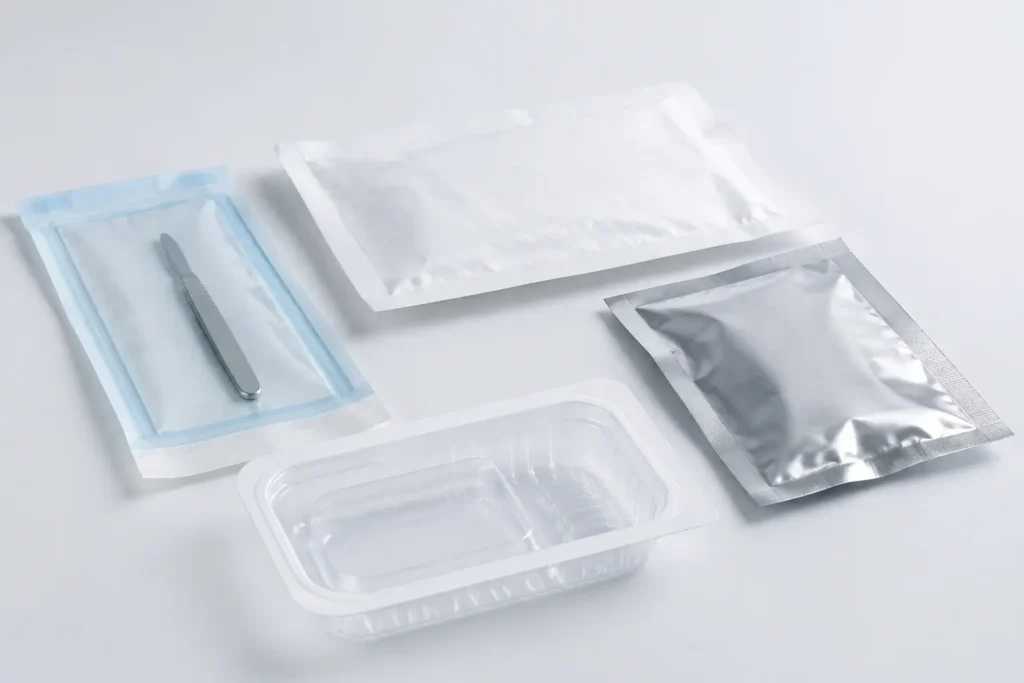
Selecting sterile barrier packaging for medical devices is not simply a matter of choosing a pouch, film or tray. The packaging must be considered together with the device design, sterilization method, handling conditions, transportation risks, opening requirements and applicable validation plan.
Medical paper–plastic pouches, Tyvek® packaging, high-barrier aluminum foil pouches and rigid blister systems each provide different performance characteristics. A material that is suitable for one medical device may be unsuitable for another, even when the products appear similar.
This guide explains the main sterile barrier packaging options for medical devices, the factors that influence material selection and the information buyers should confirm before requesting samples or quotations.
What Is Sterile Barrier Packaging for Medical Devices?
A sterile barrier system is the minimum packaging configuration that helps prevent the entry of microorganisms and allows the packaged product to be presented aseptically at the point of use. Depending on the device, the sterile barrier may be a sealed pouch, a formed tray with lidding material or another validated packaging configuration.
The sterile barrier system should not be confused with the complete packaging system. A complete system may also include protective packaging such as folding cartons, inserts, cushioning components, labels and shipping cases. These additional components help protect the sterile barrier from punctures, abrasion, compression and other distribution hazards.
ISO 11607-1 addresses requirements and test methods for materials, preformed sterile barrier systems, sterile barrier systems and packaging systems intended for terminally sterilized medical devices. ISO 11607-2 addresses the development and validation of forming, sealing and assembly processes.
Packaging selection should therefore consider both the packaging material and the process used to form and seal the final package.
Start With the Medical Device, Not the Packaging Material
It may be tempting to begin by comparing pouch prices or material specifications. However, the medical device itself should be evaluated first.
Important device characteristics include:
- Overall dimensions and weight
- Shape and profile
- Sharp points, edges or protrusions
- Rigidity or flexibility
- Sensitivity to moisture, oxygen or light
- Required sterilization method
- Intended shelf life
- Opening and aseptic presentation requirements
- Expected transportation and storage conditions
A lightweight, low-profile disposable device may be suitable for a paper–plastic or Tyvek pouch. A heavier instrument with sharp edges may require a stronger film, protective insert or rigid tray. A moisture-sensitive component may need a high-barrier foil laminate.
There is no single sterile barrier packaging material that is automatically suitable for every medical device.
Confirm the Sterilization Method Before Choosing Packaging
Sterilization compatibility is one of the most important factors in medical device packaging selection. The packaging must tolerate the selected sterilization process while maintaining its required barrier, seal and opening performance.
Common sterilization methods include:
- Ethylene oxide, commonly known as EO or EtO
- Steam sterilization
- Gamma irradiation
- Electron-beam irradiation
- Low-temperature oxidative processes, including vaporized hydrogen peroxide
Different materials react differently to heat, moisture, radiation and sterilizing gases. Porous materials may be required when a sterilizing gas must enter and leave the package. High-barrier materials may be appropriate when moisture or light protection is more important and the sterilization process does not require a fully porous package.
Even when a material is generally associated with a particular sterilization method, the final material structure, seal coating, device load and packaging process must still be evaluated and validated for the intended application.
For a more detailed comparison of EO, steam, gamma and e-beam considerations, read our guide to medical packaging for sterilization methods.
Medical Paper–Plastic Sterilization Pouches and Rolls
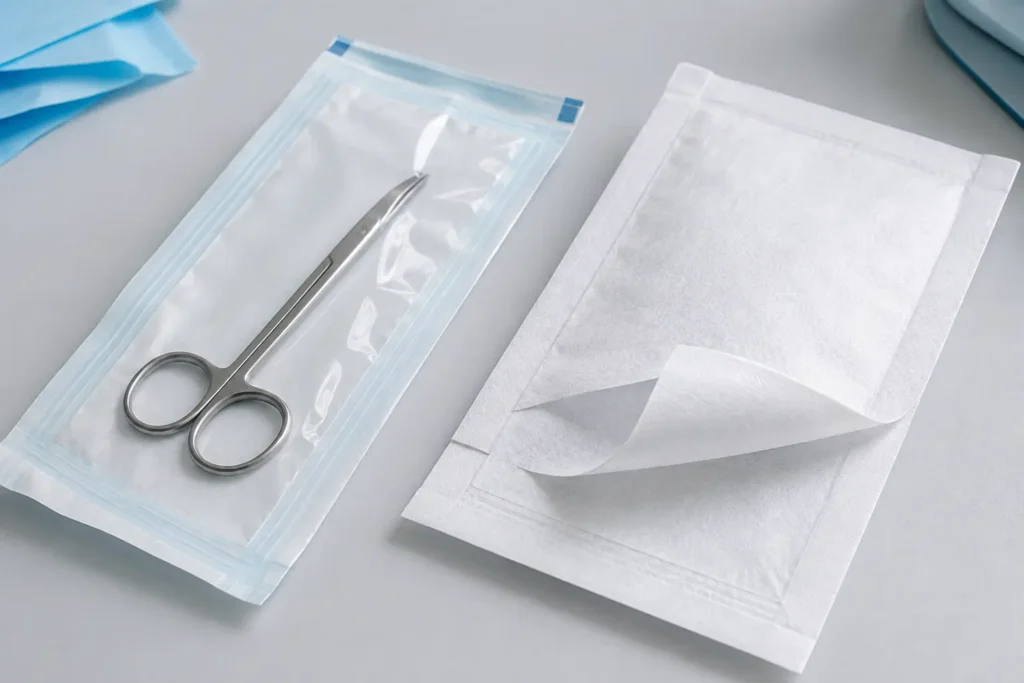
Medical paper–plastic pouches are widely used for instruments, dental products, disposable medical supplies and other relatively lightweight devices. They normally combine medical-grade paper with a transparent multilayer plastic film.
The paper side can allow compatible sterilizing agents to pass through the package, while the transparent film allows the packaged device to remain visible.
Self-Seal Sterilization Pouches
Self-seal pouches include an adhesive closure and do not require a separate heat-sealing machine for final closure. They are frequently used in hospitals, clinics, dental practices and other healthcare settings for in-house instrument preparation.
Their convenience makes them suitable for certain point-of-use applications, but they should not automatically be treated as interchangeable with heat-sealed pouches used in industrial medical device production.
Heat-Seal Sterilization Pouches
Heat-seal pouches are closed using controlled sealing equipment. The sealing temperature, pressure and dwell time influence the consistency and strength of the final seal.
Heat-seal pouches may offer more control over the closure process, but the sealing process and equipment parameters must be properly established for the selected packaging material.
Sterilization Rolls
Sterilization rolls are supplied in continuous lengths and can be cut to match different device lengths. They provide flexibility when a facility or packaging operation handles multiple product sizes.
When choosing a roll, buyers should confirm:
- Available widths and roll lengths
- Paper and film specifications
- Recommended sealing conditions
- Sterilization compatibility
- Indicator requirements, if applicable
- Printing and traceability requirements
Paper–plastic packaging can be a practical and economical option, but it may not provide enough puncture resistance or moisture protection for every device.
Tyvek Pouches and Lidding for Medical Devices
Tyvek is a high-density polyethylene material used in many healthcare packaging applications. It combines breathability with strength, microbial barrier performance and relatively low particle generation during opening.
Tyvek pouches are commonly considered for lightweight or sensitive medical devices, diagnostic products, surgical components and products requiring a strong porous sterile barrier.
Why Tyvek Is Used in Healthcare Packaging
Important characteristics may include:
- Resistance to tearing and puncturing
- Breathability for compatible gaseous sterilization processes
- Microbial barrier performance
- Clean-peel characteristics
- Low linting compared with many paper materials
- Compatibility with a range of healthcare packaging formats
Tyvek can be combined with transparent film to create pouches or used as a lidding material for formed trays and blisters.
According to DuPont’s healthcare packaging information, Tyvek is used for its durability, breathability, clean-peel performance and microbial barrier properties. DuPont also provides technical guidance concerning Tyvek grades and sterilization compatibility.
When Tyvek May Be Considered
Tyvek packaging may be considered when:
- The device requires a porous sterile barrier
- Puncture resistance is more demanding than standard paper can provide
- Clean opening and low particle generation are important
- The sterilization process is compatible with the selected Tyvek structure
- The device is used in a controlled medical or laboratory environment
Tyvek is generally more expensive than medical-grade paper. The decision should therefore be based on device risk and packaging performance rather than appearance alone.
The exact Tyvek grade, film structure, sealant and sterilization cycle must be confirmed for the specific medical device project.
For a detailed material comparison, read our guide to Tyvek vs medical-grade paper for sterile barrier packaging.
High-Barrier Aluminum Foil Pouches
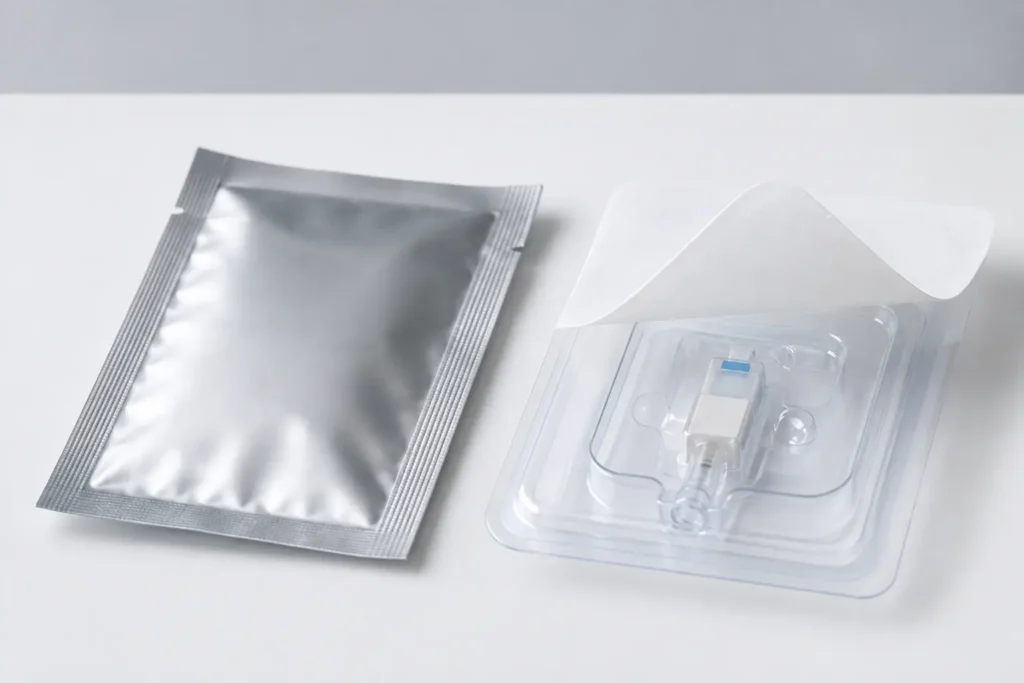
Medical aluminum foil pouches are used when the product requires strong protection from moisture, oxygen or light. The foil layer is normally incorporated into a multilayer laminate rather than used by itself.
Possible structures may combine materials such as PET, PA, aluminum foil and PE or another sealing layer. The final structure depends on barrier, strength, sealing and sterilization requirements.
When Aluminum Foil Packaging May Be Suitable
High-barrier foil pouches may be considered for:
- Moisture-sensitive medical components
- Light-sensitive products
- Diagnostic products and test components
- Medical electronics
- Precision components
- Devices requiring extended barrier protection
- Secondary barrier packaging around another sterile barrier system
Foil laminates can also help protect products from environmental exposure during storage and transportation.
Peelable and Tear-Open Foil Pouches
Foil pouches may be designed as peelable or tear-open formats. Peelable structures are intended to separate in a controlled manner, while tear-open pouches may use a notch or another opening feature.
The opening method should be considered during the design stage. A package that provides excellent barrier protection but is difficult to open consistently may not meet the practical needs of the final application.
Important Limitations
An aluminum foil pouch is not automatically a breathable sterile barrier. If the sterilization method requires gas penetration, the packaging design may need a porous component, a specialized window or another validated configuration.
Foil can also be vulnerable to flex cracking, pinholes or damage caused by sharp products if the structure and handling conditions are unsuitable. Material thickness, laminate construction, device protection and distribution testing should therefore be evaluated together.
Rigid Blister Trays and Lidding Materials
Rigid or semi-rigid trays are often used when a medical device needs more physical protection, controlled positioning or organized presentation.
A formed tray can hold the device in a specific orientation and reduce movement inside the package. It may be combined with medical-grade paper, Tyvek or another compatible lidding material.
When a Tray System May Be Appropriate
A tray system may be considered for:
- Devices with complex shapes
- Heavy or rigid instruments
- Products with sharp or delicate components
- Procedure kits containing several components
- Devices requiring controlled presentation
- Products that may damage a flexible pouch
The tray material, cavity dimensions, undercuts, flange design and lidding compatibility all influence the final package.
A rigid tray may provide better physical protection than a pouch, but it usually requires more tooling, development time and storage space. It may also have a higher minimum order quantity and project cost.
How to Compare the Main Medical Packaging Options
The following comparison provides a general starting point. Final suitability must be confirmed for the actual device and sterilization process.
| Packaging Type | Typical Advantages | Common Considerations |
|---|---|---|
| Medical paper–plastic pouch | Transparent, familiar, economical and available as pouches or rolls | Paper strength, puncture risk, linting, sterilization compatibility and seal quality |
| Tyvek pouch | Strong, breathable, puncture-resistant and suitable for clean-peel applications | Higher material cost, Tyvek grade, sealant and process compatibility |
| Aluminum foil pouch | High protection against moisture, oxygen and light | Not inherently breathable, flex-crack risk, opening design and sterilization compatibility |
| Formed blister or tray | Physical protection, device positioning and organized presentation | Tooling, cavity design, lidding compatibility, cost and storage space |
This comparison should be treated as preliminary guidance rather than a substitute for packaging engineering and validation.
Key Packaging Information to Confirm Before Requesting a Quote
Providing complete project information makes it easier to compare suitable materials and obtain useful quotations.
Before contacting a medical packaging supplier, buyers should prepare the following details.
1. Device Information
Provide the product name, intended use, dimensions, weight and photographs or technical drawings. Identify any sharp edges, delicate surfaces, protruding components or areas that require additional protection.
2. Sterilization Method
State whether the device will use EO, steam, gamma, e-beam, vaporized hydrogen peroxide or another process. If the process parameters are already known, provide the available information for technical review.
3. Packaging Format
Clarify whether the preferred format is:
- Preformed pouch
- Continuous sterilization roll
- Three-side-seal bag
- Header bag
- Peelable foil pouch
- Tear-open foil pouch
- Formed tray with lidding
If the format has not been selected, explain how the package will be filled, sealed, sterilized, transported and opened.
4. Size and Tolerance
Packaging dimensions should allow enough space for the device without creating unnecessary movement or stress on the seals. Inner and outer dimensions must be distinguished clearly.
For trays, cavity dimensions and device orientation are especially important.
5. Barrier Requirements
Confirm whether the product is sensitive to:
- Moisture
- Oxygen
- Light
- Dust or particles
- Mechanical impact
- Puncture or abrasion
Barrier requirements can affect the choice of paper, Tyvek, film, foil laminate or secondary protective packaging.
6. Opening and Presentation
Determine whether the package should be peelable, tearable or cut open. If aseptic presentation is required, the package design should support controlled opening without damaging the device or creating unnecessary contamination risk.
7. Printing and Identification
Provide requirements for:
- Product name and reference number
- Lot or batch information
- UDI and barcode areas
- Sterilization indicators
- Regulatory symbols
- Opening instructions
- Manufacturing and expiry information
The medical device company remains responsible for confirming the accuracy and regulatory suitability of the final artwork, claims, symbols and labeling content.
8. Order Quantity and Project Stage
State whether the requirement is for development samples, validation quantities, pilot production or regular commercial supply.
Sample and validation requirements may use different production methods or minimum quantities from full commercial orders. Discussing the project stage early helps avoid comparing quotations based on different assumptions.
Documents to Discuss With a Medical Packaging Supplier
Required documentation varies according to the medical device, target market, material and supplier.
Depending on the project, buyers may need to discuss:
- Material specifications and technical data sheets
- Declarations of conformity
- Quality management system certificates
- Relevant biological, chemical or physical test reports
- Sterilization compatibility information
- Seal strength or package integrity data
- Traceability and batch documentation
- Change-control procedures
- Storage and shelf-life information
A supplier certificate does not automatically validate the customer’s finished medical device packaging system. The medical device manufacturer or responsible organization must determine the applicable regulatory requirements and complete the necessary evaluation and validation for the finished system.
ISO 11607-1 focuses on materials, sterile barrier systems and packaging systems, while ISO 11607-2 covers validation requirements for forming, sealing and assembly processes. Packaging materials, sealing equipment, process parameters and the packaged device must therefore be considered as part of the complete project.
Common Mistakes When Selecting Medical Device Packaging
Choosing by Price Alone
The lowest-cost pouch may not provide the required puncture resistance, barrier protection or opening performance. A packaging failure can create far greater costs than the initial material saving.
Assuming One Material Works for Every Sterilization Method
General material compatibility is only a starting point. The specific laminate, coating, seal layer and sterilization cycle must be evaluated.
Ignoring the Device’s Sharp Edges
Sharp or irregular components can damage films and seals during handling or transportation. Protective caps, inserts, stronger films or rigid trays may be required.
Leaving Validation Until the End
Packaging design, material selection and sealing conditions influence validation. Considering validation only after artwork, tooling and production are finalized can cause delays and additional costs.
Using Unverified Regulatory Claims
Terms such as “medical grade,” “sterile,” “FDA approved” or “ISO compliant” should not be added to packaging without appropriate evidence and a clear understanding of what the supporting document covers.
Confusing Supplier Certification With Finished-System Compliance
A supplier’s ISO certificate or material test report supports supplier evaluation, but it does not transfer automatically to the customer’s finished medical device or packaging system.
A Practical Medical Packaging Selection Process
A more reliable selection process can follow these steps:
- Collect device dimensions, weight, drawings and risk information.
- Confirm the sterilization method and expected process conditions.
- Identify barrier, strength and opening requirements.
- Compare suitable pouch, foil or tray structures.
- Review supplier capabilities and available documentation.
- Prepare initial samples for fit and handling evaluation.
- Refine dimensions, materials, seals and artwork.
- Produce the quantities required for testing and validation.
- Confirm approved specifications before commercial production.
- Maintain traceability and manage future material or process changes.
This process helps reduce the risk of selecting a package that appears suitable during initial sampling but creates problems during sealing, sterilization, transportation or use.
How Jinhong Packaging Supports Medical Packaging Projects
Jinhong Packaging supports medical device packaging projects through packaging sourcing and project coordination.
Based on the information provided by the customer, we can help coordinate options for:
- Medical paper–plastic sterilization pouches and rolls
- Self-seal and heat-seal pouch formats
- Tyvek pouches and lidding materials
- High-barrier medical aluminum foil pouches
- Formed blister trays and compatible lidding
- Printed cartons and secondary protective packaging
Our role may include comparing suitable packaging formats, communicating specifications with selected manufacturing partners, coordinating samples, reviewing production details and following the project through delivery.
Material recommendations remain subject to the medical device, sterilization method, target market and validation requirements. Supporting certificates and test documents are provided by the relevant manufacturing partner when applicable and available.
Jinhong Packaging does not replace the customer’s regulatory, quality or validation responsibilities. Our goal is to make supplier communication and packaging project coordination clearer and more efficient.
Frequently Asked Questions
What is the best sterile barrier packaging for medical devices?
There is no single best material for every medical device. The choice depends on the device’s size, weight, shape, sterilization method, barrier requirements, opening method and validation plan. Paper–plastic pouches, Tyvek packaging, foil pouches and formed trays each serve different applications.
What is the difference between a sterile barrier system and protective packaging?
The sterile barrier system provides the minimum barrier needed to help prevent microbial entry and support aseptic presentation. Protective packaging, such as cartons, inserts and shipping cases, helps protect the sterile barrier system from physical and environmental damage.
When should Tyvek packaging be considered?
Tyvek may be considered when a medical device requires a breathable, strong and low-linting packaging material. The selected Tyvek grade, film, sealant and sterilization process must be evaluated for the specific application.
When is an aluminum foil pouch suitable for medical products?
Aluminum foil laminates may be suitable for products that require high protection from moisture, oxygen or light. They can be used for certain medical components, diagnostic products and sensitive devices. Sterilization compatibility and opening requirements must be confirmed.
Can a supplier’s ISO 13485 certificate make my medical packaging compliant?
No. A supplier’s ISO 13485 certificate may support supplier qualification, but it does not automatically validate the finished medical device packaging system. The responsible medical device company must confirm the applicable requirements and complete the necessary evaluation and validation.
What information is needed to request medical packaging samples?
Useful information includes device dimensions, weight, photographs or drawings, sterilization method, preferred packaging format, barrier requirements, opening method, printing requirements, estimated quantity and project stage.
Can Jinhong Packaging provide medical packaging certificates?
When relevant documents are available, Jinhong Packaging can coordinate the collection of certificates, specifications or test information from the selected manufacturing partner. The original manufacturer’s identity and document scope must remain accurate. Documents should not be altered or presented as certificates issued by Jinhong Packaging.
Discuss Your Medical Device Packaging Requirements
Choosing sterile barrier packaging for medical devices requires coordination between the device, packaging material, sealing process, sterilization method and validation plan.
If you are comparing medical paper–plastic pouches, Tyvek packaging, high-barrier foil pouches or formed tray systems, Jinhong Packaging can help organize the project information and communicate your requirements with selected manufacturing partners.
Contact us with your device dimensions, sterilization method, packaging format and estimated quantity to begin an initial packaging review.