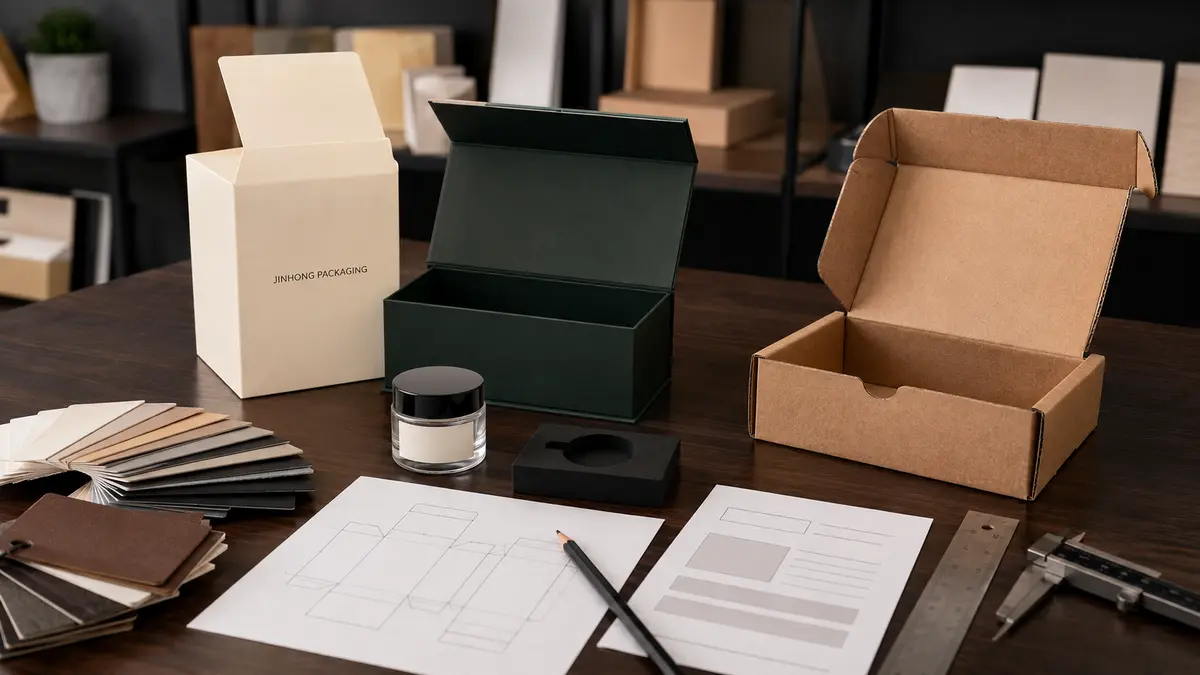
Ordering custom packaging boxes involves more than selecting an attractive design. The box must fit the product, provide appropriate protection, communicate the required information, work with the filling process, and remain practical for storage and transportation.
Many packaging problems begin before production. Incomplete dimensions, unclear material descriptions, artwork prepared on an outdated dieline, and quotations based on different specifications can make it difficult to compare suppliers or control costs.
This packaging box buying guide explains twelve practical steps to complete before placing an order. It is designed for brands buying folding cartons, rigid gift boxes, mailer boxes, corrugated boxes, and other custom paperboard packaging.
Use this packaging box buying guide as a checklist when preparing specifications, comparing quotations, reviewing samples, and planning delivery.
1. Define the Product and Packaging Purpose
Begin with the product rather than the appearance of the box. The supplier needs to understand what the packaging must contain, protect, and communicate.
Prepare the following product information:
• Product name and category
• Product dimensions
• Product weight
• Number of items in each box
• Product orientation inside the box
• Fragile, sharp, heavy, or protruding components
• Bottles, pumps, caps, or closures that may leak
• Accessories, instructions, or promotional items
• Required product separation
• Filling and packing location
• Storage and distribution conditions
The packaging requirements for a lightweight skincare carton differ from those for a glass candle, a coffee gift set, or an electronics accessory.
Identify the Packaging Level
Confirm whether the box will function as:
• Primary packaging in direct contact with the product
• Secondary packaging surrounding a bottle, pouch, jar, or other primary package
• Presentation or gift packaging
• E-commerce mailer packaging
• Shipping or transit packaging
A decorative folding carton should not automatically be treated as a shipping carton. Presentation boxes sent through parcel networks may need a separate corrugated shipping box and protective material.
Define the Sales Channel
Retail, e-commerce, subscription, wholesale, and corporate gift channels have different priorities.
Retail packaging may need:
• Shelf visibility
• Hanging features
• Product information
• Barcode placement
• Tamper-evident features
E-commerce packaging may place more emphasis on:
• Shipping protection
• Efficient dimensions
• Easy assembly
• Return handling
• Surface resistance
• A separate presentation layer
Defining the purpose early helps prevent unnecessary materials and decorative features.
2. Choose a Suitable Box Structure
The box style influences protection, presentation, assembly, storage, freight volume, and cost.
Common structures include:
Folding Cartons
Folding cartons are supplied flat and assembled during filling. They are widely used for cosmetics, personal care, food-related outer cartons, supplements, candles, electronics accessories, and small retail products.
They offer efficient storage and can support detailed printing and many surface finishes.
Rigid Boxes
Rigid boxes are made from thicker board and are usually supplied fully assembled, although collapsible rigid structures are also available.
They are often selected for gift sets, jewelry, cosmetics, perfume, candles, premium food collections, and corporate gifts.
Rigid boxes offer a substantial presentation but usually require more material, assembly, storage space, and shipping volume than folding cartons.
Mailer Boxes
Mailer boxes commonly use corrugated board and an integrated lid. They are suitable for e-commerce, subscriptions, promotional kits, and product collections.
The flute, board grade, dimensions, closure, printing method, and intended shipping conditions should be considered.
Corrugated Shipping Boxes
Corrugated shipping boxes are designed primarily for transportation and product protection. They can hold individual products, retail boxes, or multiple units.
The correct specification depends on product weight, carton dimensions, stacking, handling, route, and distribution environment.
Drawer, Magnetic and Lift-Off Lid Boxes
These structures create different opening experiences and may suit premium presentation projects.
Drawer boxes provide a gradual reveal. Magnetic boxes offer a hinged opening and closure. Lift-off lid boxes use a separate lid and base.
Each option affects tooling, board, wrapping, insert design, assembly, and freight volume.
Explore our packaging boxes to compare common structures.
3. Measure the Product and Determine the Box Size
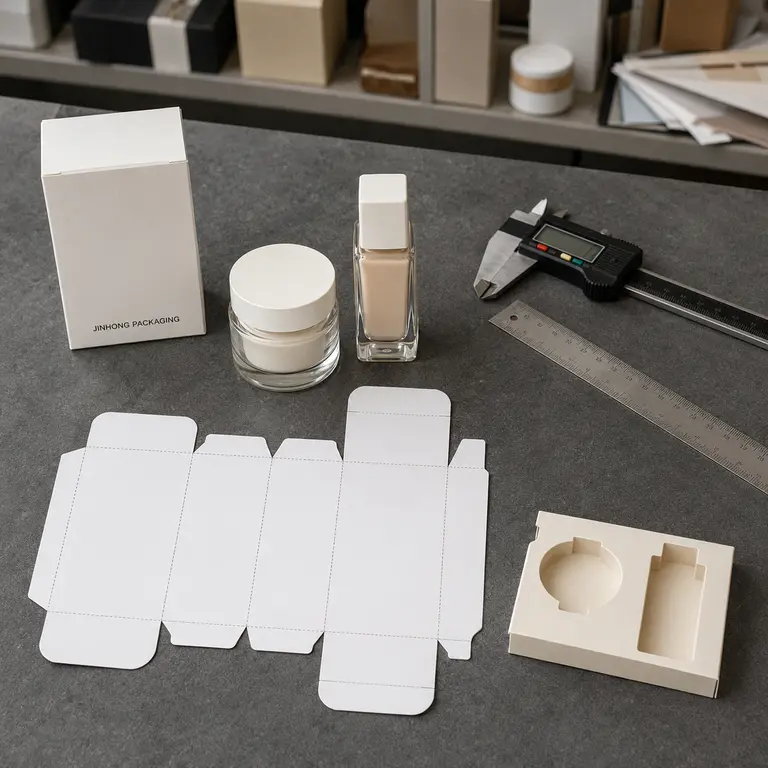
Accurate dimensions are essential. A box that is too small may place pressure on the product, while an oversized box can increase material use, insert requirements, storage volume, and transportation cost.
Measure the Complete Product
Measure:
• Length
• Width
• Height
• Weight
• Widest and highest points
• Pumps, caps, handles, or closures
• Cables and accessories
• Protective bags or wraps
• Product variation between units
Do not measure only the main body of a bottle or container. Include every component that must fit inside the box.
Confirm Internal and External Dimensions
Packaging dimensions may be described as internal or external. The difference depends on board thickness, corrugated flute, wrapping material, and structure.
When requesting a quotation, state clearly whether the dimensions are internal or external.
Include Space for Inserts and Protection
An insert may require additional clearance around the product. Tissue, protective sleeves, manuals, cables, sample sachets, and accessories also affect the internal layout.
Avoid adding arbitrary extra space. The box and insert should be developed together based on the intended product arrangement.
Create a Product Layout
For multi-product sets, prepare a simple layout showing:
• Product position
• Orientation
• Distance between items
• Removal direction
• Accessory compartments
• Desired opening sequence
A physical product sample is often more reliable than measurements alone, especially for irregularly shaped items.
For more detailed measurement guidance, read our packaging box size guide.
4. Select the Material According to Performance
Material affects strength, printing, appearance, folding, surface finish, weight, and price.
Common packaging box materials include:
• Solid bleached paperboard
• Folding boxboard
• Coated recycled board
• Kraft paperboard
• Corrugated board
• Greyboard for rigid boxes
• Coated wrapping paper
• Uncoated or textured specialty paper
The correct material cannot be selected by thickness alone. Two boards with similar thickness may have different stiffness, fiber composition, surface, fold performance, and weight.
Consider Product Weight
Heavier products may require thicker or stiffer board, reinforced structures, suitable inserts, or corrugated materials.
Increasing board thickness does not automatically solve every structural problem. Panel dimensions, grain direction, closure design, base construction, and product distribution also matter.
Consider Printing Requirements
Smooth coated paper generally supports detailed graphics and photographs. Uncoated, kraft, and textured papers produce different color and surface effects.
If the design requires fine foil, small text, detailed photographs, or solid dark printing, the material should be evaluated with the intended production process.
Consider Storage and Distribution
Ask whether the box may experience:
• Humidity
• Low temperatures
• Heat
• Grease or product residue
• Frequent handling
• Long-term stacking
• Parcel delivery
• International freight
A decorative finish does not replace the need for a suitable base material and transport package.
Evaluate Material Claims Carefully
Terms such as “recyclable,” “compostable,” and “eco-friendly” depend on the complete construction, coatings, adhesives, inserts, accessories, and local waste system.
FSC-certified paper options may be available depending on the material, production partner, specification, and documentation requirements. FSC certification addresses responsible forest management and chain of custody; it does not automatically determine the environmental impact of the finished box.
More information is available from the Forest Stewardship Council.
5. Decide Whether the Box Needs an Insert
An insert holds products in position, separates components, improves presentation, and can add cushioning.
Common insert materials include:
Folded Paperboard Inserts
Paperboard inserts can be printed, folded, and designed with locking tabs or product openings. They are suitable for many bottles, jars, candles, accessories, and gift sets.
Corrugated Inserts
Corrugated inserts provide more structural support for heavier or transport-sensitive products. They can separate products and reinforce the outer box.
Molded Pulp Inserts
Molded pulp can create a shaped cavity around the product. Tooling, texture, color, minimum quantities, and product fit should be considered.
EVA and Foam Inserts
Foam materials can provide precise fit and cushioning for glass, jewelry, electronics, tools, and fragile products.
Foam density, thickness, odor, surface finish, and material-separation goals should be reviewed.
Fabric-Covered Inserts
Fabric-covered board or foam inserts can create a soft presentation for jewelry, commemorative items, and premium accessories. They normally require additional material and manual assembly.
Confirm Product Removal
A secure insert should still allow the customer to remove the product without excessive force.
Finger notches, ribbon lifts, pull tabs, and removable trays can improve usability. Fragile caps, pumps, and glass components should not be used as the main pulling point.
The insert should be tested with the actual product or a dimensionally accurate model before production.
6. Prepare the Printing and Artwork Requirements
Printing requirements influence material selection, production method, cost, and minimum quantity.
Before requesting a final quotation, clarify:
• Number of printed colors
• Exterior and interior printing
• Photographs or gradients
• Important brand colors
• White ink requirements
• Barcode and QR code placement
• Product information
• Language versions
• Batch or date coding areas
• Variable artwork versions
• Required surface finishes
Distinguish Printing Methods from Color Systems
Offset, digital, flexographic, and screen printing are printing methods.
CMYK is a process-color system, while Pantone references are commonly used to communicate spot-color targets. They should not be listed as interchangeable printing methods.
The appropriate process depends on the box material, design, quantity, color requirements, and available equipment.
Prepare Suitable Artwork Files
Editable Adobe Illustrator files or properly prepared print PDFs are commonly preferred.
Artwork should include:
• Final approved dieline
• Vector logos and text
• High-resolution images
• Defined CMYK and spot colors
• Bleed
• Safe margins
• Outlined or supplied fonts
• Separate foil, UV, embossing, or white-ink layers
• Clearly identified interior and exterior artwork
Avoid completing the artwork on an approximate dieline. Structural changes can affect every panel and finishing position.
Our packaging box printing guide explains dielines, artwork, color, bleed, proofs, and print approval in more detail.
7. Select Surface Finishes with a Clear Purpose
Surface finishes can protect printed graphics, change the tactile feel, highlight selected details, and support the intended brand presentation.
Common options include:
• Matte lamination
• Gloss lamination
• Anti-scuff lamination
• Soft-touch lamination
• Aqueous or UV coatings
• Spot UV
• Foil stamping
• Embossing
• Debossing
• Textured or specialty paper
Each added process affects cost, tooling, registration, sampling, lead time, and recyclability considerations.
Match the Finish to the Handling Conditions
Large dark printed areas may show fingerprints, rubbing, and scratches. Standard matte film, anti-scuff film, soft-touch film, and uncoated paper behave differently during assembly, storage, and transport.
Gloss surfaces can increase reflection and color saturation but may also show fingerprints and glare.
Boxes that will experience frequent handling may need surface protection and careful packing even when a durable-looking finish is used.
Use Decorative Effects Selectively
A box does not need foil, embossing, Spot UV, and soft-touch lamination at the same time.
One carefully executed finish may create a stronger result than several effects competing for attention. Identify the main customer-facing element and select processes that support it.
Confirm Technical Limitations
Fine foil details, deep embossing, and close Spot UV registration may not work equally well on every paper and structure.
Review:
• Minimum line width
• Text size
• Coverage area
• Paper texture
• Position near folds and edges
• Glue areas
• Registration tolerance
• Surface protection during packing
Our packaging box finishes guide compares common finishes and their practical limitations.
8. Request Quotations Using the Same Specification
A quotation is useful only when every supplier or production option is pricing the same specification.
Include the following information:
• Box style
• Internal or external dimensions
• Product dimensions and weight
• Board or paper preference
• Printing method and colors
• Exterior and interior printing
• Lamination or coating
• Foil, embossing, debossing, or Spot UV
• Insert material and layout
• Accessories
• Quantity options
• Artwork status
• Sample requirements
• Packing method
• Delivery destination
• Required schedule
• Certification or testing requirements
Reference photographs can explain the intended style, but they should not replace dimensions and written specifications.
Ask What the Price Includes
Confirm whether the quotation includes:
• Printing plates
• Cutting dies
• Foil or embossing dies
• Insert tooling
• Structural development
• Sample cost
• Sample delivery
• Assembly
• Individual protective wrapping
• Master cartons
• Palletization
• Inspection
• Freight
• Insurance
• Duties and taxes
• Bank or payment charges
A low box price may exclude tooling, inserts, protective packing, or transport. Compare the total project scope rather than only the unit price.
Confirm the Quotation Validity
Paper, ink, accessories, freight, and exchange conditions can change. Check:
• How long the quotation remains valid
• Whether pricing depends on final artwork
• Whether the quantity is exact or subject to production tolerance
• Whether materials are currently available
• Whether freight is estimated or confirmed
• Which delivery term applies
Compare Like with Like
Two boxes described as “350 gsm paper” may still differ in stiffness, surface, fiber composition, coating, print quality, and structure.
Ask for material specifications or samples when the comparison affects product protection or brand presentation.
9. Understand MOQ, Quantity Tolerance and Total Cost
MOQ means minimum order quantity. It is influenced by material purchasing, printing setup, tooling, machine efficiency, assembly, and finishing processes.
There is no universal MOQ for all packaging boxes.
MOQ may vary according to:
• Box style
• Dimensions
• Material
• Printing method
• Number of artwork versions
• Surface finishes
• Insert
• Accessories
• Production partner
• Sampling requirements
Compare Unit Cost and Total Investment
A larger order can reduce the unit cost because setup and tooling expenses are distributed across more units. However, a low unit price does not automatically mean a better purchasing decision.
Also consider:
• Total cash commitment
• Storage space
• Product demand
• Artwork-change risk
• Product expiration or revision
• Freight volume
• Damage allowance
• Future reorder timing
New products may benefit from a smaller initial quantity even when the unit price is higher.
Ask About Quantity Tolerance
Custom production may result in an agreed quantity variation. Confirm:
• Permitted overrun or underrun
• How the final quantity is invoiced
• Whether exact quantity production is available
• How defective or replacement units are handled
The agreed quantity tolerance should appear in the quotation, purchase order, or specification.
Include One-Time Costs
Tooling and development costs may include:
• Cutting die
• Printing plates
• Foil die
• Embossing or debossing die
• Molded insert tooling
• Structural design
• Production-standard sample
Ask whether these tools can be reused for repeat orders and whether storage conditions or time limits apply.
For a detailed explanation of pricing factors, read our custom packaging cost guide.
10. Choose the Appropriate Sample Type
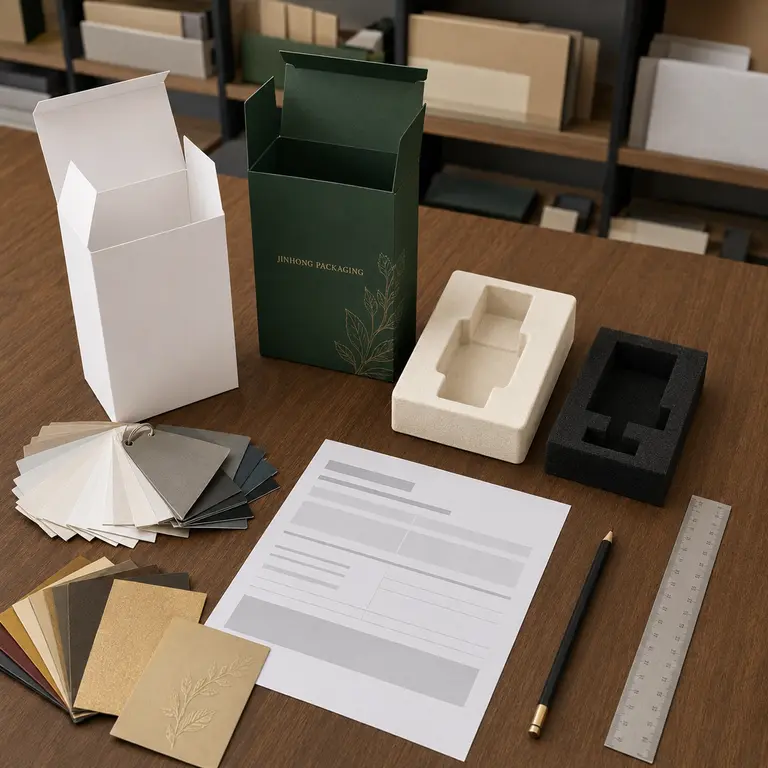
A sample should answer specific questions. Different sample types confirm different aspects of the packaging.
Stock Sample
A stock sample shows an existing material, structure, finish, or general production standard. It may not match the required size or artwork.
Use it to evaluate:
• Board feel
• Paper texture
• Box style
• Finish reference
• General assembly
Structural White Sample
A white or unprinted sample is used to check:
• Dimensions
• Product fit
• Assembly
• Opening
• Closure
• Insert layout
• Product removal
It does not confirm final printing or color.
Digitally Printed Sample
A digitally printed sample can show artwork placement and overall appearance on a physical box.
If mass production uses offset printing or another process, the final color and finish may differ.
Production-Standard Sample
A production-standard sample may use final or similar materials, tooling, printing, and finishes.
It can provide a closer reference but usually requires more time, setup, and cost.
Before paying for a sample, ask exactly which materials, printing methods, and finishes it will include.
Review Samples Systematically
Check:
• Internal and external dimensions
• Product fit
• Insert fit
• Opening and closing
• Material and board stiffness
• Print position
• Color reference
• Text and artwork
• Barcode and QR code
• Foil and Spot UV registration
• Embossing or debossing depth
• Glue and assembly
• Scratches and rubbing
• Packing method
Record comments in writing and identify the exact panel or component requiring revision.
11. Confirm Production, Inspection and Packing Details
Production should begin only after the artwork, specification, and required sample have been approved.
Confirm the Final Specification
The production specification should record:
• Approved dieline
• Dimensions
• Material
• Printing
• Colors
• Lamination or coating
• Decorative finishes
• Insert
• Accessories
• Quantity and tolerance
• Approved sample
• Packing requirements
• Inspection criteria
• Delivery terms
• Schedule
Changes made after approval may affect cost and lead time.
Use a Realistic Schedule
Avoid relying on one fixed lead time for every packaging project.
Timing depends on:
• Structural development
• Artwork readiness
• Number of sample rounds
• Material availability
• Tooling
• Printing method
• Finishing processes
• Quantity
• Manual assembly
• Production schedule
• Peak season
• Inspection
• Transport method
The schedule should separate:
• Artwork and dieline approval
• Sample production
• Sample delivery
• Sample revision
• Material preparation
• Mass production
• Inspection and packing
• Freight and customs clearance
Seasonal launches should include extra time for revision and transport risk.
Agree on Inspection Criteria
“Good quality” is not a measurable acceptance standard.
Inspection criteria may include:
• Dimensions and tolerance
• Material specification
• Print position
• Color reference and tolerance
• Barcode readability
• Glue strength
• Folding and assembly
• Surface damage
• Finish registration
• Product fit
• Packing quantity
• Outer-carton condition
The inspection plan should reflect product risk, packaging value, quantity, and delivery requirements.
Confirm Protective Packing
Premium boxes can be damaged when their surfaces rub against one another.
Possible protection includes:
• Tissue interleaving
• Individual bags
• Protective sleeves
• Dividers
• Corner protection
• Inner cartons
• Master cartons
• Pallets
Protective packing adds material, labor, weight, and volume, so it should be included in the quotation and approved specification.
12. Plan Freight, Storage and Reordering
Packaging boxes can occupy substantial volume, especially when they are supplied assembled.
Compare Flat-Packed and Assembled Options
Folding cartons and many mailer boxes can be shipped flat, reducing volume.
Rigid boxes are often shipped assembled, although collapsible structures may reduce freight and storage requirements.
Compare:
• Freight volume
• Assembly labor
• Storage space
• Final appearance
• Closure strength
• Packing process
• Risk of assembly errors
A collapsible box is not automatically the best option if local assembly is difficult or inconsistent.
Confirm the Shipping Basis
Ask whether freight is calculated by:
• Actual weight
• Volumetric weight
• Carton volume
• Pallet volume
• Full-container or shared-container space
Large lightweight boxes may be charged according to volume rather than actual weight.
Understand the Delivery Term
The quotation should state the applicable delivery term and what costs are included.
Confirm responsibility for:
• Export clearance
• Main freight
• Insurance
• Import clearance
• Duties and taxes
• Destination charges
• Final delivery
Do not assume that “shipping included” covers every charge at the destination.
Review Storage Conditions
Paper packaging should generally be stored in a clean, dry environment away from excessive humidity, heat, direct sunlight, and strong odors.
Poor storage can affect:
• Board shape
• Folding
• Adhesive
• Paper surface
• Printed color
• Lamination
• Box assembly
Plan warehouse capacity before ordering large quantities.
Keep Records for Repeat Orders
Retain:
• Approved artwork
• Dieline
• Written specification
• Material reference
• Color reference
• Approved sample
• Quotation
• Purchase order
• Inspection report
• Packing details
• Production photographs when available
Before reordering, check whether product dimensions, artwork, regulations, barcodes, quantities, or materials have changed.
Common Packaging Box Buying Mistakes
Requesting a Price Without a Complete Specification
A request for “1,000 premium boxes” does not provide enough information for accurate comparison. Supply dimensions, structure, material, printing, finishes, insert, and destination.
Confirming Artwork Before the Structure
Artwork completed on the wrong dieline must be repositioned. Confirm the structure and dimensions first.
Comparing Only Unit Prices
A lower unit price may exclude tooling, samples, inserts, assembly, protective packing, inspection, or freight.
Ordering Too Much for an Unproven Product
A lower unit price can create excess inventory, storage cost, cash-flow pressure, and waste if the product or artwork changes.
Approving Only from Photographs
Photographs cannot reliably confirm dimensions, fit, paper texture, color, foil reflection, or surface performance.
Treating a Presentation Box as a Shipping Box
Decorative boxes may require additional corrugated protection for parcel delivery.
Ignoring Packing and Freight Volume
The finished box price is only one part of the landed cost. Large assembled boxes may generate substantial freight and storage costs.
Making Broad Environmental Claims
Terms such as “eco-friendly,” “green,” and “sustainable” need clear evidence and appropriate qualifications.
Businesses selling into the United States can consult the Federal Trade Commission’s Green Guides when reviewing environmental marketing claims.
Packaging Box Buying Guide Checklist for an RFQ
A clear request for quotation can include:
• Company and product category
• Box style
• Internal dimensions
• Product dimensions and weight
• Material preference
• Printing colors
• Interior printing
• Surface finishes
• Insert type
• Accessories
• Quantity options
• Artwork status
• Sample requirement
• Certification or testing requirement
• Packing method
• Delivery destination
• Target schedule
• Reference photographs
If some specifications are not confirmed, identify which elements are flexible. This allows suitable alternatives to be compared without pretending that every detail is final.
Frequently Asked Questions About Buying Packaging Boxes
What information is required for a packaging box quotation?
The most useful information includes the box style, dimensions, product size and weight, quantity, material, printing, finishes, insert, destination, and desired schedule. Reference images can help explain the style but should be supported by measurable specifications.
Should I choose the box before completing the artwork?
Yes. Confirm the structure, dimensions, and dieline before completing the artwork. Otherwise, graphics may need to be repositioned after structural changes.
How do I choose the correct box material?
Consider product weight, required protection, box structure, printing, folding, storage, distribution, appearance, and budget. A material should not be selected by thickness or appearance alone.
Do custom packaging boxes have a minimum order quantity?
Usually, but MOQ varies by structure, material, printing, finishing, tooling, and production arrangement. Ask for quantity options and compare total investment as well as unit price.
Is a sample necessary before mass production?
A sample is strongly recommended for new structures, sizes, inserts, artwork, colors, or premium finishes. Confirm which features the selected sample type represents.
How should I compare packaging quotations?
Make sure every quotation uses the same dimensions, material, printing, finishes, insert, quantity, packing method, and delivery basis. Confirm tooling, sampling, freight, and other excluded charges.
How long does custom packaging production take?
There is no universal lead time. Timing depends on artwork, samples, revisions, materials, tooling, printing, finishing, quantity, assembly, inspection, season, and shipping method.
Can packaging boxes be shipped flat?
Folding cartons and many corrugated mailer boxes can be supplied flat. Standard rigid boxes are often assembled, while some collapsible rigid structures can reduce volume. The best option depends on appearance, assembly, storage, and freight requirements.
What should I keep for repeat orders?
Retain the final artwork, dieline, specification, color reference, approved sample, packing details, quotation, purchase order, and inspection records. Confirm that product and labeling information are still current before reordering.
Final Thoughts
A successful packaging box order begins with a clear specification. Product dimensions, box structure, material, printing, finishes, insert, quantity, sample type, packing method, and delivery terms should be reviewed before production.
Following a structured packaging box buying guide makes it easier to compare options based on the same requirements and identify missing costs before approval.
The lowest unit price is not always the lowest total cost. Tooling, sampling, assembly, protective packing, freight volume, storage, and inventory risk all influence the purchasing decision.
Jinhong Packaging supports packaging sourcing, structure and material comparison, sample coordination, production follow-up, inspection coordination, and shipment preparation through selected manufacturing partners. Each project is reviewed according to the product, quantity, presentation goals, destination, and distribution requirements.