Selecting a medical blister tray and lidding system requires more than choosing a clear tray and a peelable lid. The tray material, cavity design, device-retention features, lidding structure, sealing process, sterilization method and validation requirements must work together as one packaging system.
This guide explains the main medical blister tray and lidding selection factors that buyers should confirm before requesting samples or quotations.
What Is a Medical Blister Tray and Lidding System?
A medical blister tray and lidding system normally consists of a rigid or semi-rigid thermoformed tray and a compatible lid sealed to the tray flange.
The tray holds the medical device in a defined position and helps protect it from movement, impact or compression. The lidding material closes the package and may provide microbial barrier, controlled-peel and sterilization compatibility functions.
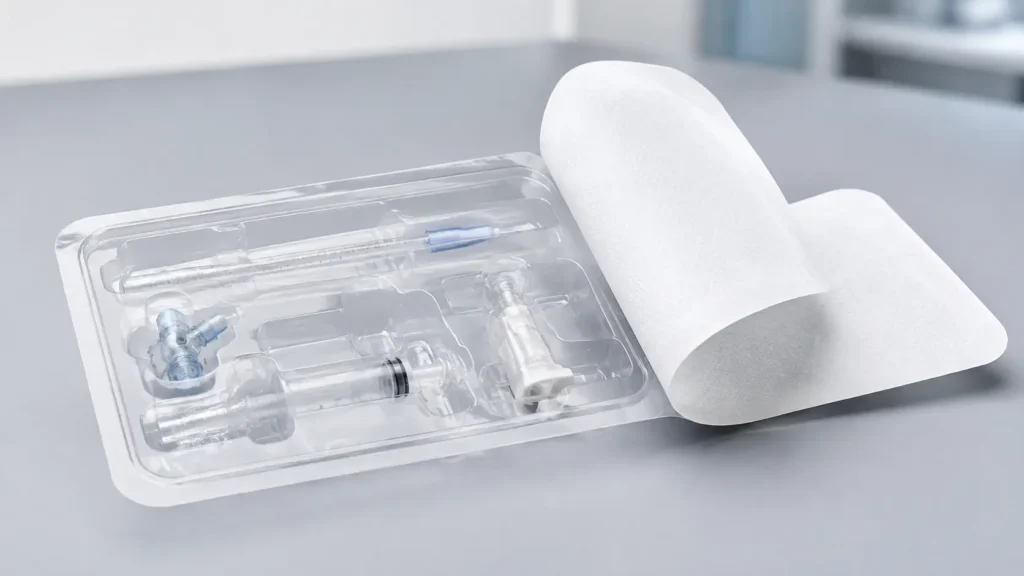
Medical trays are commonly considered for devices that need:
- Defined positioning inside the package
- Protection from movement or compression
- Product visibility
- Organized presentation
- A controlled opening process
- Additional protection for delicate or irregular components
The final package must be evaluated for the specific device, sterilization process, sealing equipment, distribution environment and target market.
For available product configurations, visit our medical blister trays and lidding solutions.
Start with the Medical Device
Medical blister tray and lidding selection should begin with the device—not with a standard material list.
Before discussing tray materials or lidstock, confirm the following device information:
- Device name and intended use
- Length, width and height
- Total weight
- Shape and component arrangement
- Sharp, pointed or delicate areas
- Areas that must not carry pressure
- Required orientation inside the tray
- Number of components in each package
- Intended sterilization method
- Required opening and presentation method
A drawing, 3D file or physical sample can help the packaging partner understand the device geometry and develop a more suitable cavity.
If this information is incomplete, the first tray design may require repeated changes, increasing tooling costs and sample-development time.
Selecting the Tray Material
Thermoformed medical trays may use PETG, APET, PVC or other project-specific materials. Each option has different forming, clarity, rigidity, sealing and sterilization characteristics.
PETG Medical Trays
PETG is frequently considered for clear medical trays because it can support detailed thermoforming and good product visibility.
It may be suitable for selected medical devices that require:
- Clear product presentation
- Defined cavities
- Dimensional stability
- Compatibility with an appropriate lidding system
The specific PETG grade and thickness must still be reviewed according to the device, tray design, sterilization method and sealing requirements.
APET Medical Trays
APET may be evaluated when clarity, rigidity or material efficiency is important. Its suitability depends on the forming process, device requirements, lidstock and intended sterilization conditions.
It should not be selected only because it looks similar to another clear tray material.
PVC Medical Trays
PVC remains available for certain established medical packaging applications. However, customer requirements, target-market expectations, sterilization conditions and material policies should be checked before selection.
Other Tray Materials
Other thermoformable materials may be considered for specialized projects. Availability depends on the required performance, material thickness, order quantity and selected manufacturing partner.
No tray material should be assumed suitable for every sterilization method or medical device.
How to Determine the Tray Thickness
Tray thickness affects rigidity, forming quality, device protection and material cost.
A suitable thickness depends on:
- Tray length and width
- Cavity depth
- Device weight
- Number of cavities
- Required rigidity
- Device-retention features
- Distribution and handling conditions
- Forming characteristics of the selected material
A larger or deeper tray does not always require the thickest available material. The tray design and reinforcing features also affect performance.
Final thickness should be reviewed after the cavity design and sample tray have been evaluated.
Tray Cavity and Retention Design
The tray cavity should protect the device without creating excessive pressure or making removal difficult.
Common design considerations include:
- Clearance around the device
- Cavity depth
- Retention tabs or undercuts
- Finger-access areas
- Protection for sharp or delicate components
- Component separation
- Device orientation
- Removal sequence
- Nesting and stacking requirements
For multi-component kits, the tray should keep the components organized while allowing the user to remove them in the intended sequence.
The device should not move excessively during handling, but retention features should not damage it or make aseptic presentation unnecessarily difficult.
Flange Design and Seal Area
The flange is the flat area around the tray where the lidding material is sealed.
Flange design can directly affect package integrity and peel performance. Buyers should confirm:
- Flange width
- Flange flatness
- Corner design
- Seal-path continuity
- Peel-tab position
- Contamination risks in the seal area
- Compatibility with the sealing tooling
An uneven, narrow or poorly formed flange can make consistent sealing more difficult.
The seal area should provide enough space for the intended seal width while supporting controlled opening.
Selecting the Lidding Material
Common lidding options include coated Tyvek®, medical-grade paper and other compatible porous or nonporous lidstock.
The correct lidding material depends on the tray substrate, sealing process, sterilization method, microbial barrier requirements and opening expectations.
Tyvek Lidding
Coated Tyvek can provide strength, low-linting performance, microbial barrier properties and controlled-peel opening for compatible tray systems.
The Tyvek grade should not be selected by name alone. Buyers must also confirm:
- Tyvek grade
- Coating or sealing surface
- Tray material
- Sealant compatibility
- Sterilization method
- Required seal strength
- Peel characteristics
- Printing requirements
Learn more about available grades and package structures in our Tyvek medical packaging guide.
Medical-Grade Paper Lidding
Medical-grade paper may be considered for selected tray systems where porosity, printability and peel performance are required.
Paper basis weight, coating, tray compatibility, sealing conditions and sterilization method must be reviewed together.
Medical-grade paper is not automatically interchangeable with Tyvek and is not suitable for every tray or sterilization process.
Nonporous Lidding
Selected nonporous lidding structures may be considered where a porous microbial barrier is not required or where the sterilization and package design support another configuration.
The complete material structure and intended process must be confirmed before use.
Matching the Tray and Lidstock
The tray and lidstock cannot be selected independently.
A compatible combination must provide:
- Reliable sealing to the tray flange
- Suitable seal strength
- Controlled and consistent peeling
- Acceptable visual seal quality
- Compatibility with the intended sterilization process
- Protection during aging and distribution
- Package integrity throughout the required shelf life
The heat-seal coating creates the bonding interface between the lidstock and tray flange. A lid that seals well to one tray material may not provide the same performance with another substrate.
Therefore, buyers should confirm the exact tray material, lidstock grade and coating system as one specification.
Sealing Parameters
Medical tray sealing usually involves three main process parameters:
- Temperature
- Pressure
- Dwell time
These parameters depend on the tray substrate, lidstock, coating, sealing equipment, tooling and package design.
Insufficient sealing may create weak or incomplete seals. Excessive sealing may make the lid difficult to peel or cause material damage.
The packaging supplier can provide material and processing information when available, but the medical device company remains responsible for developing and validating the final sealing process.
ISO 11607-2 addresses validation requirements for forming, sealing and assembly processes used for terminally sterilized medical device packaging.
Sterilization Compatibility
A clear tray and peelable lid should not be assumed suitable for every sterilization process.
The complete package may need to be evaluated for:
- Ethylene oxide sterilization
- Radiation sterilization
- Low-temperature sterilization processes
- Other project-specific sterilization conditions
The tray, lidstock, heat-seal coating, printing system, device and sealing process may all respond differently during sterilization.
Buyers should provide the sterilization method and relevant process conditions at the beginning of the project. Material compatibility should then be reviewed and confirmed for the complete packaging configuration.
Package Testing and Validation
Medical blister trays and lidding may require evaluation for seal quality, package integrity, aging and distribution performance.
Depending on the device and validation plan, the evaluation may consider:
- Seal strength
- Visual seal inspection
- Package integrity
- Peel performance
- Accelerated and real-time aging
- Distribution simulation
- Tray deformation or damage
- Device movement and retention
- Sterilization effects
ISO 11607-1 addresses requirements for materials, sterile barrier systems and packaging systems intended to maintain the sterility of terminally sterilized medical devices until the point of use.
The required tests and acceptance criteria must be determined by the medical device company according to the device, packaging system, sterilization process, distribution environment and applicable market requirements.
For a practical preparation checklist, read our medical packaging validation preparation guide.
Information Needed for a Quotation
To obtain a useful quotation, provide as much of the following information as possible:
- Medical device name and application
- Device drawing, photograph or physical sample
- Device dimensions and weight
- Number of components per tray
- Required tray dimensions, if already known
- Preferred tray material and thickness, if specified
- Required lidding material or current specification
- Intended sterilization method
- Sealing equipment or process information
- Printing requirements
- Estimated quantity per size
- Target market
- Required quality or technical documents
- Expected project schedule
- Delivery destination
If the tray design is new, tooling and sample-development costs may need to be quoted separately.
Sample Evaluation Checklist
Before approving a medical blister tray and lid, check:
- Does the device fit without excessive movement?
- Are sharp or delicate areas adequately protected?
- Can the device be removed without unnecessary force?
- Are all components positioned correctly?
- Is the tray sufficiently rigid?
- Is the flange flat and continuous?
- Is the peel tab easy to access?
- Does the lid seal evenly around the full seal path?
- Is the peel clean and controlled?
- Does the package remain acceptable after sterilization?
- Have aging and distribution requirements been considered?
- Do the material specifications match the approved sample?
Sample approval should include both the physical tray and the complete tray-lid packaging configuration.
Common Purchasing Mistakes
Selecting Materials Before Confirming the Device
Choosing PETG, Tyvek or another material before reviewing the device can lead to an unsuitable tray design or unnecessary material changes.
Treating the Tray and Lid as Separate Products
The tray substrate, lidding grade, coating and sealing process must work together.
Ignoring the Sterilization Method
A material combination that forms and seals successfully may still be unsuitable for the intended sterilization conditions.
Quoting Without a Drawing or Sample
Incomplete device information can produce an inaccurate quotation and repeated tooling revisions.
Focusing Only on Unit Price
Tooling, sample development, material yield, packing method, validation preparation and order quantity can all affect the total project cost.
Assuming Documents Apply to Every Configuration
Certificates or test reports from one material or package construction may not automatically apply to another tray-lid combination. Document applicability should be confirmed for the selected project.
Frequently Asked Questions
What materials are commonly used for medical blister trays?
PETG, APET and PVC are among the materials considered for thermoformed medical trays. The appropriate material depends on the device geometry, required rigidity, tray design, lidding system, sterilization method and validation requirements.
What lidding materials can be used with medical trays?
Lidding options may include coated Tyvek, medical-grade paper and other compatible porous or nonporous structures. The lidstock and coating must be matched to the tray substrate, sealing process, sterilization method and opening requirements.
Are all tray and lidding combinations suitable for sterilization?
No. The tray, lidstock, coating, printing and seal must be evaluated together for the intended sterilization conditions and final validation plan.
Can a medical blister tray be customized for a specific device?
Yes. The cavity, tray dimensions, flange, retention features and component arrangement can be developed according to a device drawing, 3D file or physical sample. Custom tooling may be required.
What information is needed to quote a custom medical tray?
Provide the device drawing or sample, dimensions, weight, preferred materials if known, sterilization method, required quantity, printing requirements, target market and project schedule.
Can samples and supporting documents be provided?
Available samples and supporting documents can be coordinated according to the selected material system and manufacturing partner. Availability and applicability must be confirmed for each project.
Discuss Your Medical Blister Tray Project
Planning a new tray packaging project or reviewing an existing tray and lidding system?
Send us your device drawing or sample, dimensions, intended sterilization method, packaging requirements and estimated quantity. Jinhong Packaging can coordinate suitable tray and lidding options, samples and available supporting documents with selected manufacturing partners.