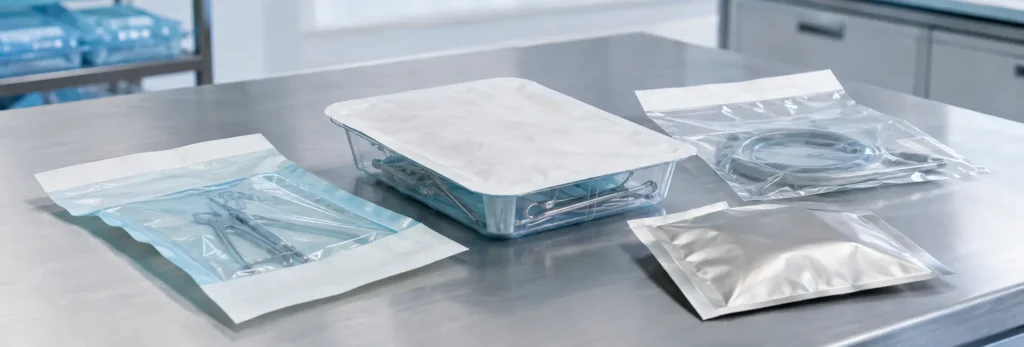
Medical packaging for sterilization methods must be selected as part of a complete system involving the medical device, package design, sealing process, sterilization cycle, distribution environment and intended shelf life. A material should not be considered suitable only because it is commonly associated with ethylene oxide, steam, gamma or e-beam sterilization.
Different sterilization processes expose packaging to different combinations of heat, moisture, radiation, pressure and chemical contact. These conditions may affect material strength, seal performance, dimensional stability, print legibility and opening characteristics. Packaging selection should therefore begin with the device and validated sterilization requirements rather than with a preferred pouch or tray format.
This guide compares the main packaging considerations for ethylene oxide, steam, gamma and e-beam sterilization. It is intended to support early material and package-format discussions, not to replace testing or validation by the medical device manufacturer.
Packaging and Sterilization Must Be Evaluated Together
The sterile barrier system has two connected functions: it must allow the selected sterilization process to be completed as intended, and it must maintain package integrity and sterility until the point of use.
A packaging material may perform well in one configuration but differently when the device geometry, seal width, film thickness, sterilization parameters or distribution conditions change. Sharp edges, heavy components and irregular device profiles may create concentrated stress at corners and seals. Pressure changes during processing may also affect packages containing large internal air volumes.
Porous materials may be considered when sterilant penetration and aeration are required. Nonporous films and foil laminates may be considered when greater protection from moisture, oxygen or light is needed. However, neither porosity nor barrier performance alone establishes suitability for a specific medical device.
ISO 11607-1 addresses requirements for materials, preformed sterile barrier systems, sterile barrier systems and packaging systems intended to maintain sterility until the point of use. ISO 11607-2 addresses the validation of forming, sealing and assembly processes. The material, package design and packaging process must therefore be evaluated together.
Ethylene Oxide Sterilization and Porous Packaging
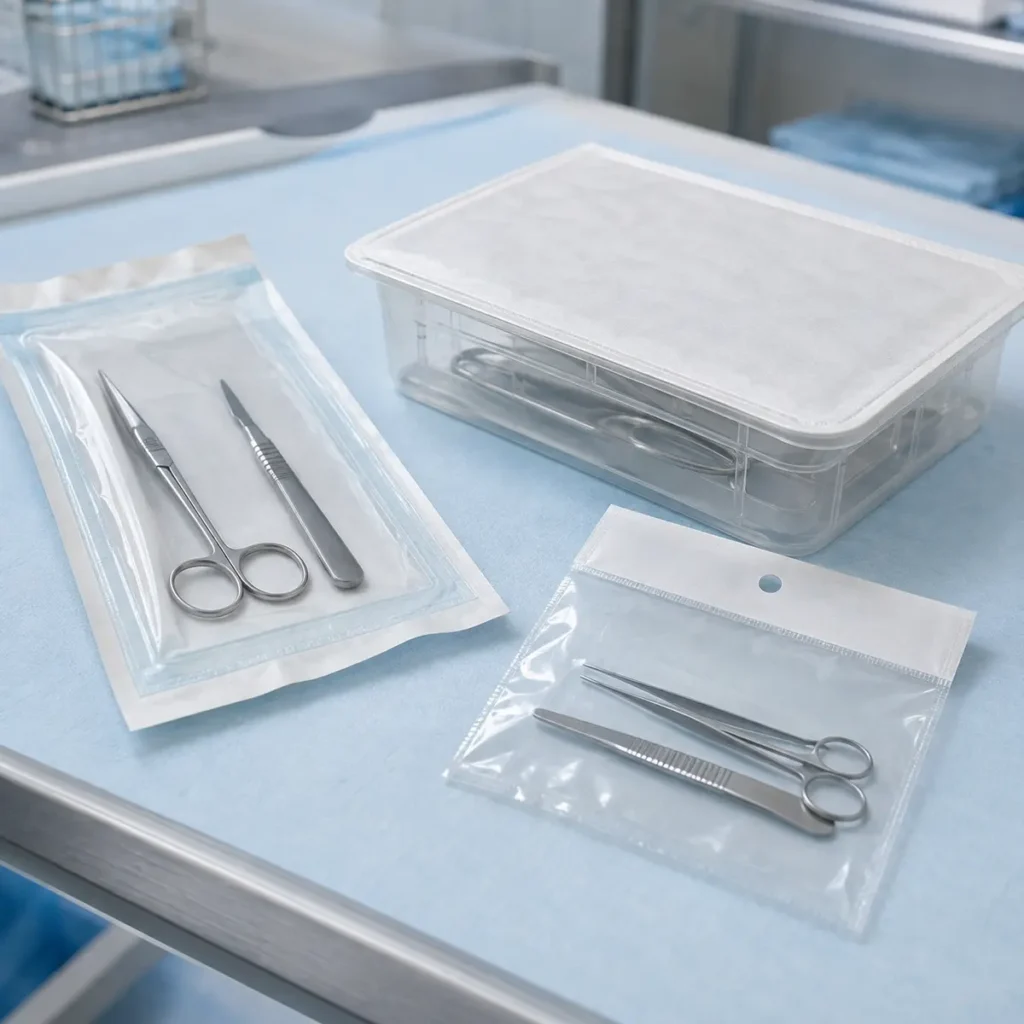
Ethylene oxide, commonly abbreviated as EO or EtO, is used for many medical devices that cannot tolerate higher-temperature sterilization processes. Packaging for EO sterilization must support sterilant penetration, exposure and subsequent aeration while maintaining the required sterile barrier.
Porous packaging components such as medical-grade paper and Tyvek lidstock are commonly considered for EO applications because they can provide a pathway for gas movement. Package formats may include paper-plastic sterilization pouches and rolls, Tyvek medical packaging, header bags and thermoformed trays sealed with porous lidding.
Porosity alone does not confirm compatibility. The completed package may also need evaluation for:
- Sterilant penetration and aeration
- Seal strength and seal uniformity
- Microbial barrier performance
- Package expansion during pressure changes
- Material cleanliness and particulate control
- Peel characteristics and aseptic presentation
- Device movement and stress on seals
- Performance after distribution and aging
The package configuration and sterilization load may influence the movement of EO into and out of the package. Device geometry, internal components and package density should therefore be considered during process development.
The FDA’s medical device sterilization information explains that an EO-sterilized medical device must be enclosed in a carefully designed gas-permeable package that allows EO gas to enter. Final cycle parameters, residual limits and aeration requirements remain part of the device manufacturer’s validated sterilization and regulatory process.
Steam Sterilization and Heat-Moisture Resistance
Steam sterilization exposes packaging to elevated temperature, moisture and pressure changes. Medical packaging for sterilization methods involving moist heat must therefore be evaluated for resistance to these combined conditions.
Medical-grade paper and suitable film structures may be used in certain steam sterilization applications. Some paper-plastic sterilization pouches and rolls are designed for hospital or clinical sterilization processes. However, a pouch described generally as a sterilization pouch should not automatically be considered compatible with every steam cycle.
Important selection factors include:
- Maximum cycle temperature
- Exposure and drying time
- Pressure and vacuum phases
- Paper wet strength
- Film heat resistance
- Sealant and coating performance
- Dimensional stability
- Drying performance
- Handling immediately after processing
Moisture may temporarily reduce the strength of some paper-based materials. Incomplete drying, overloading or unsuitable storage after processing may also increase the risk of package damage. The package should be handled according to the validated cycle and applicable healthcare-facility procedures.
The device itself must also tolerate the selected temperature and moisture conditions. Even when the packaging material can withstand a steam cycle, the complete device-package system may still require additional evaluation.
Current requirements for developing, validating and routinely controlling moist-heat sterilization processes are addressed in ISO 17665:2024. Packaging compatibility should be confirmed using the actual or justified worst-case cycle rather than a general assumption about steam resistance.
Gamma and E-Beam Sterilization
Gamma and electron-beam sterilization use ionizing radiation. Unlike EO, these processes do not normally require a porous pathway for sterilant gas. This allows consideration of both porous and nonporous package structures, depending on device protection, opening and barrier requirements.
Radiation exposure may affect polymers through chain scission, cross-linking, oxidation or changes in molecular structure. Possible package effects include:
- Discoloration or yellowing
- Increased brittleness
- Reduced elongation
- Changes in impact resistance
- Changes in seal strength
- Adhesive or coating degradation
- Reduced print or label performance
- Changes that become more apparent after aging
Material response depends on the polymer, additives, radiation dose, dose range, oxygen exposure and storage conditions. A film that appears unchanged immediately after sterilization may show different mechanical properties after accelerated or real-time aging.
Gamma and e-beam are both radiation processes, but they should not be treated as identical. Differences in dose rate and penetration may influence load configuration and processing. Package evaluation should therefore use the intended sterilization method and justified dose range.
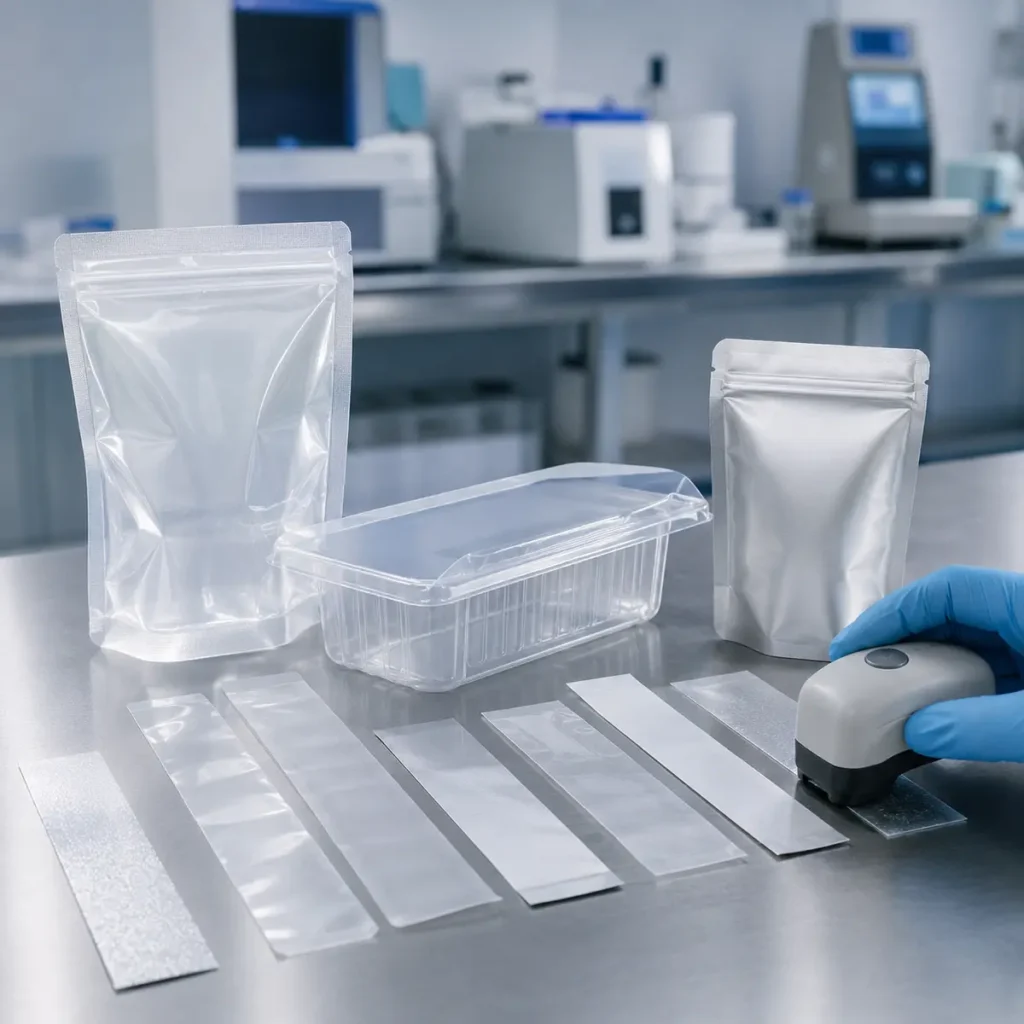
Radiation-compatible package formats may include flexible pouches, thermoformed trays, lidded blister packs and selected high-barrier structures. High-barrier medical device packaging may be considered when moisture, oxygen or light protection is required, but every laminate layer, adhesive, coating and sealant should be reviewed for radiation exposure.
ISO 11137-1 addresses the development, validation and routine control of radiation sterilization processes for medical devices. Packaging tests should reflect the intended radiation dose and any justified worst-case exposure.
Comparing Packaging Formats
Medical packaging for sterilization methods can involve several package formats. The appropriate option depends on the device, sterilization process, barrier requirement and opening method.
Paper-Plastic Pouches and Rolls
Paper-plastic pouches and rolls are commonly used for lightweight devices, dental instruments and healthcare applications. The porous paper side may support EO or certain steam processes, subject to the product specification and validation.
Self-sealing pouches may support convenient small-volume preparation, while heat-sealing pouches and rolls allow the package length and sealing process to be coordinated with the device.
Tyvek Pouches and Lidding
Tyvek is used in selected medical packaging applications requiring microbial barrier performance, strength and sterilant permeability. It may be considered for EO and some radiation-sterilized devices, depending on the complete material structure.
Tyvek should not be described as universally compatible with every sterilization method. Tyvek grade, coating, sealant, package design and processing conditions must be confirmed for the project.
Thermoformed Trays and Blister Packaging
Medical blister trays and lidding may be used for devices requiring presentation, protection or controlled positioning. Tray materials may include PETG, APET, PVC or other structures according to the project.
The tray, porous or nonporous lidstock, seal coating and sterilization method must be evaluated as one system. Flange design, corner radii, seal width and device retention can all affect performance.
Header Bags
Medical header bags for sterilization combine a film bag body with a porous header. They may be considered for larger, longer or irregular medical devices requiring a gas-permeable section for EO processing.
Header size, film structure, seal geometry and device loading should be coordinated according to the sterilization and distribution requirements.
High-Barrier Pouches
Foil and high-barrier laminates may provide protection from moisture, oxygen or light. Because these materials are generally nonporous, the sterilization strategy and package sequence require careful review.
A high-barrier pouch may function as a sterile barrier in an appropriate validated system or as protective secondary packaging around another sterile barrier. Its role should be defined before material selection.
Package Testing and Validation
Material data can support initial screening, but finished-package testing is necessary because sterilization performance depends on the complete package and process.
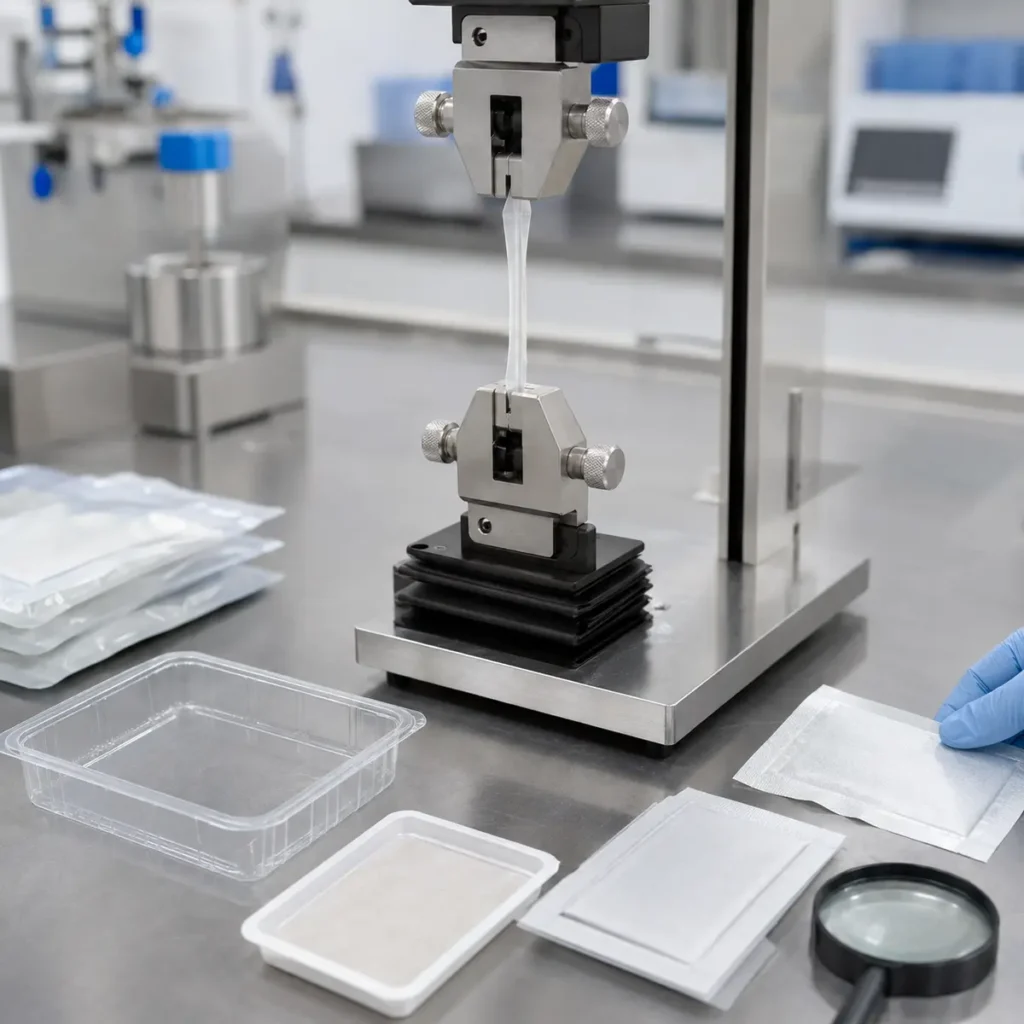
A validation plan may consider:
- Seal strength and opening characteristics
- Seal integrity and visual inspection
- Gross-leak or fine-leak detection
- Bubble-emission or dye-penetration testing
- Package integrity after sterilization
- Distribution simulation
- Accelerated and real-time aging
- Microbial barrier evaluation
- Print and label durability
- Device protection and package presentation
ASTM F88/F88M is commonly referenced for seal-strength testing of flexible barrier materials. ASTM F1929 addresses dye-penetration testing for seals in porous medical packaging, while ASTM F2096 addresses gross-leak detection by internal pressurization and bubble emission. The applicable test method depends on the package material and design.
Testing should include suitable worst-case conditions. These may include minimum and maximum seal settings, challenging device sizes, heavy or sharp devices, sterilization dose extremes, repeated vacuum phases or aging conditions.
ISO 11607-2 emphasizes validation of forming, sealing and assembly processes. Equipment settings, process limits, operator procedures and routine monitoring should therefore be addressed rather than relying only on a single finished-package test.
Jinhong Packaging supports material review, specification communication, sampling and project coordination with selected manufacturing partners. Final validation, sterilization-cycle approval and regulatory responsibility remain with the medical device manufacturer and its qualified testing or sterilization partners.
Selection Checklist for a Medical Packaging Project
When reviewing medical packaging for sterilization methods, the following project information helps narrow the available material and package-format options.
Before requesting a material recommendation or quotation, prepare the following information:
- Device description, dimensions and weight
- Sharp edges, protrusions or sensitive components
- Intended sterilization method
- Expected sterilization cycle or radiation dose range
- Required sterile barrier and protective packaging functions
- Preferred pouch, tray or lidding format
- Barrier requirements for moisture, oxygen or light
- Opening and aseptic-presentation requirements
- Intended shelf life
- Distribution and storage conditions
- Applicable standards and target market
- Testing and documentation requirements
Providing this information helps packaging suppliers and manufacturing partners identify realistic material and package-format options. If the sterilization process has not yet been selected, packaging and sterilization specialists should be involved early so that one decision does not unnecessarily restrict the other.
Frequently Asked Questions
Which packaging materials are commonly considered for EO sterilization?
Medical-grade paper, Tyvek and selected porous packaging structures are commonly considered because EO processing requires gas penetration and aeration. Suitability still depends on the complete package design, sealing system, device and validated cycle.
Can every paper-plastic sterilization pouch be used for steam?
No. Steam compatibility depends on the paper, film, coating, adhesive, seal construction and specified cycle conditions. The pouch specification and complete package should be confirmed and validated for the intended process.
Are foil pouches suitable for EO sterilization?
A fully sealed foil pouch is generally nonporous and may restrict EO penetration and aeration. A foil structure may be used in a different stage of the packaging system, or the package may require another design. The complete sterilization and packaging sequence must be reviewed.
Can Tyvek be used for gamma or e-beam sterilization?
Selected Tyvek structures may be considered for radiation sterilization, but suitability depends on the Tyvek grade, coating, sealant, adjoining film or tray and intended radiation dose. Project-specific evaluation is required.
What packaging tests are used after sterilization?
Testing may include seal strength, visual inspection, dye penetration, bubble-emission testing, package-integrity testing, distribution simulation and aging studies. The test plan should reflect the package material, device, sterilization process and applicable regulatory requirements.
Who is responsible for validating the final packaging system?
The medical device manufacturer is responsible for ensuring that the device, sterile barrier system, packaging process and sterilization process are appropriately validated. Packaging suppliers, laboratories, sterilization providers and manufacturing partners may provide supporting information and project-specific testing.
Discuss Your Medical Packaging Project
Selecting medical packaging for sterilization methods requires coordinated review of the device, materials, package design, sealing process and sterilization conditions.
Jinhong Packaging works as a packaging supplier and project coordination partner with selected manufacturing partners. We can support early specification review, material and format comparisons, sample coordination, documentation communication and production follow-up.
Share your device dimensions, intended sterilization method, package format, expected quantity and validation requirements so that appropriate next steps can be reviewed for your project.