Medical packaging validation preparation should begin before samples are ordered or a final packaging specification is approved.
A successful validation project requires more than choosing a pouch, tray or lidding material. The responsible organization must define the medical device, packaging system, sealing process, sterilization method, distribution conditions, shelf-life objectives, acceptance criteria and required documentation.
Missing or inconsistent information can lead to unsuitable samples, repeated testing, delayed approval and unnecessary cost.
This practical checklist explains what medical device companies, packaging engineers, quality teams, contract packers and buyers should prepare before beginning packaging evaluation and validation.
What Is Medical Packaging Validation Preparation?
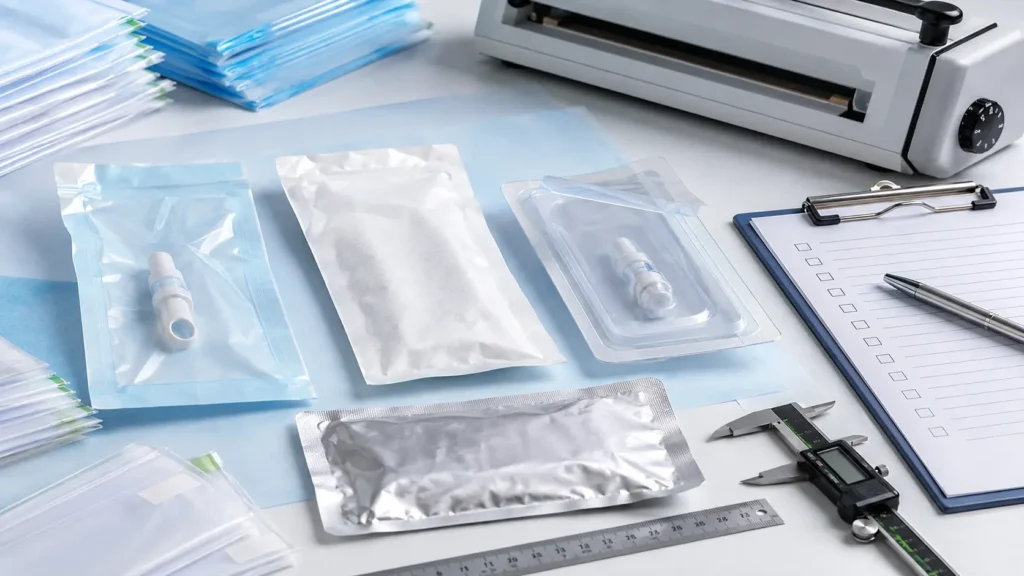
Medical packaging validation preparation is the process of organizing the information, samples, specifications, equipment details and responsibilities needed before formal validation activities begin.
Preparation may include:
- Defining the medical device
- Selecting the packaging format
- Confirming material specifications
- Identifying the sealing process
- Documenting sterilization conditions
- Establishing package-performance requirements
- Selecting representative or worst-case samples
- Planning aging and distribution studies
- Determining sample quantities
- Collecting supplier documents
- Defining change-control requirements
- Assigning responsibility for testing and approval
Preparation does not itself validate the package. It creates a controlled foundation for the responsible organization to develop an appropriate validation plan.
Our Medical Packaging Testing and Validation Support page explains how Jinhong Packaging can coordinate specifications, samples and available supplier documents without replacing the customer’s validation responsibilities.
Why Validation Preparation Should Begin Early
Packaging decisions affect several later activities.
A change in material, pouch size, seal width, coating, sterilization process or packing configuration may influence:
- Device fit
- Package integrity
- Seal performance
- Sterilant penetration
- Drying or aeration
- Peel behaviour
- Aseptic presentation
- Distribution performance
- Aging studies
- Documentation
- Production controls
If validation planning begins only after a commercial order is placed, the selected packaging may need to be changed.
Early preparation helps the project team identify missing information before committing to tooling, printing, large sample quantities or production.
Understand the Different Responsibilities
Packaging suppliers, material suppliers, laboratories, sterilization providers and medical device companies may all contribute information to a project. Their responsibilities are not identical.
Packaging or Material Supplier
A supplier may provide:
- Product specifications
- Material information
- Recommended sealing ranges
- Certificates
- Available test reports
- Batch documents
- Samples
- Change notifications
These documents may support supplier and material evaluation, but they do not automatically validate the finished medical device packaging system.
Testing Laboratory
A qualified laboratory may perform agreed tests and issue results according to the submitted samples, methods and conditions.
The laboratory does not normally define the complete regulatory strategy or take responsibility for the medical device package unless this is specifically included in its contracted scope.
Sterilization Provider
A sterilization provider may support cycle development, processing, sterilization records and related technical information.
Packaging compatibility must still be evaluated together with the medical device and finished package.
Medical Device Company or Responsible Organization
The responsible organization must determine:
- Applicable regulatory requirements
- Device and package risks
- Acceptance criteria
- Validation strategy
- Test methods
- Worst-case configurations
- Sample sizes
- Shelf-life claims
- Change-control requirements
- Final approval
Jinhong Packaging coordinates packaging sourcing and project communication. We do not replace the customer’s regulatory, quality or validation functions.
1. Define the Medical Device
Begin with a controlled description of the device.
Prepare:
- Device name
- Intended use
- Regulatory classification where applicable
- Length, width and height
- Weight
- Photographs
- Technical drawings
- Materials
- Rigid or flexible construction
- Sharp points or protruding areas
- Fragile components
- Number of components per package
- Device orientation
- Required accessories, caps or inserts
- Cleanliness requirements
- Sensitivity to heat, moisture, radiation or chemicals
The device should be evaluated in its final or representative configuration.
A lightweight flat device does not create the same package challenge as a heavy implant, long catheter, sharp instrument or multi-component kit.
If several device models use the same package, identify the dimensional, weight and shape differences before selecting a worst-case configuration.
2. Define the Packaging Format
Confirm the intended packaging format before requesting validation samples.
Options may include:
- Paper–film pouches
- Tyvek–film pouches
- Sterilization rolls
- Header bags
- High-barrier pouches
- Formed trays with lidding
- Double sterile barrier systems
- Protective cartons
- Inserts or retention components
The selected format should reflect:
- Device size and weight
- Sharp or irregular features
- Sterilization method
- Sealing equipment
- Required opening method
- Aseptic presentation
- Distribution risks
- Storage requirements
- Production volume
Explore available Sterilization Pouches and Rolls, Tyvek Medical Packaging, Medical Header Bags and Medical Blister Trays and Lidding before confirming a format.
3. Create a Controlled Packaging Specification
The package specification should be detailed enough to distinguish the approved structure from similar-looking alternatives.
Record:
- Package format
- Internal usable dimensions
- External dimensions
- Material type
- Material grade
- Basis weight or thickness
- Film structure
- Coating
- Sealant layer
- Seal width
- Chevron or opening design
- Peel direction
- Printing
- Process indicator
- Packing quantity
- Supplier
- Product code
- Revision number
- Approved drawing
- Applicable documents
Descriptions such as “medical pouch,” “Tyvek bag” or “paper–plastic pouch” are not sufficiently specific for controlled validation preparation.
For Tyvek projects, our Tyvek pouch specifications guide explains which material, film, sealing and documentation details should be confirmed.
4. Confirm the Package Dimensions
Package dimensions should accommodate the complete device without placing excessive stress on the materials or seals.
Confirm whether stated dimensions are:
- Internal usable dimensions
- External dimensions
- Width × length
- Length × width
- Measurements including seals
- Measurements excluding seals
Also consider:
- Device thickness
- Protective caps
- Inserts
- Loading space
- Final closure area
- Sterilant circulation
- Peel area
- Opening tabs
- Device movement
A pouch that fits an unloaded device drawing may not fit the final assembled device.
Review our guide on how to choose sterilization pouch sizes for additional dimensional considerations.
5. Identify Representative and Worst-Case Configurations
When one packaging system covers several devices, sizes or material combinations, the responsible team should determine which configurations represent the greatest challenge.
Possible worst-case factors may include:
- Largest device
- Smallest device
- Heaviest device
- Sharpest or most irregular device
- Largest pouch
- Smallest seal area
- Most demanding film or coating
- Highest sterilization exposure
- Longest intended shelf life
- Most difficult opening configuration
- Maximum product movement
- Most demanding distribution condition
The largest device is not automatically the only worst case.
For example, a small device in a large pouch may create more movement during transportation, while a tightly fitted package may create greater seal stress.
The rationale for selected configurations should be documented by the responsible organization.
6. Document the Sealing Equipment
Packaging validation preparation should include information about the actual equipment used to form or close the package.
Record:
- Equipment manufacturer
- Model
- Equipment identification number
- Sealing-jaw design
- Seal width
- Temperature range
- Pressure range
- Dwell-time range
- Conveyor speed where applicable
- Cooling conditions
- Calibration status
- Maintenance status
- Alarm functions
- Data-recording capability
- Operator instructions
Samples sealed on different equipment may not represent the planned production process.
If more than one sealer or production location will be used, the responsible team should determine how each configuration will be qualified and controlled.
7. Establish the Sealing Process Information
The packaging material and sealing process must work together.
Prepare the proposed:
- Sealing temperature
- Pressure
- Dwell time
- Line speed
- Material orientation
- Seal width
- Cooling time
- Cleaning requirements
- Inspection method
- Routine monitoring method
Supplier sealing recommendations can provide a starting range, but the final operating parameters must be developed and validated with the actual materials, equipment and package configuration.
ISO 11607-2 addresses validation requirements for forming, sealing and assembly processes used for packaging terminally sterilized medical devices.
8. Confirm the Sterilization Method
The intended sterilization method must be identified before material approval.
Possible methods include:
- Ethylene oxide
- Steam
- Gamma irradiation
- Electron-beam irradiation
- X-ray
- Vaporized hydrogen peroxide
- Other validated processes
Prepare available information concerning:
- Sterilization method
- Cycle parameters
- Maximum and minimum exposure
- Temperature
- Humidity
- Pressure
- Radiation dose
- Number of exposures
- Load configuration
- Aeration
- Drying
- Residual requirements where applicable
- Sterilization provider
Material compatibility should be evaluated for the complete package—not only for one component.
The Tyvek, paper, film, coating, adhesive, ink, process indicator, tray and device may respond differently to the same process.
See our guide to medical packaging for sterilization methods for a broader comparison.
The FDA overview of medical device sterilization describes several technologies used to sterilize medical devices.
9. Define Package-Performance Requirements
Before testing begins, the responsible organization should define what acceptable performance means for the project.
Requirements may address:
- Seal continuity
- Seal strength
- Visible channels
- Package integrity
- Leaks
- Burst performance
- Peel consistency
- Fibre tear
- Film delamination
- Puncture resistance
- Microbial barrier
- Sterilization compatibility
- Opening behaviour
- Aseptic presentation
- Printing durability
- Device protection
- Particulate concerns
- Appearance
Acceptance criteria should not be copied from another project without assessing whether they are appropriate for the current device and package.
10. Prepare the Test Plan
Testing should be based on the device, package risk, applicable requirements and project stage.
Possible evaluations may include:
- Visual inspection
- Seal-strength testing
- Package-integrity testing
- Dye-penetration testing
- Bubble-emission testing
- Burst testing
- Peel evaluation
- Material testing
- Sterilization exposure
- Distribution simulation
- Real-time aging
- Accelerated aging
- Microbial-barrier evaluation
- Usability and aseptic-presentation assessment
This list is not a required test programme for every project.
The responsible organization and qualified technical personnel should determine the appropriate methods, sample sizes, acceptance criteria and sequence.
ISO 11607-1 specifies requirements and test methods for materials, preformed sterile barrier systems, sterile barrier systems and packaging systems intended to maintain sterility until the point of use.
The FDA’s recognized consensus standards database can be reviewed when determining which standards are currently recognized for relevant U.S. medical device submissions.
11. Plan Distribution Evaluation
The package may experience vibration, shock, compression, temperature changes and handling during transportation.
Prepare information concerning:
- Shipping method
- Distribution distance
- Parcel, air, sea or truck transport
- Pallet or non-pallet shipment
- Carton configuration
- Number of units per carton
- Product orientation
- Protective materials
- Maximum stacking
- Storage conditions
- Expected handling environment
- Target market
Distribution testing should use a representative final packaging configuration.
Changing the carton, packing quantity, protective insert or pallet arrangement after evaluation may affect the relationship between the tested configuration and commercial shipments.
12. Define Shelf-Life and Aging Objectives
If the device will carry a shelf-life claim, the preparation stage should define:
- Intended shelf life
- Real-time aging plan
- Accelerated aging plan where applicable
- Storage temperature
- Storage humidity
- Package configuration
- Test intervals
- Post-aging test methods
- Acceptance criteria
- Relationship between accelerated and real-time studies
Accelerated aging can provide earlier information, but the responsible organization should determine the applicable approach and continue real-time studies as required by its plan.
The package should be assessed after relevant sterilization, aging and distribution conditions rather than only in its initial unprocessed state.
13. Calculate Sample Quantities Before Ordering
Validation quantities should not be estimated from production quantity alone.
The required number of packages may need to cover:
- Equipment trials
- Sealing-process development
- Sterilization cycles
- Distribution studies
- Accelerated aging
- Real-time aging
- Package testing
- Retained samples
- Repeat testing
- Different sizes
- Different production lots
- Worst-case configurations
- Control samples
Prepare a sample matrix showing:
- Test or evaluation
- Package configuration
- Device configuration
- Number of samples
- Production lot
- Sterilization condition
- Aging condition
- Test date
- Retained quantity
Ordering too few samples can interrupt the programme. Ordering a large quantity before confirming the specification can create unnecessary waste.
14. Confirm Whether Samples Are Representative
Ask whether the proposed samples use the same:
- Material grade
- Film structure
- Coating
- Adhesive
- Pouch or tray dimensions
- Seal design
- Production process
- Equipment
- Printing
- Process indicator
- Outer packing
- Supplier location
A generic stock sample may be useful for initial fit and appearance review but may not represent the final commercial configuration.
Any difference between samples and the proposed production package should be documented and assessed.
15. Collect Supplier Documents
Depending on the product and selected manufacturing partner, relevant documents may include:
- Product specification
- Technical data sheet
- Material declaration
- Certificate of analysis
- Certificate of conformity
- Quality-management certificate
- Lot or batch traceability
- Available test reports
- Recommended sealing conditions
- Sterilization compatibility information
- Change-notification policy
- Approved drawing
- Artwork confirmation
- Packing specification
Document names alone are not enough.
Check:
- Exact product covered
- Material grade
- Revision
- Date
- Supplier
- Manufacturing location
- Test sample
- Test conditions
- Applicable standard
- Relationship to the quoted package
A report for one material or pouch construction should not automatically be used for every product from the same supplier.
16. Establish Traceability
Validation samples should be traceable to the material, production and process information used to prepare them.
Record:
- Supplier
- Manufacturing partner
- Product code
- Material lots
- Production lot
- Production date
- Equipment
- Sealing parameters
- Operator or production record
- Drawing revision
- Artwork revision
- Sterilization lot
- Sample destination
- Test report
- Retained-sample location
Traceability supports investigation if results differ between samples, production lots or later commercial orders.
17. Define Change Control Before Commercial Production
Changes can affect the relationship between a validated configuration and later production.
Possible changes include:
- Material supplier
- Material grade
- Film structure
- Coating
- Adhesive
- Ink
- Process indicator
- Dimensions
- Seal design
- Sealing equipment
- Production location
- Sterilization method
- Carton configuration
- Test method
Before approval, discuss:
- Which changes require notification
- Who reviews the change
- Required notice period
- Whether new samples are required
- Whether testing or revalidation is needed
- How revised documents are controlled
Do not rely only on an informal promise that materials will remain the same.
Medical Packaging Validation Preparation Checklist
Before formal validation begins, confirm that the following items are available:
Device Information
- Final or representative device
- Device dimensions and weight
- Photographs or drawings
- Materials and sensitive features
- Sharp or fragile areas
- Required orientation
- Worst-case rationale
Packaging Specification
- Package format
- Internal and external dimensions
- Material grades
- Film or tray structure
- Coating and sealant
- Seal design
- Printing and indicators
- Approved drawing
- Revision number
Process Information
- Sealing equipment
- Proposed process parameters
- Equipment calibration
- Operator instructions
- Inspection method
- Production location
Sterilization Information
- Sterilization method
- Cycle information
- Maximum and minimum exposure
- Number of exposures
- Sterilization provider
- Aeration or drying requirements
Study Planning
- Test methods
- Acceptance criteria
- Sample quantities
- Production lots
- Distribution configuration
- Aging conditions
- Test sequence
- Retained samples
Documentation
- Product specifications
- Material data
- Certificates
- Available reports
- Traceability records
- Change-control agreement
- Supplier contact information
Common Validation Preparation Mistakes
Beginning Testing Before Freezing the Specification
If the materials, dimensions or seal design are still changing, early test results may not represent the final package.
Using Empty Packages Instead of Representative Devices
An empty pouch may behave differently from a package containing the actual device.
Ignoring Sealing Equipment Differences
Samples produced on laboratory or supplier equipment may not represent the customer’s commercial sealing process.
Selecting Only the Largest Device as Worst Case
Weight, sharpness, pouch movement, seal area and sterilization exposure may create different worst-case conditions.
Forgetting Distribution and Aging Samples
Testing only newly sealed packages does not evaluate later life-cycle conditions.
Ordering Too Few Samples
Separate studies, controls, retained samples and repeat testing can require more packages than expected.
Treating Supplier Documents as Final Validation
Supplier information supports the project but does not automatically validate the device-specific packaging system.
Failing to Document Sample Differences
If validation samples differ from the planned commercial package, the relationship between them must be assessed.
Review our guide to common sterilization packaging purchasing mistakes for additional sourcing and documentation risks.
How Jinhong Packaging Supports Validation Preparation
Jinhong Packaging is a packaging supplier and project coordination partner.
Based on the customer’s defined requirements, we can help coordinate:
- Packaging-format review
- Material and dimension communication
- Selected manufacturing partners
- Standard and customized samples
- Available material specifications
- Applicable supplier documents
- Production and lot information
- Sample quantities
- Quotation and lead-time follow-up
- Packing and delivery preparation
- Communication with external testing resources where agreed
Available documents, samples and test information depend on the specific product and selected manufacturing partner.
Jinhong Packaging does not define the customer’s regulatory strategy, approve the finished medical device package or replace the responsible organization’s validation activities.
Frequently Asked Questions
When should medical packaging validation preparation begin?
Preparation should begin before the final packaging specification and validation samples are approved. Early planning helps identify missing device, material, process, sterilization, testing and documentation information.
What information should be prepared before requesting validation samples?
Prepare the device details, package format, dimensions, material specifications, sealing process, sterilization method, sample quantities, testing plan, documentation requirements and delivery schedule.
Can supplier test reports replace finished-package validation?
No. Supplier reports may support material and supplier evaluation, but they do not automatically validate the customer’s device-specific finished packaging system and processes.
Should validation samples contain the actual medical device?
Samples should be representative of the intended commercial configuration. The responsible organization should determine whether the actual device, a production-equivalent device or a justified representative configuration is appropriate.
How many samples are needed for medical packaging validation?
There is no universal quantity for every project. Sample requirements depend on the validation plan, test methods, package configurations, production lots, sterilization cycles, aging studies, distribution studies, controls and retained samples.
Who is responsible for approving the medical packaging validation plan?
The medical device company or other responsible organization must determine the applicable requirements, approve the validation plan and evaluate the results. Suppliers and laboratories may provide supporting information and services within their defined scope.
Discuss Your Medical Packaging Requirements
Effective medical packaging validation preparation begins with complete and controlled project information.
Before requesting samples, confirm the device, package specification, sealing process, sterilization method, testing stage, quantities and documentation requirements.
Jinhong Packaging can help coordinate suitable packaging options, representative samples and available supplier documents through selected manufacturing partners.
Please send your device information, intended package format, sterilization method, sample requirements and validation stage for an initial review.
Discuss your medical packaging project